When did baseball players start wearing gloves?
In the 1870s. At first gloves were mocked as unmanly, and one player wore flesh-colored ones so they wouldn’t be noticed.
For many people, the first step in taking up baseball is getting a glove. You breathe in the smell of the leather, work oil into it, shape the pocket and break it in until it fits your hand. Of all the gear in the game, the glove may be the most personal.
Yet when baseball took shape in mid-19th-century America, players caught the ball with nothing on their hands at all. Catching a hard ball barehanded hurt, and broken and jammed fingers were common. Even so, the glove was slow to catch on.
Hiding a glove in plain sight
One of the earliest recorded examples is Doug Allison, catcher for the Cincinnati Red Stockings, who around 1870 is said to have worn buckskin gloves to protect an injured left hand.
Another well-known pioneer is Charlie Waitt of St. Louis. In 1875, while playing first base, he took the field wearing gloves to protect his hands. They were flesh-colored, with a large round opening in the back. He chose that color to make them as inconspicuous as possible.
That was because wearing gloves was seen as unmanly. Waitt was reportedly teased and laughed at by fans and teammates alike. This was an era when enduring the sting of the ball barehanded was a point of pride.
Spalding’s black glove
The man who helped turn the tide was Albert Spalding, one of the great players of the day. In a history of baseball he later wrote, Spalding recalled Waitt’s glove as “the first glove I ever saw on the hand of a ball player in a game.”
Spalding had long wanted some protection for his own hands, but he held back, reluctant to join what he called the “kid-glove aristocracy.” He finally put on a glove in 1877. Rather than flesh color, he deliberately chose black. He cut away much of the back to let the air in, and added one pad after another inside the thin glove.
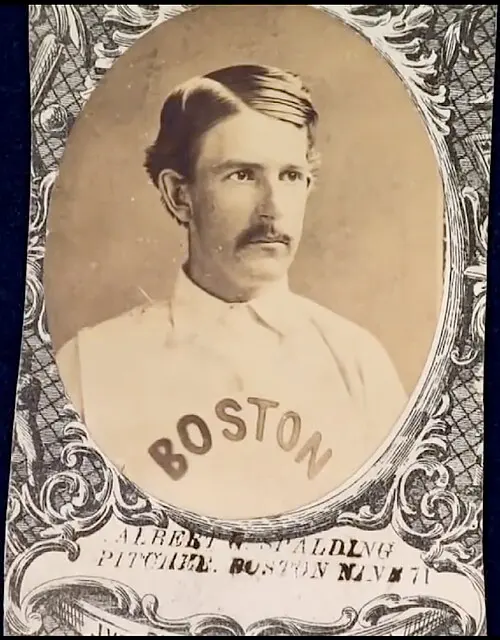

With a player of Spalding’s standing wearing one, the scorn for gloves gradually softened. He also had a business interest: in 1876 he had started a sporting goods company, and his 1877 official guidebook was already offering catcher’s gloves for sale. He was a star player and a glove salesman at the same time. That company is the origin of the Spalding brand still known today.
The last barehanded star
By around 1890, big catcher’s mitts that covered the whole hand were on sale, and fielders were putting on gloves one after another. Still, some players clung to their bare hands.
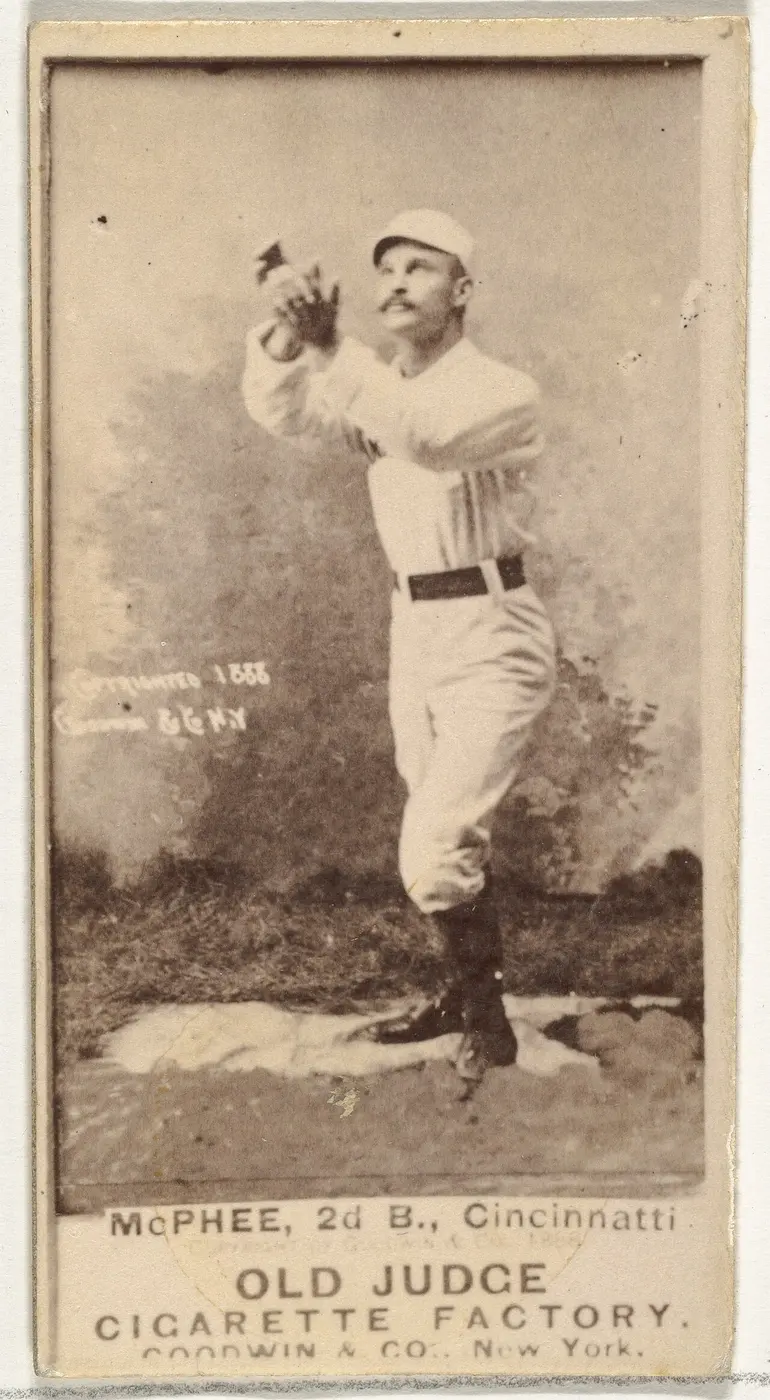
The most famous was Bid McPhee, second baseman for Cincinnati. After breaking into the majors in 1882, he declared, “I never use a glove on either hand in a game. I have never seen the necessity of wearing one,” and became known as a superb fielder anyway. Then in 1896 he began the season with an injured finger and finally gave in. That year, wearing a glove, he set a major league record with a .978 fielding percentage, a mark that was not topped until 1925.

From hand protector to catching tool
Early gloves were little more than thin leather to protect the hand; they were not designed to wrap around the ball. The big change came in 1920. At the suggestion of Bill Doak, a pitcher for the St. Louis Cardinals, a glove went on sale with a laced web strung between the thumb and forefinger to form a deep pocket. From then on, the glove gradually changed from something that protected the hand into something that caught the ball.
Rules keep gloves from growing too large. Under today’s Major League Baseball rules, gloves worn by fielders other than the catcher and first baseman may be no more than 13 inches (about 33 centimeters) from top to bottom.
In Japan, where baseball arrived in the 1870s and became hugely popular, gloves are said to have come into use around 1896. In the town of Miyake in Nara Prefecture, glove making began around 1921, and the town and its neighbors eventually came to produce 90 percent of all the gloves made in Japan.