Was the slam dunk ever banned?
Yes. In American college basketball, dunking was illegal for nine seasons, starting in 1967.
9seasons
Of all the plays in basketball, few bring a crowd to its feet like the dunk. A player leaps and slams the ball down through the hoop from above. It is spectacular, and it almost never misses.
Yet in American college basketball, the dunk was against the rules for nine seasons beginning in 1967. The player usually blamed for the ban was a college student who would later be known as Kareem Abdul-Jabbar.
Freshmen beat the champions
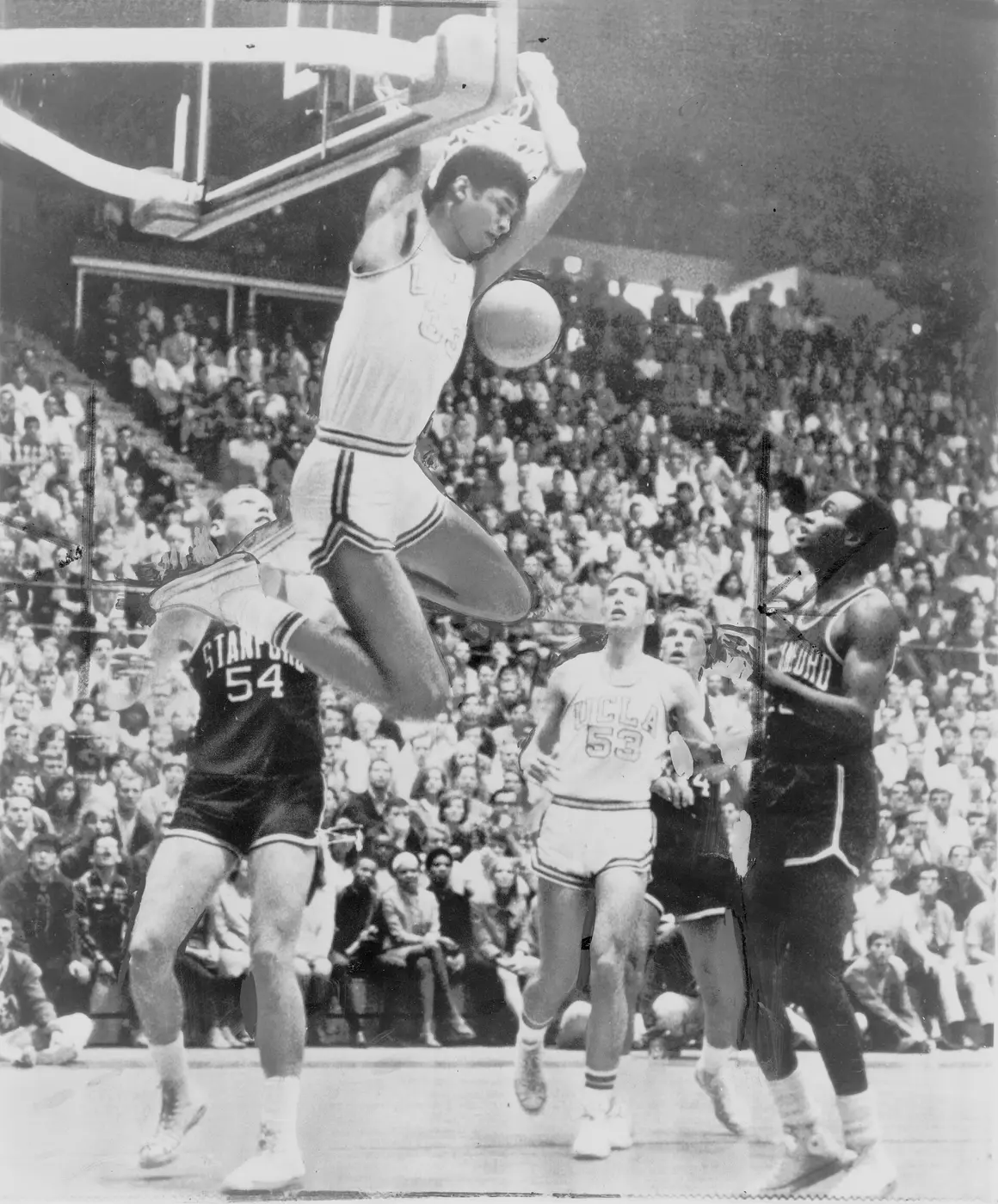
Lew Alcindor was born in New York City in 1947. When he enrolled at the University of California, Los Angeles (UCLA) in 1965, he already stood about 7 feet 1 inch (2.16 m). Freshmen were not allowed to play on varsity teams at the time, so he played for the UCLA freshman team. In an exhibition game, that team took on the UCLA varsity, national champions the previous two years, and won 75–60. It was the first time a UCLA freshman team had beaten the varsity.
As a sophomore in 1966–67, Alcindor averaged 29 points a game, and UCLA went 30–0 to win the national championship.

The “Alcindor rule”
A few days after that title, college basketball’s rules makers banned the dunk. Stuffing the ball through the hoop from directly above became illegal.
The official reasons were that too many players were getting hurt while dunking or trying to block dunks, and that backboards were being shattered and rims bent. The committee also argued that there was no defense against the dunk, so it upset the balance between offense and defense. But it was obvious who the rule was really about. In April 1967, Time magazine called it “frankly aimed at Alcindor,” and critics dubbed it the “Alcindor rule.”
The same Time article noted, though, that Alcindor dunked only occasionally. Most of his baskets came from tip-ins, lay-ups, jump shots and hook shots. Some experts thought the rule would actually hurt smaller players more, since the dunk was one of their weapons against taller defenders.
Alcindor himself told the Chicago Defender, a leading Black newspaper, that the new rule “smacks a little of discrimination,” because “most of the people who dunk are black athletes.” Just a year earlier, Texas Western, with an all-Black starting five, had beaten an all-white Kentucky team in the national final, and some historians see race as part of the story behind the ban.
Unstoppable anyway
Banning the dunk did not slow UCLA down. In Alcindor’s three varsity seasons the team went 88–2 and won three straight national titles, and he was named the tournament’s most outstanding player all three times.
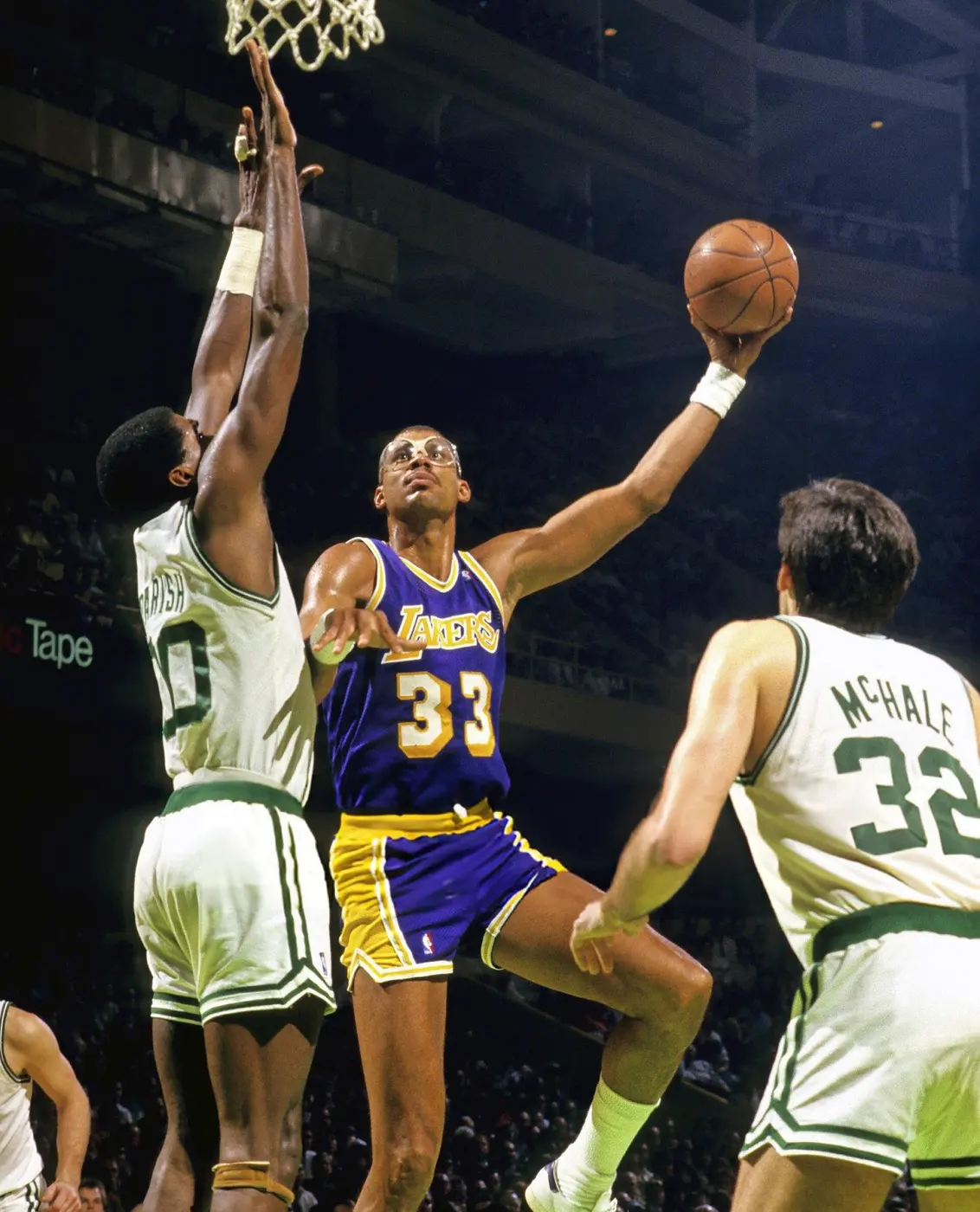
The shot he is said to have refined in those years was the hook shot, released one-handed from high above his head, which became known as the “skyhook.” As Time had noted, the hook was already part of his game before the ban, but in the pros it became his signature. After taking the name Kareem Abdul-Jabbar in 1971, he scored 38,387 points in the NBA, a career record that stood until LeBron James passed it in 2023.

The dunk returns
The ban lasted through the 1975–76 season, and players found ways around it. At North Carolina State, David Thompson became known for the alley-oop with his teammate Monte Towe, catching a pass in midair and finishing it before landing. Thompson is said to have dunked just once in college, in his final home game in 1975, and to have been promptly hit with a technical foul.
The dunk came back to college basketball in the 1976–77 season. That same year, the professional American Basketball Association held the first-ever slam dunk contest. Julius Erving won it, and the runner-up was none other than David Thompson.