Where does the Japanese phrase “Ultra C” come from?
It was coined in Japanese gymnastics before the 1964 Tokyo Olympics for skills harder than C, then the top difficulty grade. It later came to mean a brilliant trump card.
C
In Japan, a bold maneuver that suddenly breaks a deadlock in negotiations, or a solution nobody else thought of, is often called an urutora shī: an “Ultra C.” It combines the English word “ultra” with the letter C, but the Japanese dictionary Digital Daijisen classes it as a Japanese coinage, and an English speaker would have no idea what it meant.
The C is a grade from gymnastics, where it marks how hard a skill is. The phrase was born in Japanese gymnastics in the run-up to the 1964 Tokyo Olympics.
When the scale stopped at C
In artistic gymnastics, every skill is assigned a difficulty grade. According to the Japanese edition of the Britannica International Encyclopedia, there used to be only three grades, A, B and C, with C reserved for the hardest skills.
Ahead of the Tokyo Games, Japan put great effort into developing difficult new skills that no other country had. Skills that went beyond C, the highest grade in the scoring rules of the day, became known as “Ultra C.” In October 1964 the Japanese men won the Olympic team title, and Ultra C became a buzzword far beyond the world of gymnastics.
Who coined it?
There are several versions of who said it first. Britannica says it is believed to have been first used by Akitomo Kaneko, who later sat on the men’s technical committee of the International Gymnastics Federation, and popularized by Toshihiko Sasano, the head of the Japanese gymnastics team at the Tokyo Olympics.
On the other hand, the official history of the sports newspaper Daily Sports, published in 1978, reportedly gives the credit to its own story from a national team training camp the year before the Olympics, in which Tadao Uesako, a member of the team’s coaching committee, used the phrase in an interview. Uesako is said to have explained that some skills that really deserved a higher grade were being lumped in with C, and he wanted a name to set them apart. None of these accounts is more than “it is said,” and the phrase has no single confirmed inventor.
Adding a twist to the Yamashita
The most celebrated Ultra C of the Tokyo Olympics was Haruhiro Yamashita’s “new Yamashita” on vault. Yamashita had invented the original Yamashita vault, in which the gymnast pushes off the horse with both hands and then folds into a pike in the air, and won a silver medal with it at the 1962 World Championships. But he was convinced that foreign gymnasts would copy it by the time of the Tokyo Games, so he went looking for something harder.
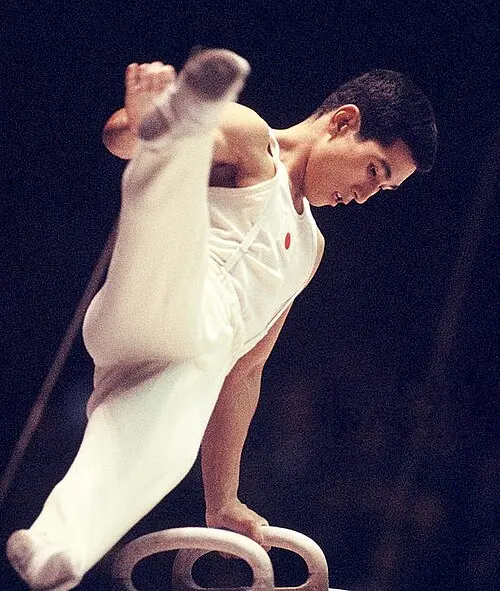

The breakthrough came from a trampoline he noticed at a training camp in Hachinohe, in northern Japan. As he later told the newspaper Sports Nippon, it struck him that he could practice twisting his body once in the time between landing on his back on the trampoline and bouncing back up. In the vault final on October 23, 1964, Yamashita landed the Yamashita on his first attempt and then the new version, with a full twist added, on his second, winning the gold medal. Yamashita, who later took the surname Matsuda, died in June 2026 at the age of 87.
Many more Japanese Ultra C skills followed, most famously the getsumen chūgaeri, or “moon somersault,” the dismount from the horizontal bar that Mitsuo Tsukahara unveiled at the 1972 Munich Olympics. It is known in English as the moonsault.
A trump card, and the end of C
The phrase escaped from gymnastics almost immediately. The Nihon Kokugo Daijiten, Japan’s largest historical dictionary, cites a figurative use from a book published in 1965, describing a new approach to dressmaking as an “Ultra C” that would shake Japanese dressmaking education and technique to their foundations. Today’s dictionaries also give it the meaning of a secret weapon or trump card, because in gymnastics an Ultra C was the skill you saved to clinch the win.
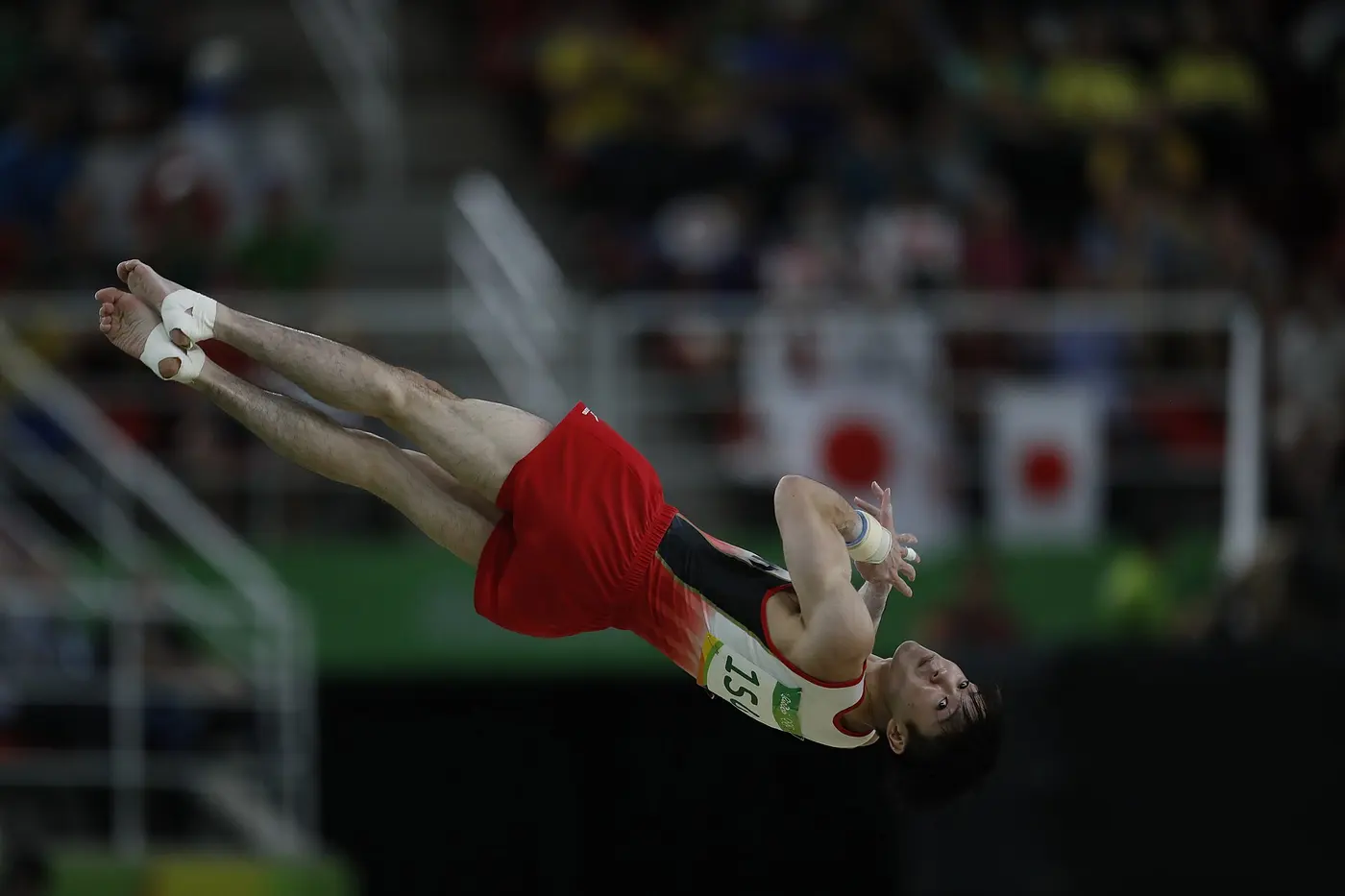

Ironically, gymnastics itself has more or less stopped using the phrase. As skills beyond C kept multiplying, a D grade was added in 1985 and an E grade in 1993, and the scale has kept growing ever since. According to Digital Daijisen, the highest grade in the 2025 Code of Points is J, for both men and women. Britannica notes that in gymnastics, Ultra C has effectively become a dead expression. The phrase retired from the sport that created it, but it is still hard at work in everyday Japanese.