Was the ekiden born in Japan?
Yes. It began in 1917 with a race that relayed runners about 508 kilometers from Kyoto to Tokyo in 23 stages.
508km
In many Japanese homes, New Year’s morning means watching the Hakone Ekiden on TV. Team after team of university runners race for two days, each runner handing a tasuki, a cloth sash worn diagonally across the chest, to the next.
The marathon, inspired by a legend from ancient Greece, and the relay, a standard track event, both came to Japan from abroad. But what about the ekiden, a long road race split into many legs and run by a team in turn? That one was invented in Japan, a little over a century ago.
Kyoto to Tokyo in three days
The first ekiden set off at 2 p.m. on April 27, 1917, from the Sanjō Ōhashi bridge in Kyoto. The finish was Shinobazu Pond in Ueno, Tokyo. Organized by the Yomiuri newspaper to mark 50 years since Japan’s capital moved from Kyoto to Tokyo, the race followed the Tōkaidō, the old highway linking the two cities.
Two teams took part, one from the Kanto region around Tokyo and one from the Kansai region around Kyoto and Osaka. They split roughly 508 kilometers (316 miles) of the Tōkaidō into 23 legs (sources give anything from 507 to 516 kilometers) and ran day and night without stopping.
At 11:34 a.m. on April 29, the Kanto team’s anchor broke the tape in Ueno, about 45 and a half hours after the start. That final runner was Shisō Kanakuri, who had represented Japan in the marathon at the 1912 Olympics in Stockholm.


Named after an ancient postal system
The word ekiden was coined for this race. It is credited to Zenmaro Toki, a poet who was then head of the Yomiuri’s city news department, who is said to have settled on it after consulting Chiyosaburō Takeda, vice president of the Japan Amateur Sports Association.
The inspiration was a transportation system from Japan’s Nara period in the eighth century. The imperial court set up stations, called eki, along its main highways and kept horses there, known as ekiba and tenma, to carry officials and official messages from one station to the next. The idea of handing something on from station to station was a perfect fit for a race in which runners take over from one another leg by leg. The name is often translated roughly as “station to station.”
According to a pre-race newspaper article cited in the Nihon Kokugo Daijiten, Japan’s largest dictionary, the organizers first planned to call the event a “marathon relay.” Had they stuck with that, the Hakone Ekiden might be known today as the Hakone Marathon Relay.
Hakone: a trial for crossing America?
Three years later, on February 14, 1920, the first Hakone Ekiden was held. Just four schools took part: Waseda University, Keio University, Meiji University and Tokyo Higher Normal School (now the University of Tsukuba). The course ran from Tokyo to the hot-spring town of Hakone and back, and Tokyo Higher Normal School won after overturning an 8-minute-27-second deficit from the outbound leg.
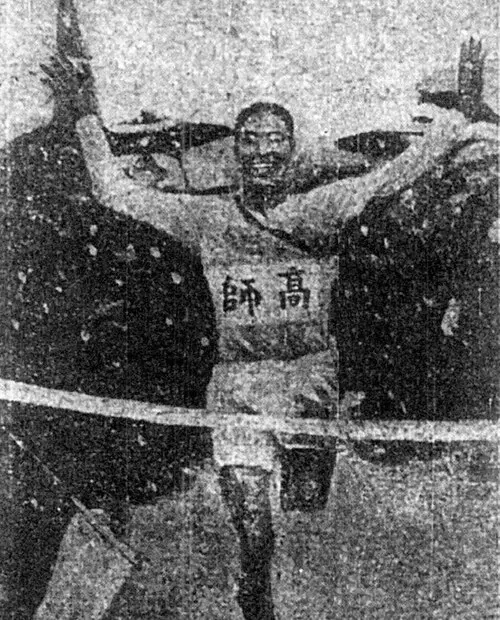

Kanakuri was a driving force behind this race too. After failing to finish the marathon in Stockholm, he devoted himself to developing runners who could compete with the world. The Hakone Ekiden is said to have doubled as a selection race for a planned ekiden across the United States, and the widely accepted story is that the steep climb over the Hakone mountains was included to simulate crossing the Rockies. The transcontinental ekiden itself never happened.
“Ekiden” goes global
The ekiden is now known abroad by its Japanese name. Between 1992 and 1998, the International Amateur Athletic Federation (today’s World Athletics) held four editions of the World Road Relay Championships, a format based on Japanese ekiden races. Teams of six covered the full marathon distance of 42.195 kilometers in legs of 5, 10, 5, 10, 5 and 7.195 kilometers.
The world record for that format was set by Kenya’s men at the International Chiba Ekiden, east of Tokyo, on November 23, 2005: 1 hour 57 minutes 6 seconds. In November 2025, a team of Kenyan runners took aim at the mark at an ekiden in Paris but fell 59 seconds short. A race born on an old Japanese highway has become a stage on which some of the world’s best runners chase records.