When did skiing come to Japan?
In earnest, in 1911, when an Austrian army officer, Major Theodor von Lerch, taught skiing in Takada, now part of Jōetsu in Niigata Prefecture.
1911
Skiing is now part of winter life in Japan. The slopes of Hokkaido, northern Honshu and the mountains of Nagano and Niigata draw skiers not only from all over the country but from around the world.
Yet people in Japan have been skiing seriously for only about 115 years. The ski itself, by contrast, is many times older than that.
Skis more than 5,000 years old
Skis began not as sports equipment but as a way of getting around on snow, to travel and to hunt.
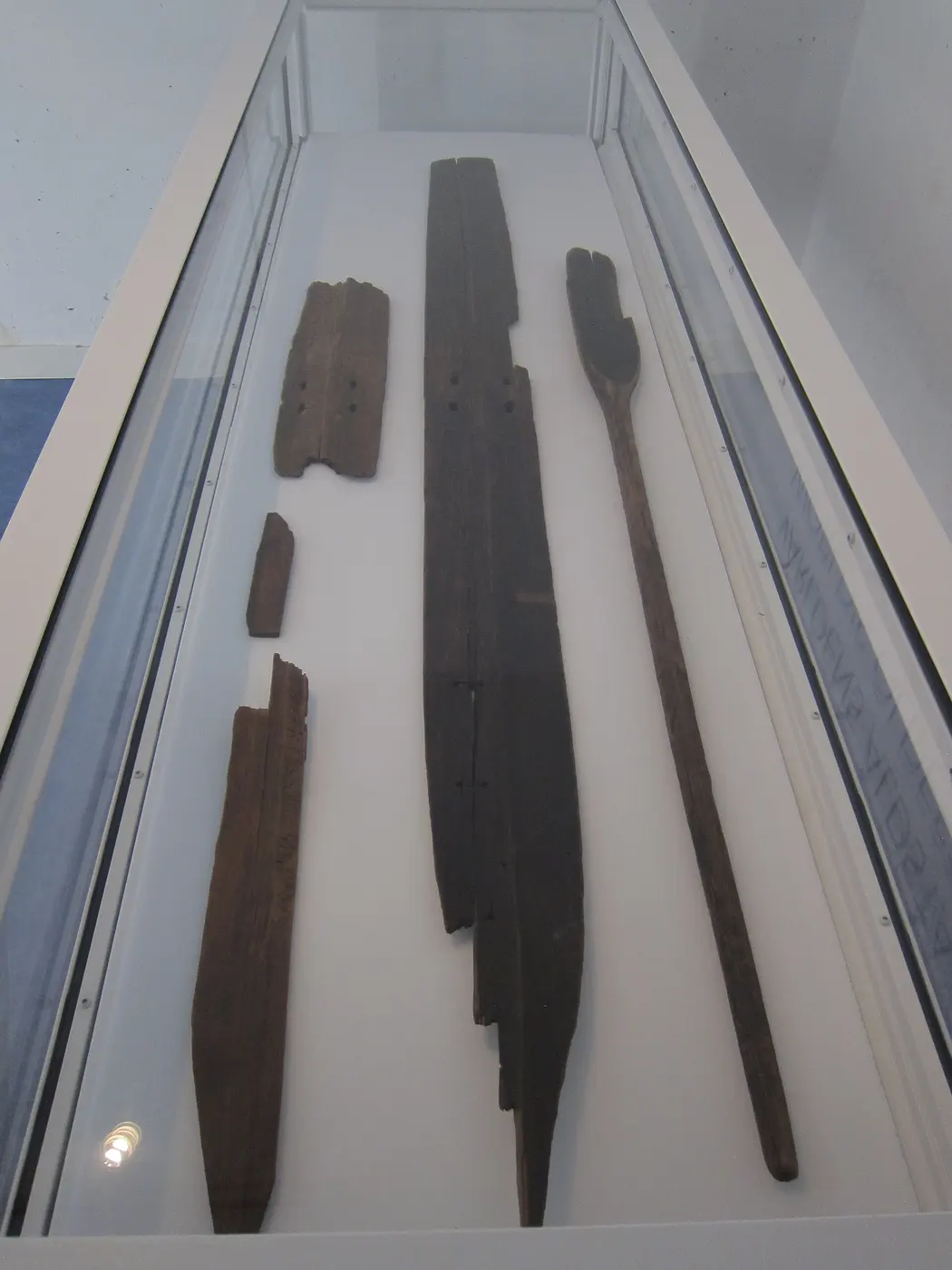
In the autumn of 1924, men digging a ditch through a bog near the village of Kalvträsk in northern Sweden found two wooden boards and a pole about 1.5 meters (5 feet) down. The boards were 204 centimeters (6.7 feet) long and 15.5 centimeters (6 inches) wide, and the pole, 156 centimeters long, ended in a shovel-like blade. Carbon dating showed the skis to be about 5,200 years old, older than the pyramids of Egypt and among the oldest skis ever found.
On the island of Tro, off northern Norway, a rock carving thought to be about 5,000 years old shows a figure on skis. It inspired the pictograms for the sports at the 1994 Winter Olympics in Lillehammer, Norway. The English word “ski” itself came by way of Norwegian from the Old Norse “skíð,” meaning a split piece of wood.

January 12, 1911, in Takada
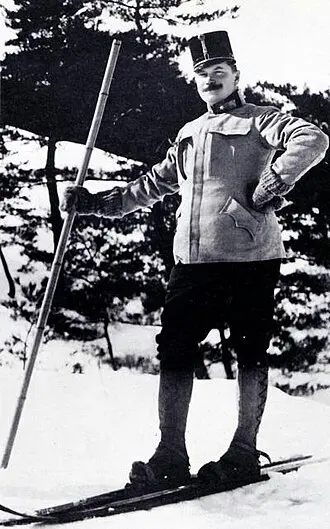
The man who brought skiing to Japan in earnest was Major Theodor von Lerch (1869–1945) of the Austro-Hungarian army. He came to Japan to observe its army and, from January 5, 1911, to January 24, 1912, was attached to the Imperial Japanese Army’s 13th Division in Takada, a snowy town near the Sea of Japan coast that is now part of the city of Jōetsu. Being posted to snow country is said to have been his own wish, as a passionate skier, and he arrived with two pairs of skis.
On January 12, 1911, the 42-year-old Lerch began teaching skiing to 14 officers of the 58th Infantry Regiment. This is regarded as the first proper ski instruction in Japan. According to the city of Jōetsu, the first lessons took place not on Mount Kanaya, the hill usually associated with them, but on the regiment’s own grounds, where a junior high school now stands.
The division’s commander, Gaishi Nagaoka, was keen to spread skiing beyond the army as a winter sport for ordinary people. The following month, Japan’s first ski club was founded in Takada, and lessons, races, ski making, and even ski-themed sweets, dances and folk songs all spread from the town.
Just one pole
The skiing Lerch taught looked a little different from today’s. Instead of two poles, skiers carried a single long staff. This was the Lilienfeld technique, developed by Lerch’s teacher Mathias Zdarsky and named after the town of Lilienfeld in Austria, where he perfected it.
At the time, the dominant style was Norwegian. It was well suited to crossing flat, open snow, but its bindings were simple, which made steep Alpine slopes difficult. Zdarsky designed sturdier bindings and a technique for getting down steep slopes safely. Its hallmarks were a controlled, braking descent using the long pole, and the snowplow, or “bogen,” turn, made with the skis in a wedge.

Sapporo got there first
Lerch was not, in fact, the first person to bring skis to Japan. According to the city of Sapporo, a Swiss teacher named Hans Koller introduced skis to the city in 1908 while teaching at the agricultural college of Tohoku Imperial University, today’s Hokkaido University. Using skis Koller had ordered from Switzerland as a model, his students had a sleigh maker build their own and skied on local hills such as Mount Sankaku.
Still, it was Lerch’s systematic teaching that spread skiing across the country. In February 1912 he moved to Asahikawa in Hokkaido and taught there too. In 1930, a monument reading “Birthplace of Japanese Skiing” was erected on Mount Kanaya in Takada, and January 12 is still remembered as the day skiing began in Japan.