Did Mozart write “Twinkle, Twinkle, Little Star”?
No. The tune is an 18th-century French song; Mozart wrote a set of variations on it.
C, C, G, G, A, A, G. In Japan, “Kira Kira Boshi” (“Twinkling Star”) is sung at practically every kindergarten and nursery school. In the English-speaking world it’s Twinkle, Twinkle, Little Star, surely one of the most famous children’s songs on Earth.
Have you ever heard that Mozart actually wrote it? It’s true that the melody appears in one of Mozart’s works. But the melody itself was not his creation.
It began with a confession of love
Follow the melody’s trail and you arrive in 18th-century France. The oldest known printed version is said to be in a collection of pieces for the hurdy-gurdy (a stringed instrument played by turning a crank) published in 1761 by one François Bouin.
In France, the tune spread as a song called Ah! vous dirai-je, maman (“Oh, shall I tell you, Mother”). Its original words were not for children at all. It was a love song in which a young shepherdess confesses to her mother that she has fallen for a young shepherd.
Later, a children’s parody with new words appeared. In this version, a child tells its mother that grown-ups want it to be sensible like an adult, but it would rather have sweets. Accounts differ on when this parody arose: some say it already existed in the early 19th century, others put it in the late 19th century.
Mozart’s twelve variations
It was this popular French tune that Mozart used for his piano work Twelve Variations on “Ah vous dirai-je, Maman”, catalogued as K. 265. It opens by stating the simple melody as its theme, followed by twelve variations. The tune is dressed in rippling runs, moved into the left hand, and transformed again and again. Of the twelve variations, only the eighth turns to C minor, and only the last, the twelfth, is in triple time.
For a long time the piece was thought to date from 1778, when Mozart was staying in Paris. Since it uses a French song, that seemed natural. But a study of the handwriting in the autograph score has made it more likely that it was actually written in Vienna around 1781–1782, when Mozart was about 25. The piece was published in Vienna in 1785.
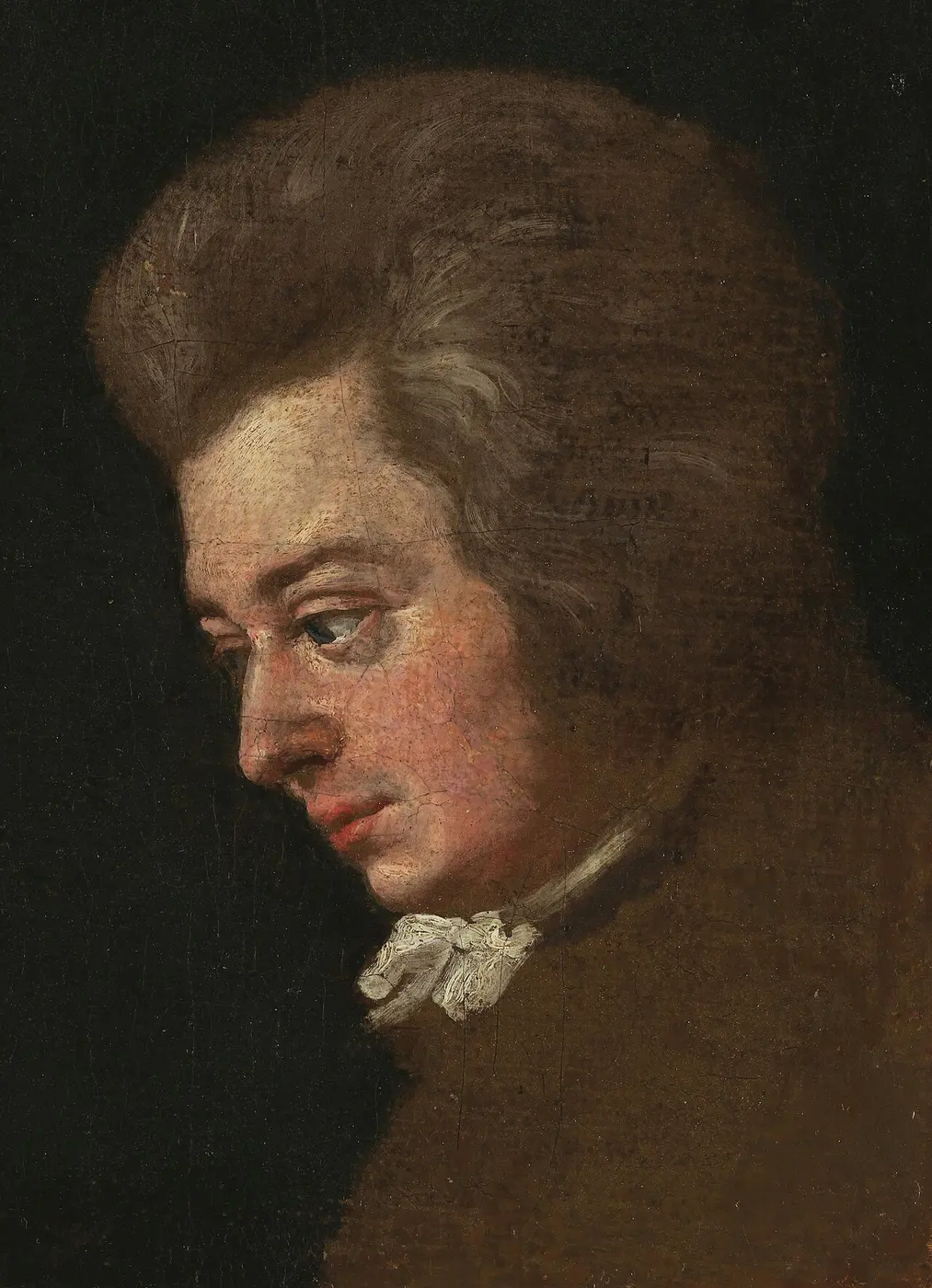

Because these variations have been widely played at piano recitals, in Japan they are also known as the “Twinkle Star Variations.” The misconception that Mozart wrote the tune probably grew out of this famous set of variations. Mozart was not the composer but the “chef” who cooked up an existing melody.
English words from two English sisters
So when did it become a song about a star? The English words come from a poem called “The Star” by the English poet Jane Taylor. It appeared in 1806 in Rhymes for the Nursery, a collection of poems for children she published with her older sister, Ann Taylor.
The poem is said to have first been published together with the French melody in 1838. The original poem has five stanzas, but today usually only the first is sung.
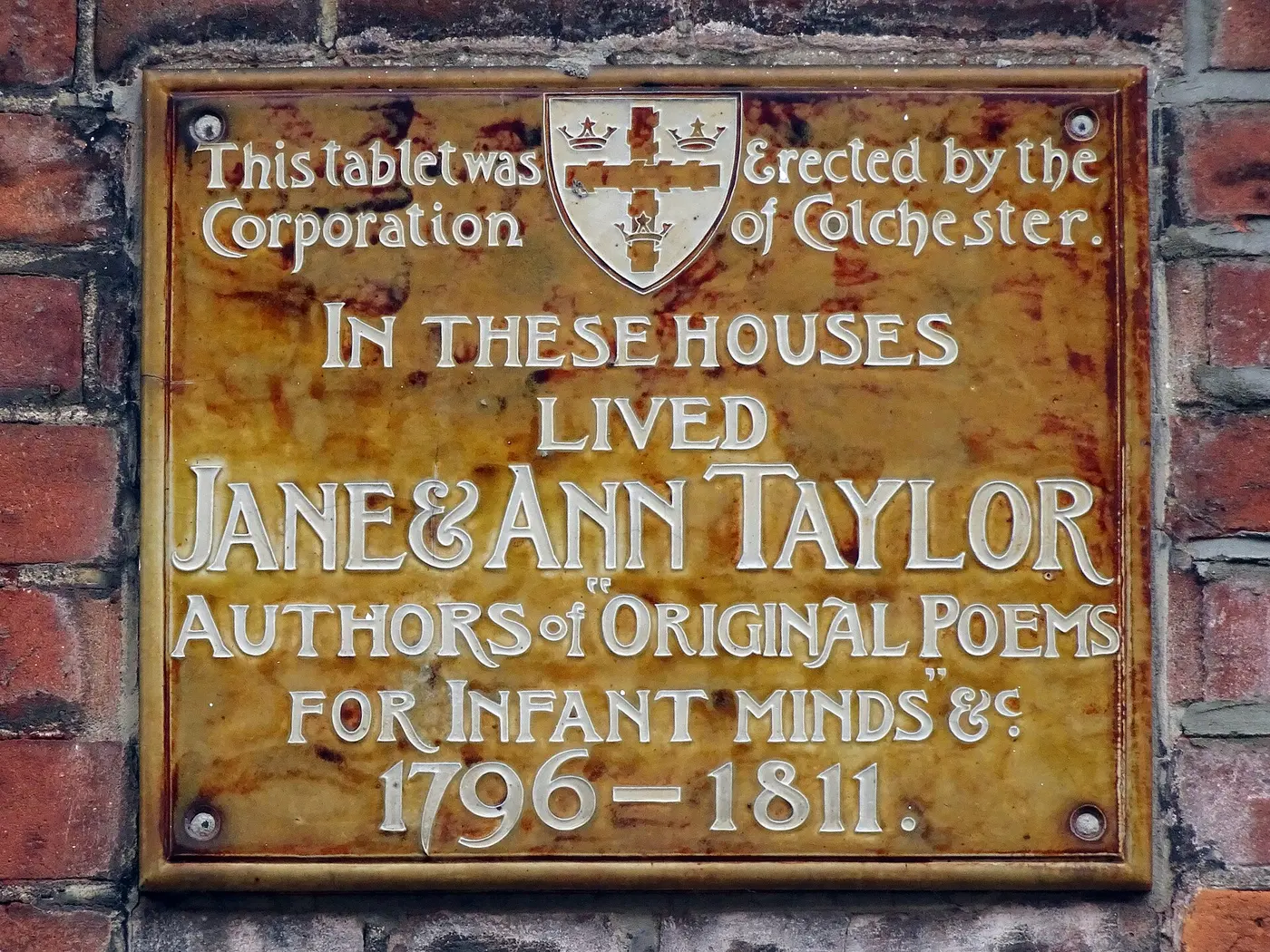

The poem became widely loved—so much so that in Lewis Carroll’s Alice’s Adventures in Wonderland, the Hatter performs a parody about a twinkling little bat.
One melody, many songs
In the English-speaking world, the same melody is used for the Alphabet Song and for the nursery rhyme Baa, Baa, Black Sheep. In Germany, around 1840, the poet August Heinrich Hoffmann von Fallersleben—who later wrote the words of the German national anthem—set a Christmas song to the tune. A melody that began as a confession of love has been reborn as song after song, across countries and languages.