Did Beethoven name the “Moonlight” Sonata?
No. It was titled “Sonata quasi una fantasia”; “Moonlight” is a nickname traced to the poet Rellstab.
Slow, repeating triplets in the accompaniment, and above them a dusky melody rising quietly to the surface. The first movement of Beethoven’s Piano Sonata No. 14, better known as the Moonlight Sonata, is a piece that even people with no interest in classical music have surely heard at least once.
Listening to music that seems to shimmer like moonlight on a lake, the title feels perfect. Yet Beethoven himself never called the piece “Moonlight.”
The original title: “a sonata in the manner of a fantasy”
The piece was composed in 1801, when Beethoven was about 30. When it was published the following year, 1802, its title was the Italian “Sonata quasi una fantasia,” meaning “a sonata in the manner of a fantasy.” His Opus 27 contains two sonatas, and both carry this same title.
The phrase “in the manner of a fantasy” is thought to reflect Beethoven’s intentions. Sonatas of the day usually opened with a fast movement. This one, however, begins quietly with a slow movement and blazes up only in the finale. It was structured freely, like a fantasy, unbound by convention.
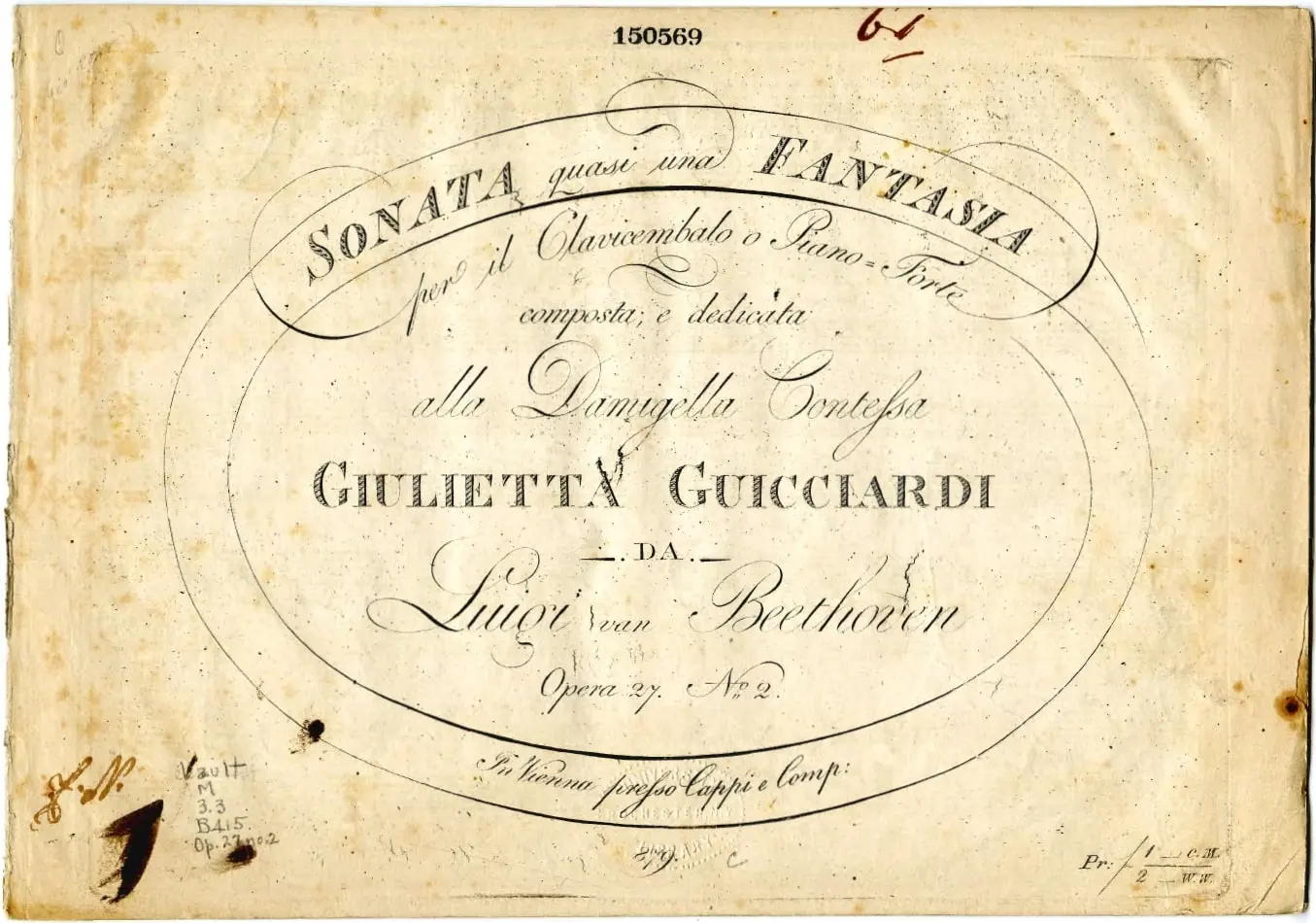

The score was dedicated to Countess Giulietta Guicciardi, one of Beethoven’s piano students, a woman he is said to have been in love with. At the head of the first movement is the instruction: “This whole piece must be played with the utmost delicacy and without dampers.” It was meant to let the sound linger and the notes blend into one another. Nowhere, though, is there a single word suggesting the moon or the night.
The legend of moonlight on Lake Lucerne
So where did the nickname come from? For a long time, the standard explanation went like this.
The German poet and music critic Ludwig Rellstab compared the first movement to “a boat rocking on the moonlit waves of Lake Lucerne in Switzerland.” This happened around 1832, five years after Beethoven’s death, and from then on the name “Moonlight Sonata” spread.
The source of this story was a book by Wilhelm von Lenz, published in 1852. Lenz wrote that Rellstab had compared the piece to a boat on Lake Lucerne by moonlight, and that the nickname had been in use “for twenty years.” Taken literally, “twenty years” points to 1832. Yet no one had ever found anything Rellstab actually wrote to that effect around 1832.
A text from 1824 comes to light
Later, a researcher combing carefully through Rellstab’s writings came across a different text: a short story called Theodor, serialized in a Berlin music magazine in the summer of 1824.
In it, Rellstab describes a scene in which a character imagines “the adagio of the C-sharp minor sonata.” The lake slumbers in faint moonlight, muffled waves strike the dark shore; ghostly swans glide over the water, and from the ruins comes the mysterious music of an Aeolian harp. Lake Lucerne is never mentioned. That detail, it seems, was added later by Lenz.
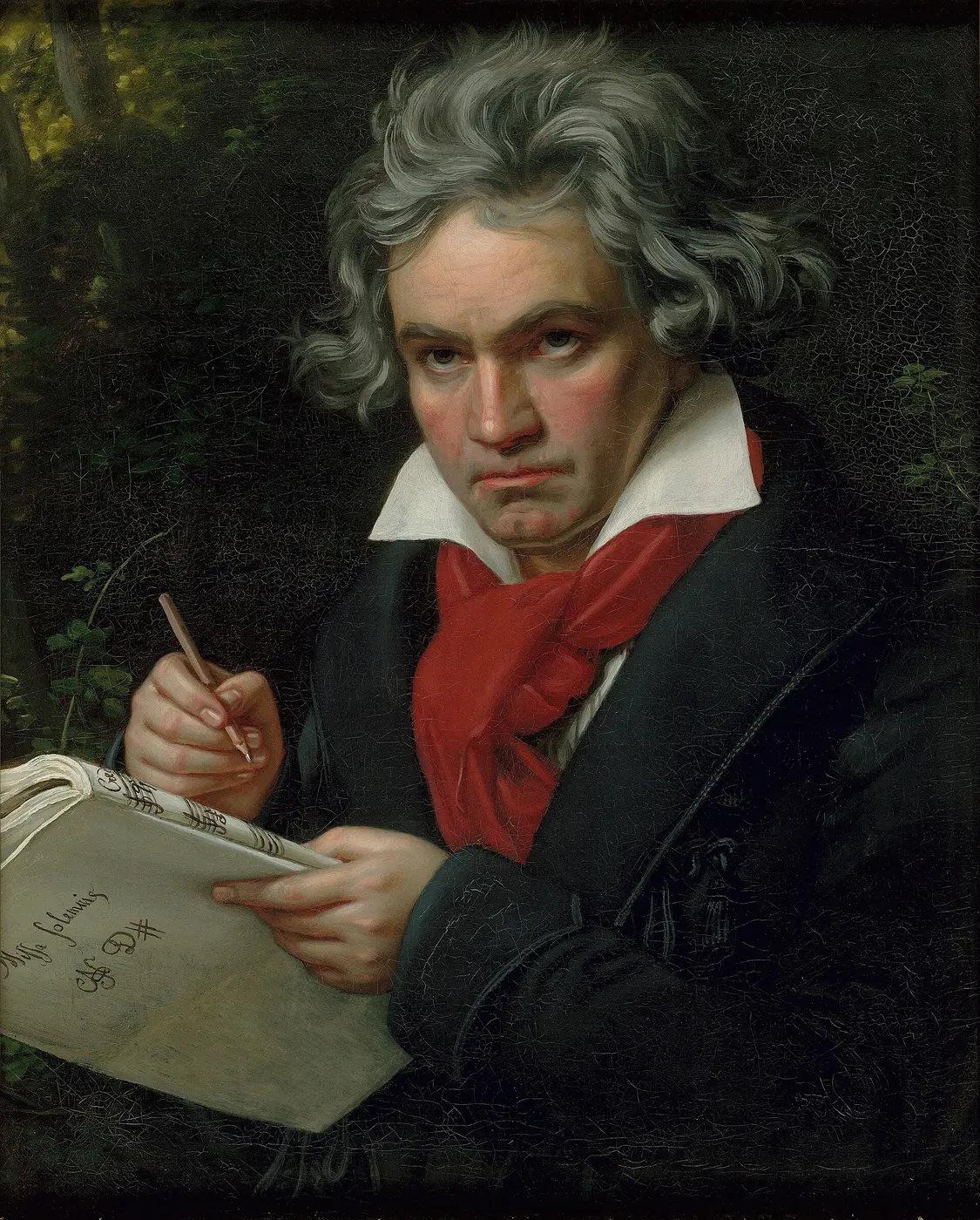

In 1824, Beethoven was still alive. What’s more, the following year, 1825, Rellstab met Beethoven in person in Vienna. Whether Beethoven ever read the story is unknown. Even so, it means that the image of “moonlight” was born not after the composer’s death but during his lifetime.
The name “Moonlight Sonata” itself is thought to have first appeared in print around the mid-1830s. By the end of that decade the nickname was in use in both German and English, and in the latter half of the 19th century it took hold around the world. In Japan, too, the piece is loved as “Gekkō Sonata” or “Gekkō no Kyoku” (“the Moonlight piece”). Though the composer never gave it that name, one poet’s imagination has shaped how the piece is heard for nearly 200 years.