Did Michelangelo paint the Sistine ceiling lying down?
No. He stood on a scaffold of his own design and painted with his head bent back. The lying-down image is a later myth.
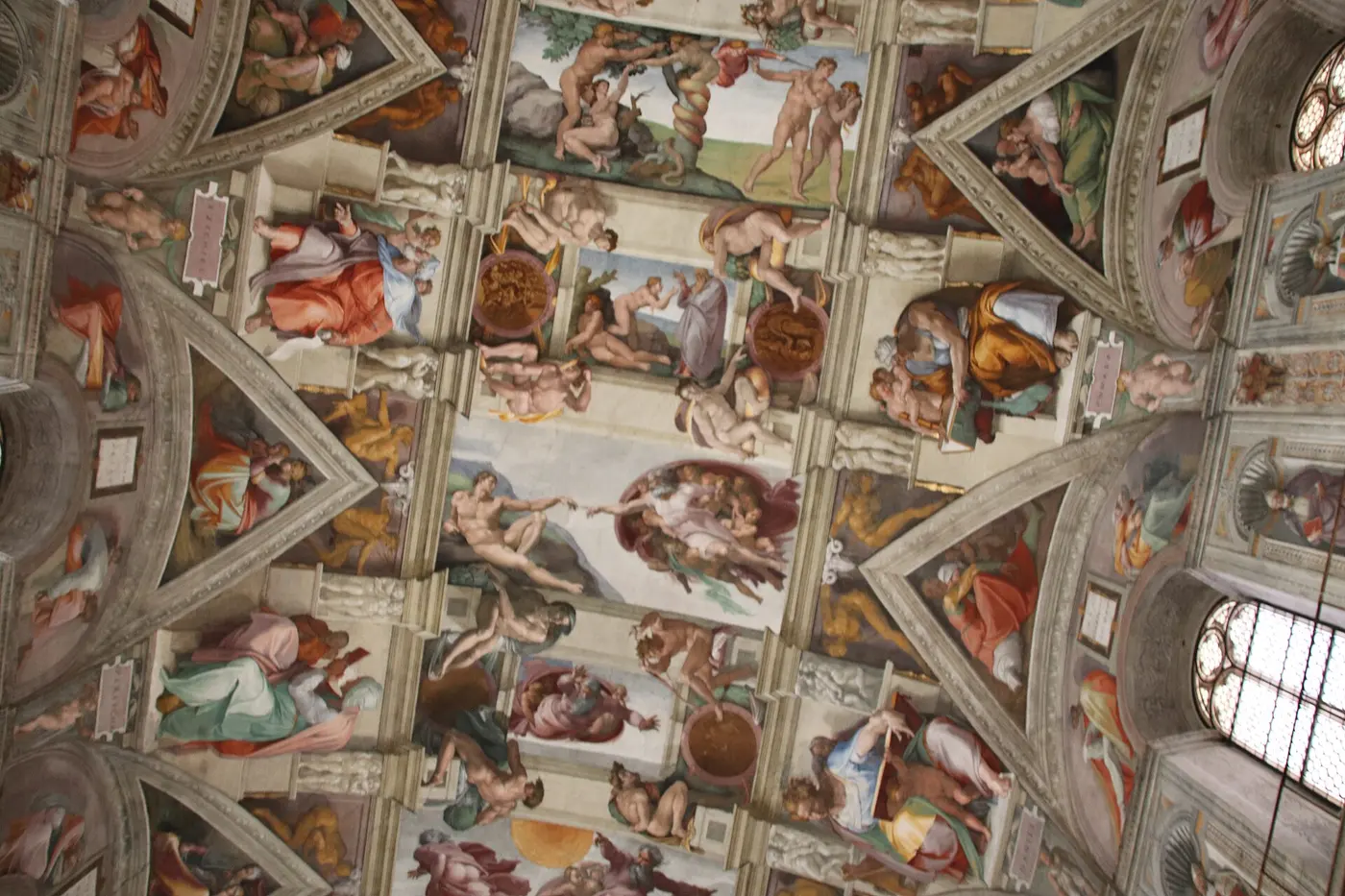
Step into the Sistine Chapel in the Vatican and look up, and the whole ceiling is crowded with scenes such as the Creation and the Creation of Adam, with more than 300 figures in all. It is the work of the Renaissance master Michelangelo, who spent over four years painting it.
A well-known story says Michelangelo painted it lying on his back on top of the scaffolding. In reality, he did nothing of the sort.
A sculptor and a gigantic ceiling
The ceiling was commissioned by Pope Julius II, and the contract was signed on May 8, 1508. The chapel is about 40.9 meters (134 feet) long and 13.4 meters (44 feet) wide, and at its highest point the ceiling is about 20.7 meters (68 feet) above the floor. Across this vast surface Michelangelo painted nine scenes running from the Creation to the story of Noah, along with figures of prophets and sibyls.
Michelangelo thought of himself as a sculptor, not a painter. He looked for assistants experienced in fresco, but could not find suitable ones, and he is said to have ended up painting almost all of it himself. The ceiling was finished by October 31, 1512, and on November 1 the pope celebrated Mass in the chapel.

A scaffold of his own design
Painting a high ceiling first requires a scaffold. The first design came from the architect Bramante: a platform hung on ropes from holes drilled through the ceiling. Michelangelo disliked it, since he would have had to paint around the holes, and had a different scaffold built instead.
The new scaffold had beams set into holes high in the walls, with the projecting cornice supporting diagonal beams. On top of this ran a working platform that is thought to have been stepped to follow the curve of the vault. Beneath it hung a false ceiling, and services in the chapel carried on while the work went ahead.
In other words, Michelangelo painted standing up, on a platform built just below the ceiling.
Standing, head tilted back
That did not make it easy. Giorgio Vasari, a sixteenth-century artist and biographer, wrote that working with his face turned upward so damaged Michelangelo’s eyesight that for several months he could read letters or look at drawings only by tilting his head back.
Michelangelo described the ordeal himself in a poem written around 1509 or 1510 to his friend Giovanni da Pistoia. Craning upward, he complains, has given him a goiter; his beard points to heaven; paint dripping from his brush spatters his face; his body is bent like a bow. He ends by declaring that he is not in a good place, “nor am I a painter.”
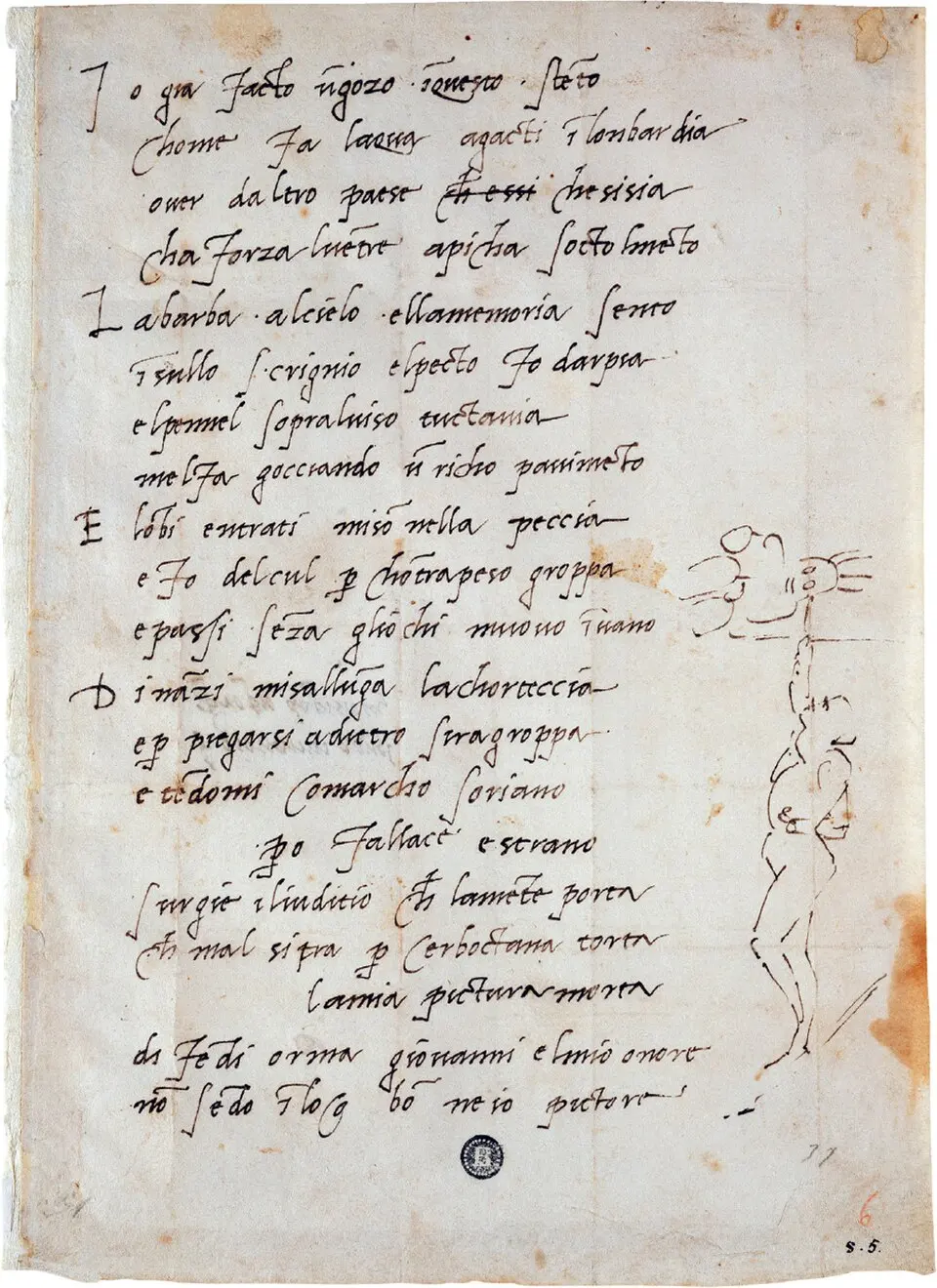

In the margin of that poem is a quick sketch Michelangelo made of himself. The figure is not lying down. It stands, body arched backward, reaching up toward the picture overhead.
Where did “lying down” come from?
So where did the lying-down story begin? The biographies by Vasari and by Michelangelo’s pupil Ascanio Condivi both say he painted standing up. But Paolo Giovio, another biographer of the time, wrote a short Latin life of Michelangelo that used a word suggesting he painted on his back. That image is thought to have spread and stuck.
The real posture was not lying down at all, but standing with eyes fixed upward for hour after hour, a punishing strain on the neck and back.