Were the famous striped tulips caused by a virus?
Yes. The flamed tulips prized in the 17th century were infected with a virus spread by aphids. Most striped tulips sold today get their patterns from their genes instead.
26%
Sometimes a red or purple tulip blooms with its color split into flames and feathers, the white or yellow beneath showing through. Growers have long called such flowers “broken.” A bulb that had produced plain flowers year after year would suddenly, one spring, send up a broken one.
These were the flowers that fetched astonishing prices during the tulip mania of 17th-century Holland. Yet for centuries, nobody knew what made them break.
A pattern made by missing color
The reds and purples of tulips come from pigments called anthocyanins, stored in the cells of the petal’s outer layer. According to a 1990 plant disease report from the University of Illinois, in a broken flower the anthocyanin is redistributed into streaks, feathers and flames, and between them the pure white or yellow of the underlying tissue shows through. In dark varieties, the result can be even darker stripes.
That is why white and yellow tulips, which have no anthocyanin to begin with, never break. The pattern is not painted on; it is where color has gone missing.
There was no way to predict which bulb would break, or when. Some enthusiasts tried to induce breaking on purpose. A change inside the bulb was long suspected, but no one could find a fungus or a bacterium in broken bulbs.


The mycologist who solved it
The answer came from Dorothy Cayley, a mycologist at the John Innes Horticultural Institution in Merton, south London. According to its successor, the John Innes Centre, she began working on tulips in 1927.
In the early 20th century, plant viruses were still poorly understood, partly because they are too small to see with an ordinary microscope. So Cayley tested whether breaking could be passed from plant to plant. When she grafted halves of broken bulbs onto bulbs of an unbroken variety called ‘Bartigon,’ 26 percent of them broke in their first year. Plugging a healthy bulb with pounded tissue from a broken one also produced breaks. But filtered juice from broken bulbs did not.
Cayley published her results in the journal Annals of Applied Biology in November 1928. Breaking, she reported, was infectious, and the more infected tissue was introduced, the stronger the breaking. The institution’s director, Daniel Hall, took the infectious agent to be a virus.
So what carried it from plant to plant in the field? In 1931, in the same journal, A. W. McKenny Hughes showed experimentally that the green peach aphid, Myzus persicae, transmits breaking. As aphids move from plant to plant to feed on sap, they spread the virus with them.
Beauty at a price
The patterns that 17th-century collectors adored were symptoms of disease. The Illinois report notes that infected tulips lose vigor, produce fewer offsets (the small daughter bulbs used to propagate them) and bloom later. The Royal Horticultural Society (RHS) says the vigor of virus-affected stock frequently deteriorated over time. The most precious tulips were also among the hardest to multiply.
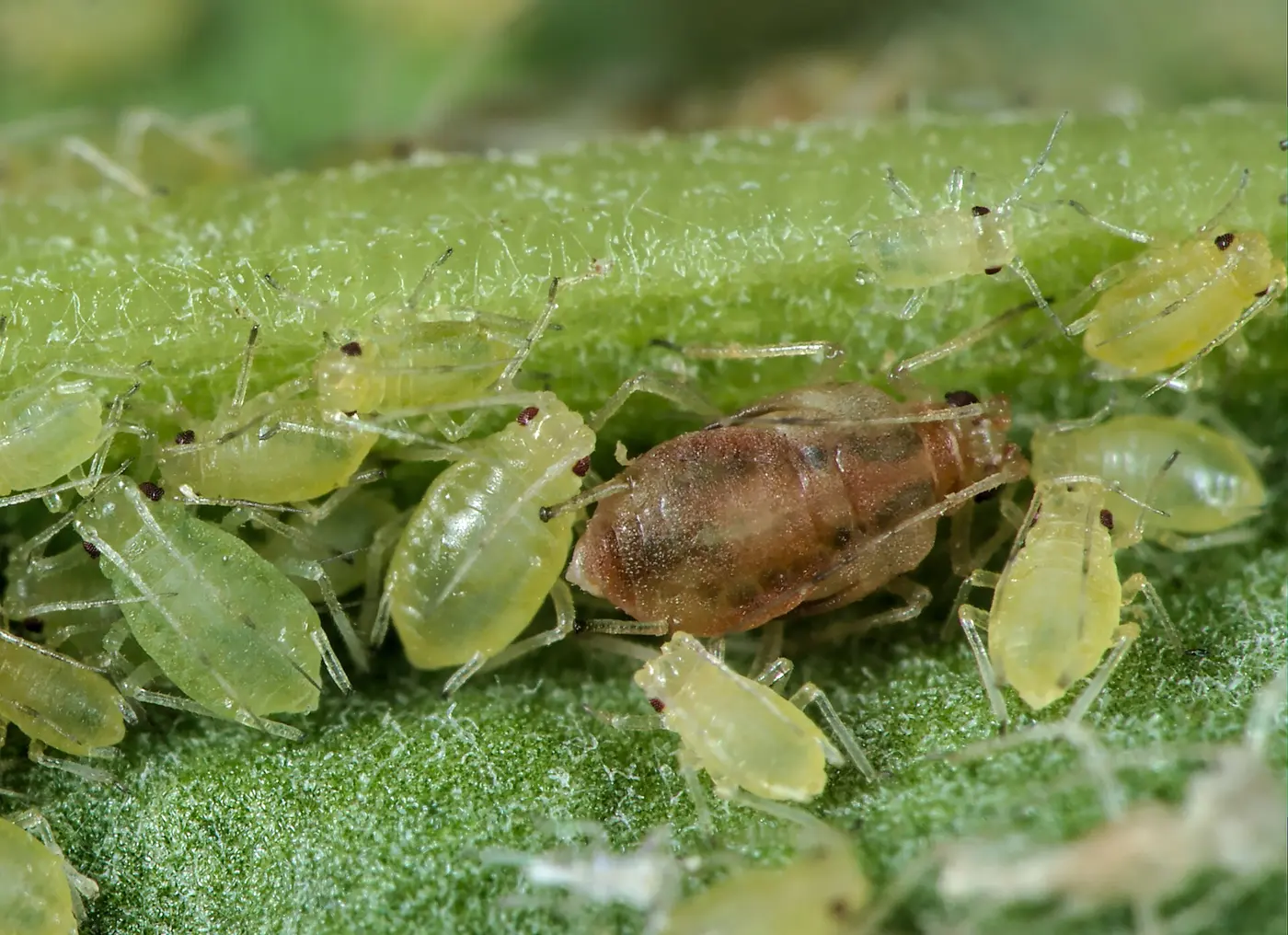

The same viruses also infect lilies, and tulips and lilies can each serve as a source of infection for the other. The Illinois report advises digging up and destroying broken plants as soon as they appear, spraying mineral oil to keep aphids off, and keeping broken varieties away from lilies and solid-colored tulips. According to the John Innes Centre, Dutch growers supplying the 20th-century market actually wanted bulbs free of breaks. Once the cause was known to be an infection, breaking became something that could be prevented.
What about striped tulips today?
Garden centers still sell tulips with flame-like stripes. According to the RHS, however, their patterns come from stable genetic mutations, not from a virus.
There is one exception. The Wakefield and North of England Tulip Society, founded in 1836 and by its own account the last of the old societies devoted to tulips, still grows and shows traditional English florists’ tulips. Their flamed and feathered markings, the society says, are caused by tulip breaking virus. The RHS notes that in these tulips the virus-caused breaks are remarkably stable, though the plants are seldom available for sale.