Do fig trees never flower?
They do. The flowers bloom inside the fig itself, hidden from view, which is why the Chinese name for the fig means “flowerless fruit.”
In autumn, figs appear in Japanese supermarkets. In Japanese the fruit is called ichijiku, and it is written with three characters borrowed from Chinese, 無花果, meaning “no-flower fruit.” And it’s true: hardly anyone can say they have seen a fig tree in flower.
Yet figs do have flowers. They just bloom where you can’t see them.
Flowers on the inside
Cut a fig in half lengthwise and you will find the inside packed with reddish, threadlike strands. Those are the flowers.
According to Nipponica, Japan’s major encyclopedia, what we call a fig is really the flower-bearing base of the plant, swollen into a hollow, urn-shaped container whose inner wall is crowded with tiny flowers. Botanists call this structure a syconium. Because the flowers are invisible from the outside and the whole thing looks like a fruit, the Chinese gave it the name “no-flower fruit.”
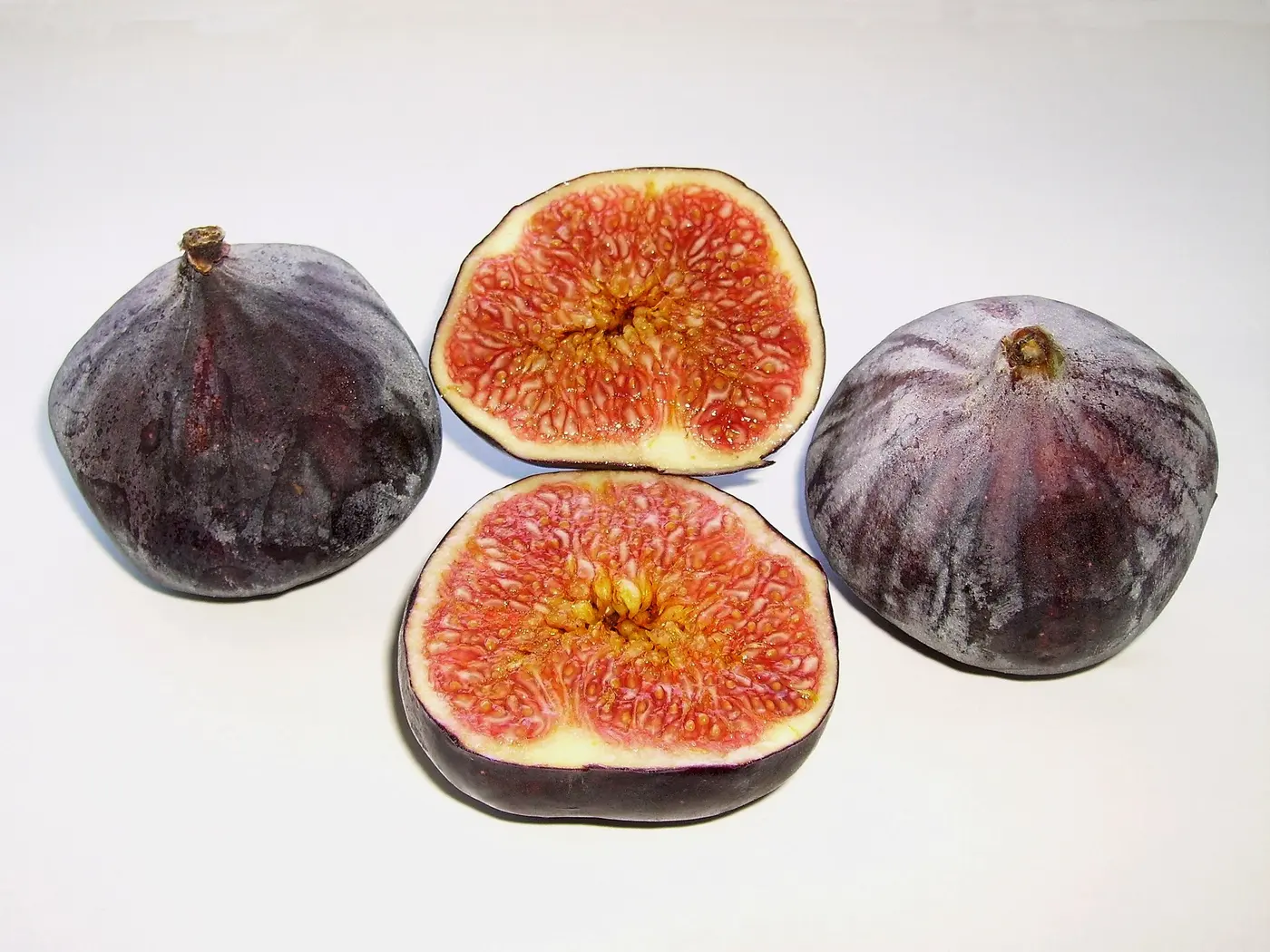

The crunchy little specks you bite into are each the fruit of a single tiny flower. Eating a fig, in other words, is a bit like eating a whole bouquet in one go.
The wasp that carries the pollen
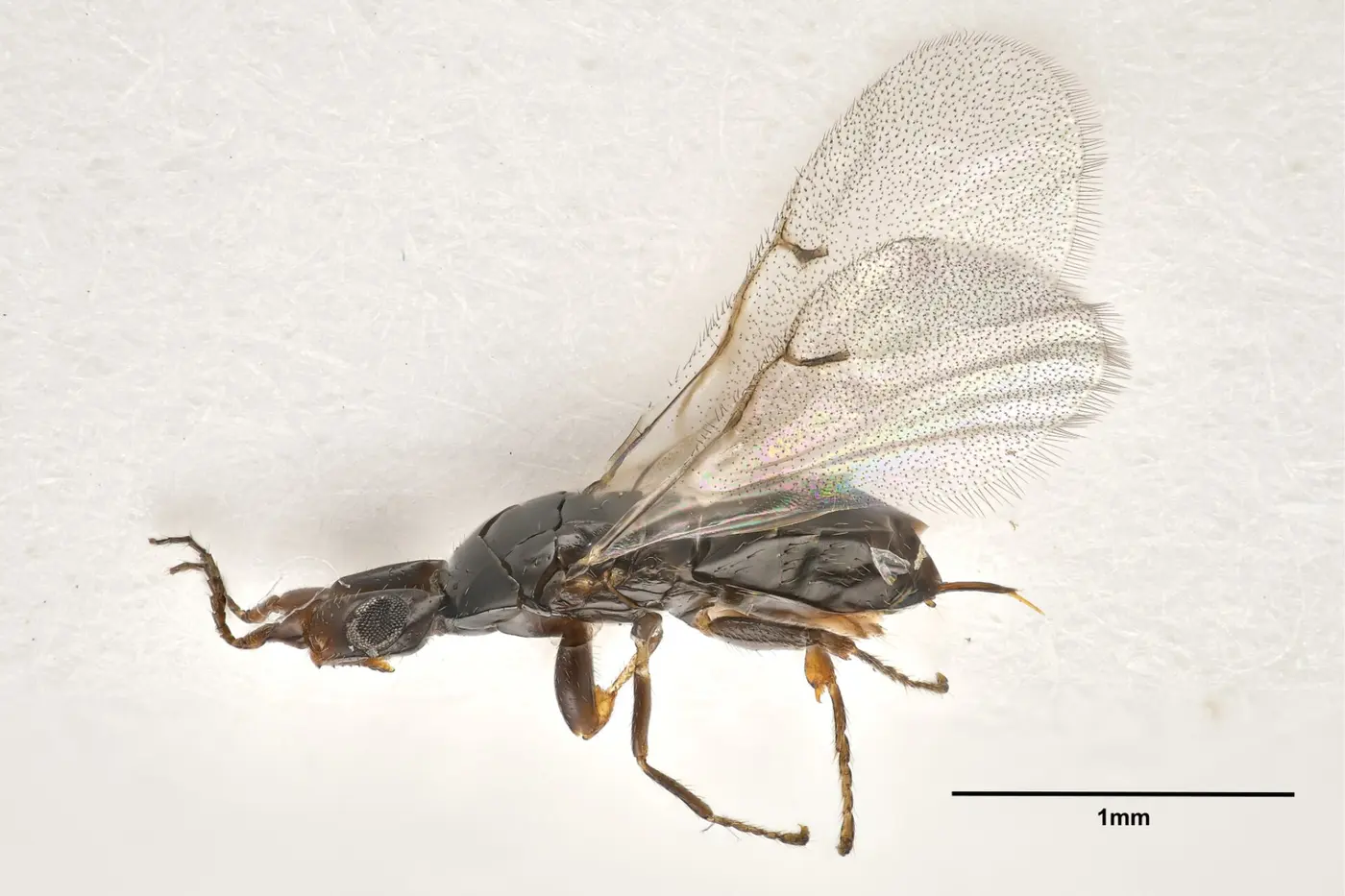
If the flowers are shut away inside a container, how does pollen get to them? Enter the fig wasp, an insect less than 2 millimeters long.
According to the Japanese encyclopedia Sekai Daihyakka Jiten, the edible fig comes in several groups, including the caprifig, which keeps the habits of its wild ancestors, and the Smyrna fig, which bears only female flowers. Inside a caprifig there are both male and female flowers. A female fig wasp squeezes in through a tiny opening at the bottom and lays her eggs in the female flowers. The larvae grow by eating the insides of the flowers’ ovaries. When the new generation of female wasps emerges, the male flowers have just ripened, so the wasps leave dusted with pollen and fly off to find another young fig.
The female flowers of the Smyrna fig have long styles, too long for the wasp’s egg-laying tube to reach the ovary. So the wasp delivers pollen there without being able to lay eggs. To get Smyrna figs to set fruit, growers have to plant caprifigs nearby. The Smyrna group has long been grown in Anatolia, in what is now Turkey, for drying.
There are nearly 900 species in the fig genus, mostly in the tropics, and each is said to have its own species of fig wasp. Even the inubiwa, a small wild fig of the Japanese countryside, has a wasp of its own.

Japanese figs need no wasps
So do the figs sold in Japan have wasps inside? Not at all. According to Sekai Daihyakka Jiten, the fig wasp cannot survive in Japan’s climate, so growers there plant varieties that ripen without pollination. Familiar Japanese varieties such as Horaishi and Masui Dauphine belong to the “common fig” group, whose fruit swells without being pollinated. Most figs grown in Japan have no embryos inside their tiny seeds.
Figs reached Japan in the early Edo period (1603–1868), during the Kan’ei era (1624–1644). According to Nipponica, Portuguese traders brought them under the name Horaishi, and that variety became Japan’s traditional fig. Today they are grown mainly in Aichi, Wakayama and Hyogo prefectures, among others. Where the Japanese name ichijiku comes from is debated. The older form ichijuku, “ripe in one,” already appears in a book called Tashikihen in 1631, and an Edo-period encyclopedia, Wakan Sansai Zue, explains that the fruit got that name because it ripens within a month. Another theory traces it to yingriguo, an old Chinese name for the fig.