Was the Trojan Horse real?
There is no evidence that it was. The city of Troy really existed, but the wooden horse belongs to poems such as the Odyssey and the Aeneid.
For ten years the Greeks besieged Troy, a city in Asia Minor, without success. So they built a huge wooden horse, hid soldiers inside, left it on the beach and sailed away, or pretended to. The Trojans hauled the horse into their city, and that night the soldiers climbed out and opened the gates. Today a “Trojan horse” is anything that hides a trap behind an innocent face.
Was there ever such a horse? Follow the trail back and the first surprise comes quickly: the most famous poem about the Trojan War never mentions it.
Not in the Iliad
Homer’s Iliad covers only a few weeks in the tenth year of the war. It follows the wrath of the hero Achilles and ends with the funeral of the Trojan champion Hector. There is no horse and no fall of Troy.
The horse appears instead in the Odyssey, also attributed to Homer. Menelaus, king of Sparta, remembers hiding inside it while Helen, then living among the Trojans, walked around it three times, calling out the names of the Greek leaders in the voices of their wives. One man almost answered, until Odysseus clapped his hands over his mouth. Later the bard Demodocus sings of the horse that Epeius built with the help of the goddess Athena, and of the Trojans arguing over whether to break it open, throw it off a cliff, or keep it as an offering to the gods.
Other early epics, the Little Iliad and the Sack of Ilion, told the story at greater length, but they are lost, surviving only in fragments and later summaries. The fullest version we have today is in the Aeneid, written by the Roman poet Virgil in the late first century BC. There the priest Laocoön warns the Trojans, “I fear the Greeks, even when they bring gifts,” but no one listens.
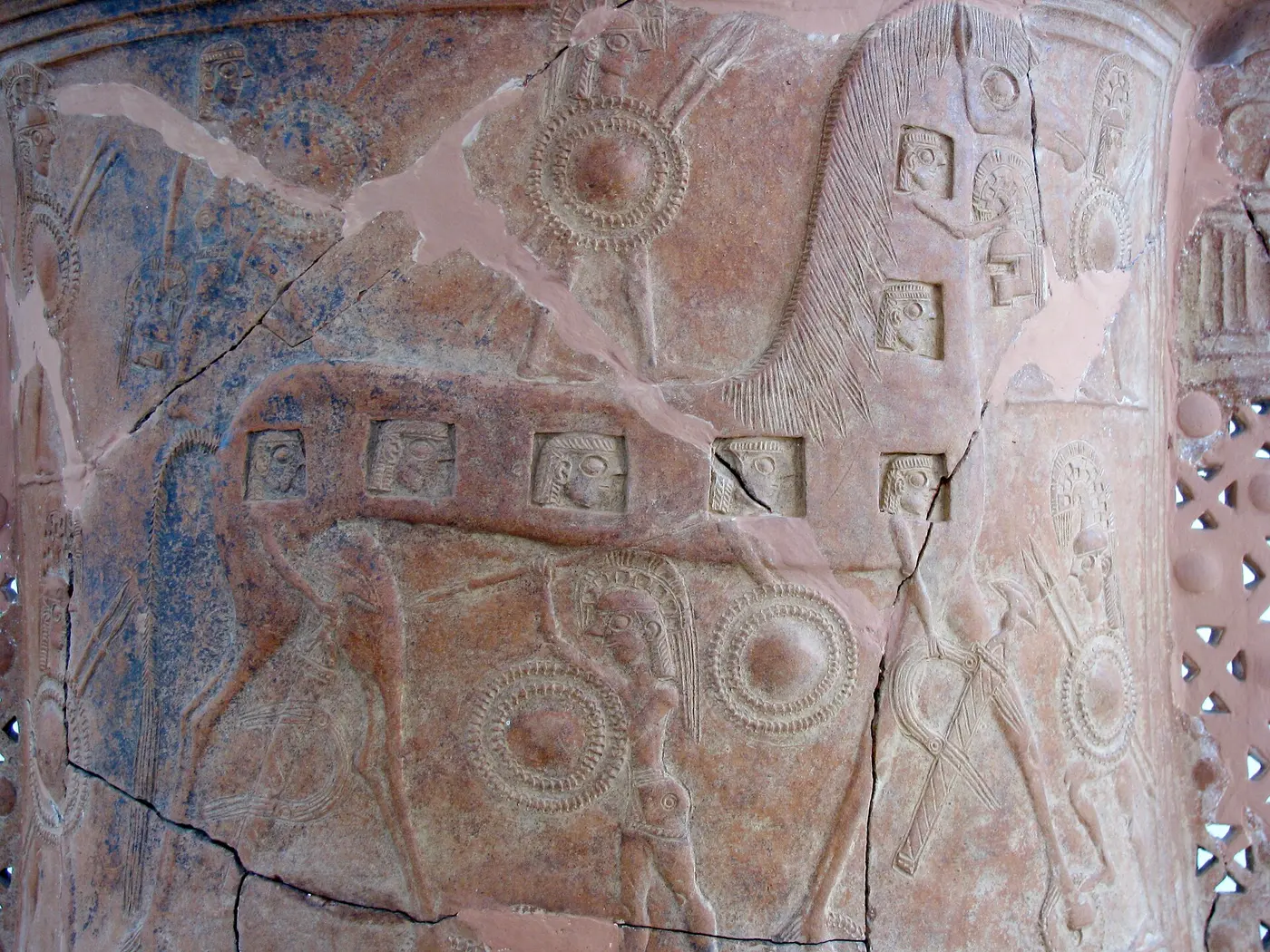
Pictures of the horse are far older than Virgil’s poem. One of the earliest is on a large storage jar found on the Greek island of Mykonos in 1961 and dated to around 675 BC. As Ancient World Magazine describes it, the jar stands 1.34 m (4 feet 5 inches) tall, and on its neck is a gigantic horse on wheels, with small windows through which the faces of warriors peer out. By the seventh century BC, the story was clearly well known.

The mound Schliemann dug
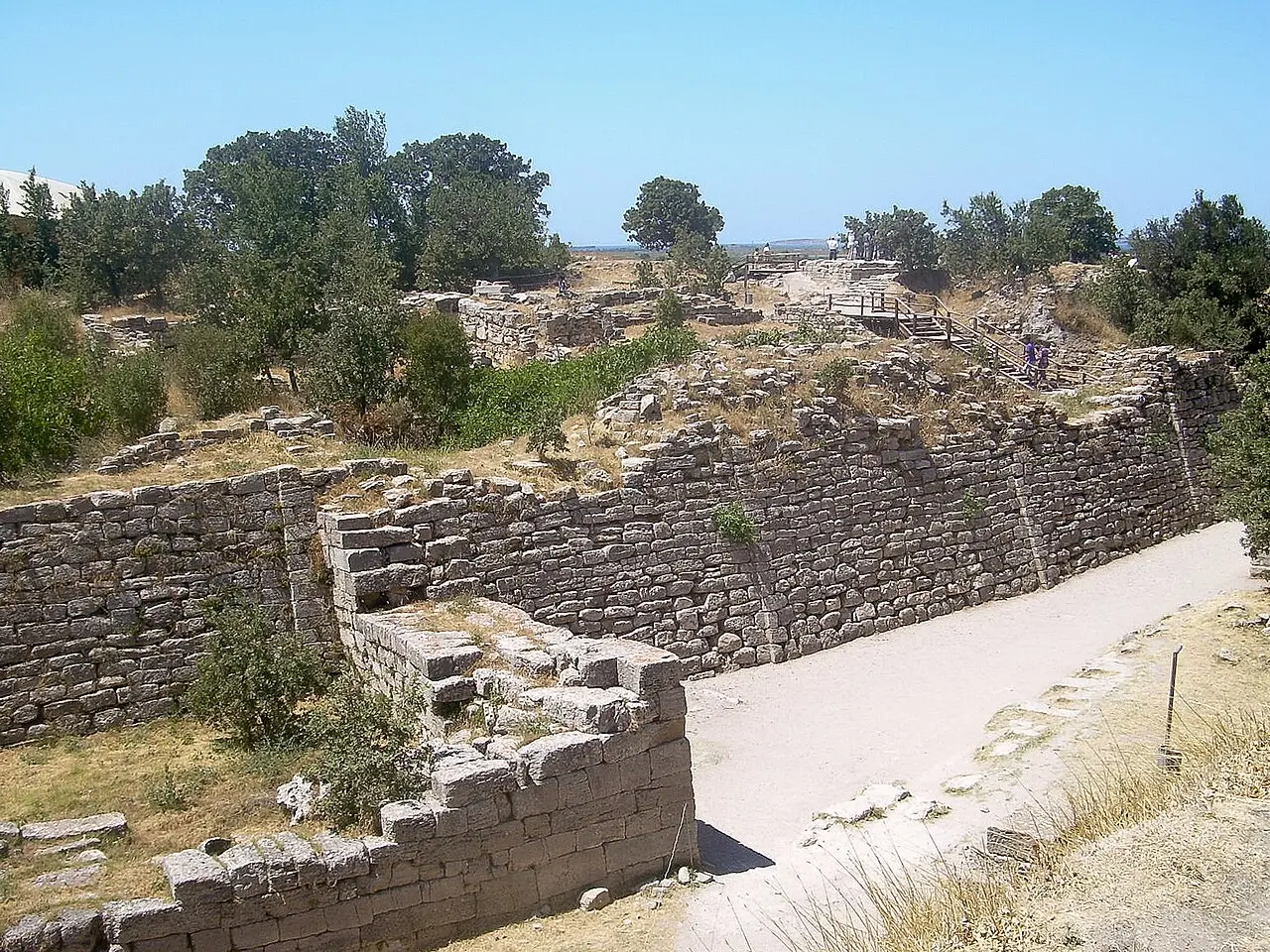
Did Troy itself exist? Its remains are generally identified with the mound of Hisarlık in northwestern Turkey, near the Dardanelles. The German businessman Heinrich Schliemann dug there on a large scale from 1870 to 1890, and German and American teams have continued the work ever since.
According to a 2002 article in the journal Anatolian Studies, people lived on the mound throughout the Bronze Age, from about 3000 to 1000 BC, and the city was rebuilt many times. The gold and silver hoard Schliemann called “Priam’s Treasure” turned out to come from a layer of the third millennium BC, roughly a thousand years older than the era in which the Trojan War is supposed to have taken place.
The same article supports the view that “Wilusa,” a land named in the records of the Hittite empire, was Troy, known in Greek as Ilios. Wilusa was at one point a bone of contention between the Hittite king and the king of “Ahhiyawa,” a power from the Aegean side. A city of Troy and a quarrel with people from across the sea may not have been pure invention.

No trace of the horse
Of the horse itself, though, there is no trace, neither in the ruins nor in any record. It exists only in the stories the poets passed down.
Even in antiquity, not everyone took the tale literally. Pausanias, a Greek travel writer of the second century AD, remarked that “the work of Epeius was a contrivance to make a breach in the Trojan wall” was “known to everybody who does not attribute utter silliness to the Phrygians,” that is, the Trojans. The idea that the horse was really a siege engine is nearly 2,000 years old.