When was tonkatsu invented?
Pork cutlets deep-fried in plenty of oil had appeared in Japan by the 1880s and 1890s, and the name “tonkatsu” was in use by about 1910. No single restaurant can claim to have invented it.
A thick slice of pork in a crunchy golden crust, served with a heap of finely shredded cabbage. Tonkatsu, the Japanese pork cutlet, is a classic of yoshoku, the Western-inspired cooking Japan made its own from the late 19th century.
There is a well-known story about where it came from. In 1899, the tale goes, Rengatei, a Western-style restaurant in Tokyo’s Ginza district, took the European cutlet and deep-fried a pork version like tempura, calling it a “pork cutlet.” Then in 1929, a restaurant in the Ueno district came up with the thick-cut “tonkatsu.” But old cookbooks and essays tell a messier story.
A dish once cooked in butter
The Japanese word katsuretsu is a corruption of the English “cutlet,” which goes back to the French côtelette, originally a rib chop of pork, veal or lamb. According to the Japanese encyclopedia Sekai Daihyakka Jiten, the English used the word for slices of veal or lamb coated in flour, egg yolk and breadcrumbs and then browned on both sides in butter. It was not deep-fried.
The cutlet first appeared in Japanese print in 1872, when two Western cookbooks published that year included recipes for it. The same encyclopedia says that cutlets only started turning up on ordinary Japanese tables in the late 1890s and early 1900s, thanks to the arrival of Japanese-made Worcestershire sauce and the ingenuity of neighborhood yoshoku cooks. Frying the meat in a deep pan full of oil was a technique borrowed from tempura. And a freshly fried cutlet doused in sauce went beautifully with a bowl of white rice.
Pork cutlets before Rengatei
Rengatei opened in Ginza in 1895 and is still in business today. Many popular histories of tonkatsu say that in 1899 it began serving a pork cutlet made with pork instead of beef and deep-fried like tempura. (Some accounts give 1904 instead.) The restaurant is also credited with the shredded cabbage. According to the story, during the Russo-Japanese War of 1904–05 its cooks were drafted, and the short-handed kitchen replaced fussy cooked vegetables with raw cabbage cut into thin strips.
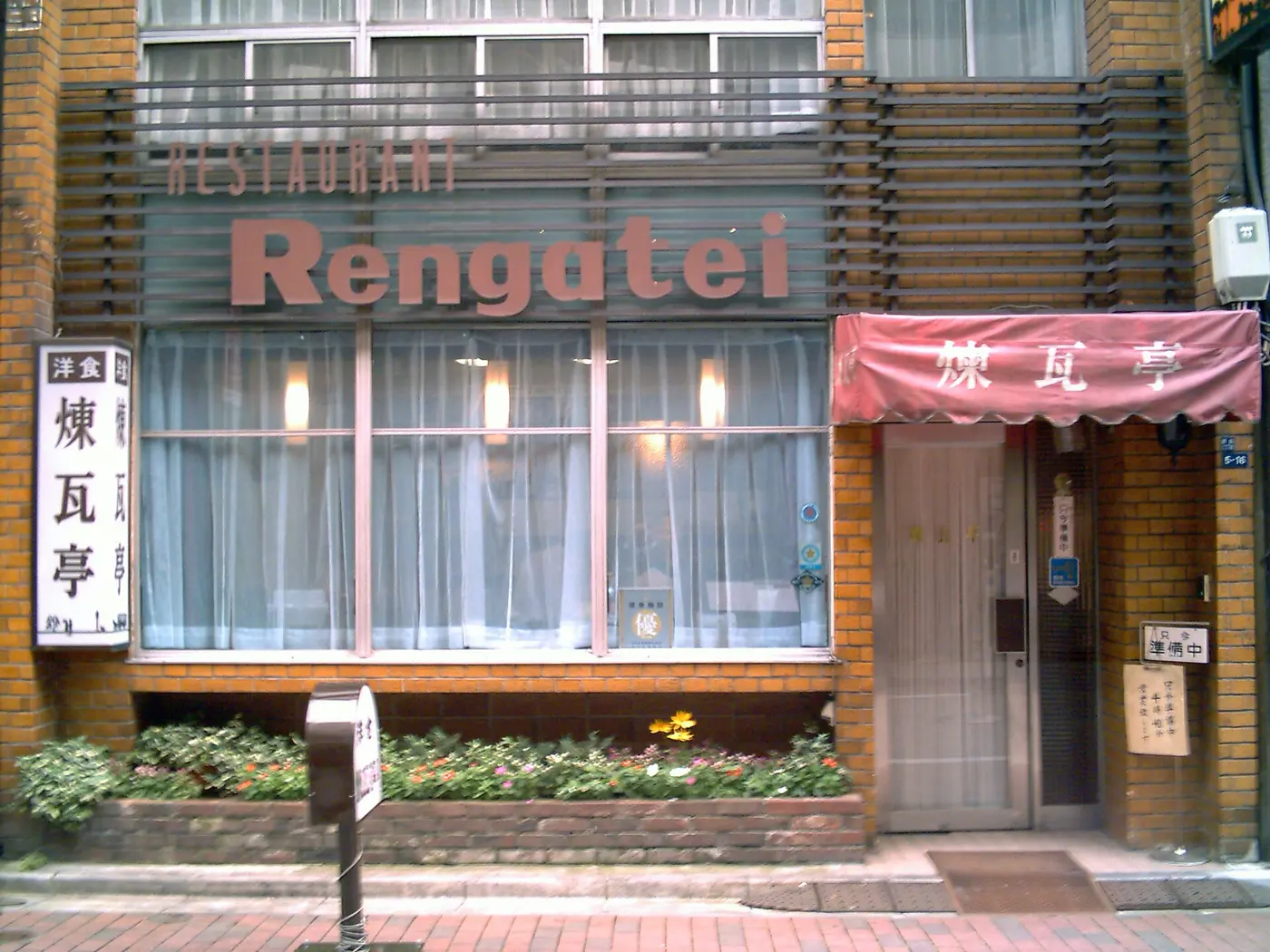

However, a 2019 paper by Yasushi Masuko in the journal of the Japanese Society for Global Social and Cultural Studies points out that most of these accounts were copied from earlier books without checking the original sources. According to the paper, an 1888 cookbook, Keiben Seiyo Ryoriho Shinan (A Handy Guide to Western Cooking), already gave a recipe for a cutlet of pork loin, pounded thin, coated in flour, egg yolk and breadcrumbs, and fried in enough oil to cover the meat. A guide to Tokyo published by the Jiji Shimpo newspaper in 1890 also mentions a “pork cutlet.” Masuko accepts that Rengatei did much to popularize the dish, but argues that other restaurants may well have developed something similar, and that it is unfair to treat Rengatei as the sole inventor.
Street-stall “tonkatsu”
The name “tonkatsu” was also around well before 1929. (Ton is the Sino-Japanese reading of the character for pork.) In his 1911 essay “Ginza,” the novelist Nagai Kafu wrote that some people would rather catch a whiff of tonkatsu burps at a street stall than eat Western food at the Imperial Hotel. The fried pork sold at the stalls, he observed, had already left its Western pretensions behind and become something new, without stepping on the toes of tempura.
According to Masuko, Tokyo in the late 1890s and early 1900s was full of street stalls selling fried foods, steaks, stews and other Western dishes. Cutlets spread through these stalls as well as through fancier restaurants, and by the late 1900s the stall version was being called tonkatsu. The name rarely appeared in cookbooks for home cooks, though, which suggests it was seen as slang.
The thick-cut tonkatsu
So what about 1929? According to Hakurai Jibutsu Kigen Jiten, a Japanese dictionary of the origins of imported things, and other books, a cook named Shinjiro Shimada, said to have made Western food in the Imperial Household kitchens, fried thick slices of pork at a restaurant called Ponchiken in Tokyo’s Ueno district and named the dish “tonkatsu,” written in the rounded hiragana script. Other accounts say Shimada founded Ponta, a Ueno restaurant dating from 1905. The details vary from source to source.
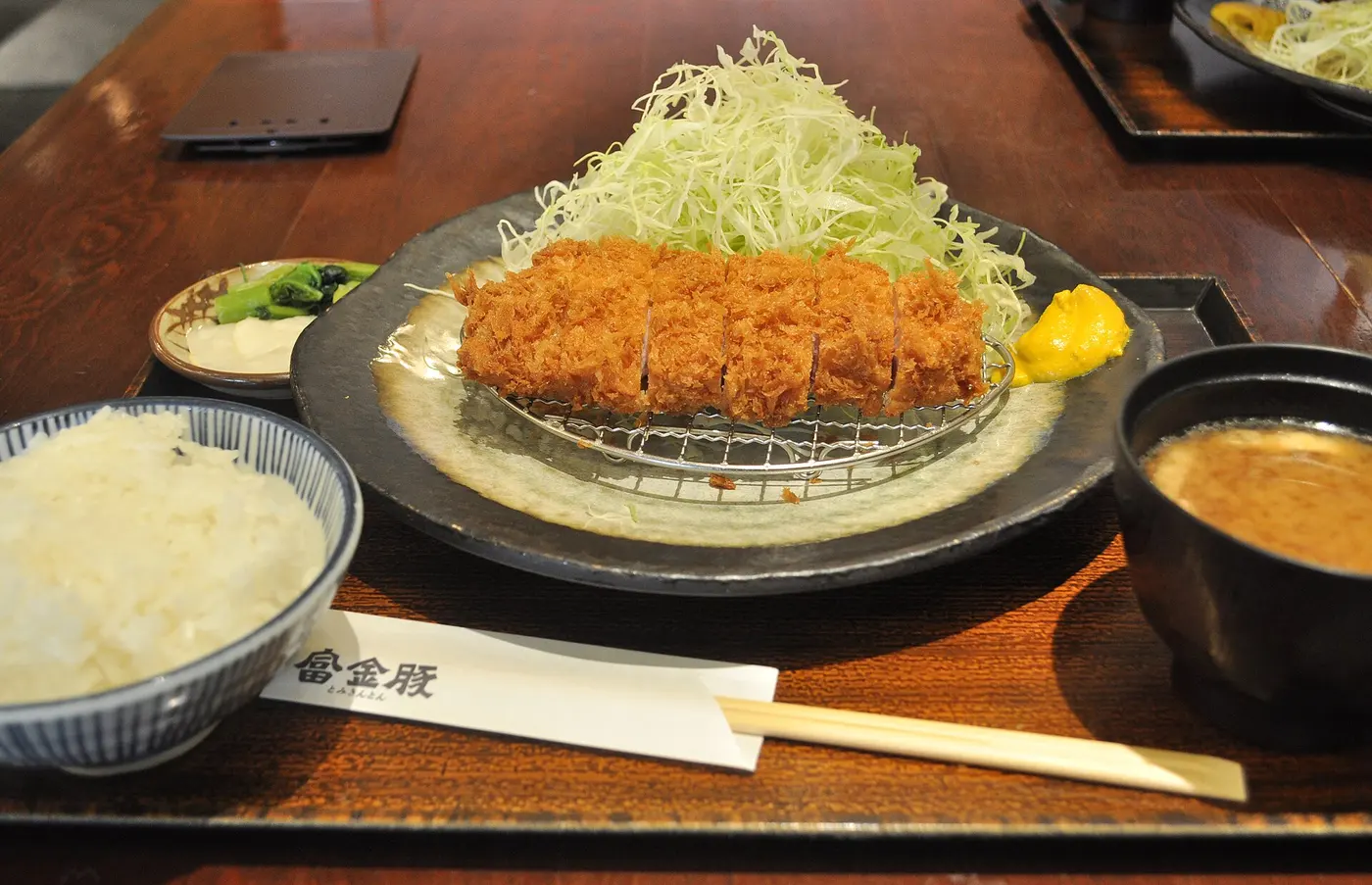

Either way, the name itself had existed since the Meiji era (1868–1912). What happened around 1929 is better seen as the arrival of something close to today’s tonkatsu, a thick piece of pork fried slowly, than as the birth of the name. By around 1932, restaurants such as Rakuten in Ueno and Kitahachi in Asakusa were drawing crowds with tonkatsu, and specialist shops multiplied. Over several decades, a European dish cooked in butter had borrowed tempura’s technique and the energy of the street stalls to become the perfect partner for a bowl of rice.