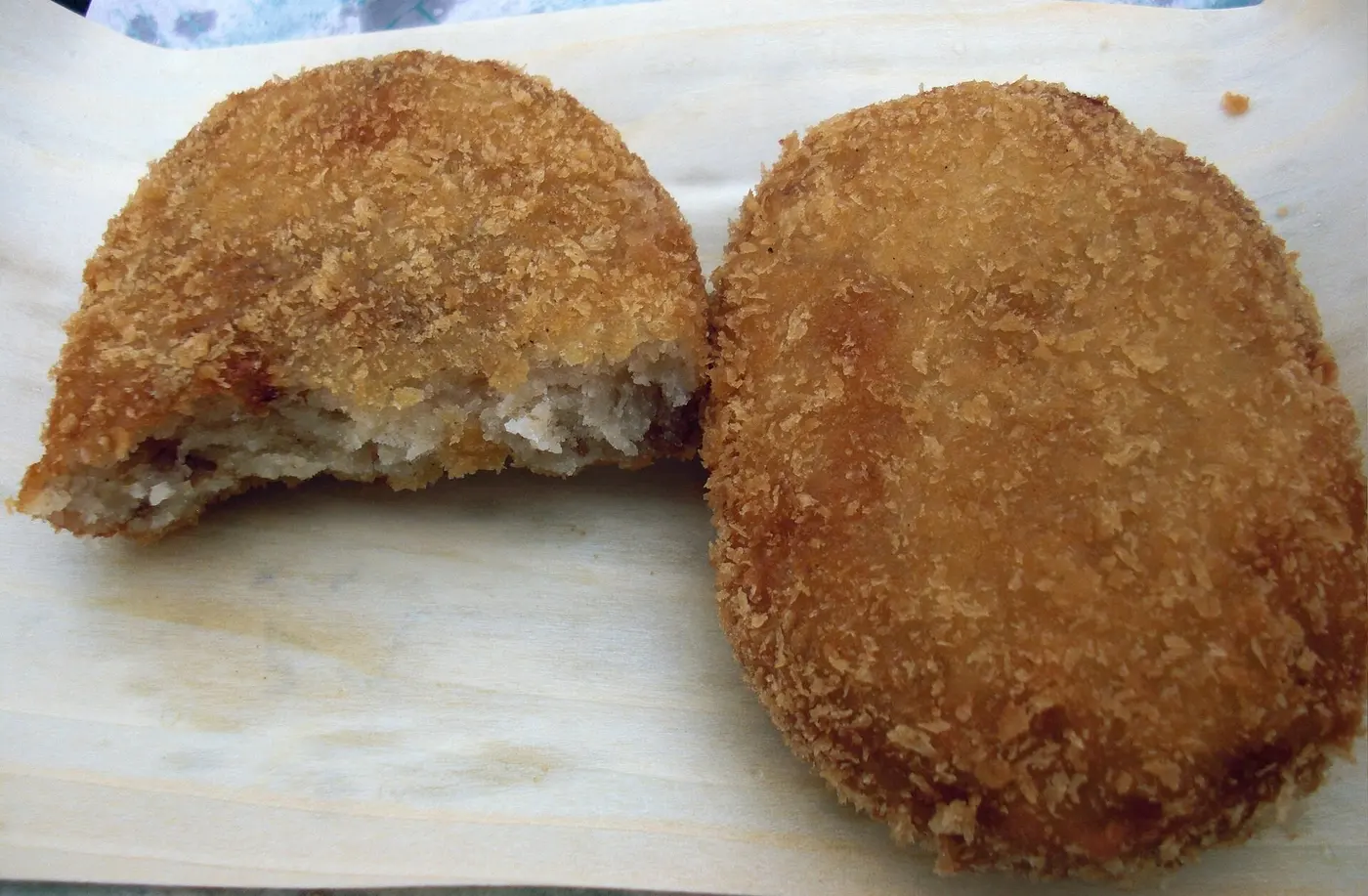
When did croquettes come to Japan?
In the early Meiji era. The French croquette arrived in the 1870s, and a cookbook from 1872 already describes a Japanese version made with potatoes.
In Japan you can buy them at almost any neighborhood butcher: golden, oval potato croquettes called korokke, handed over hot and wrapped in paper. Douse one in sauce and eat it with rice, or tuck it into a bread roll. Few fried foods are more familiar.
Korokke trace their ancestry to the French croquette. But the croquette changed almost as soon as it reached Japan, and in the 1910s a single song, first performed on a Tokyo stage, helped make it a household word.
From croquette to korokke
The French word croquette turns up in an 18th-century cookbook. It comes from the verb croquer, meaning to crunch.
According to Japan’s Heibonsha World Encyclopedia, a European croquette is made from chopped seafood or meat bound with béchamel sauce or potato purée, coated in flour, egg yolk and breadcrumbs, and fried. The Japanese equivalent would be a cream croquette.
In Japan, though, the potato quickly took over. The same encyclopedia names the oldest known Japanese description as one in Seiyo Ryori Shinan (A Guide to Western Cooking), published in 1872, early in the Meiji era (1868–1912). It describes a way to make “something like what is commonly called ganmodoki,” a fried tofu patty. Mash ten large potatoes, mix in about 300 grams (two-thirds of a pound) of finely minced raw beef, shape it like a round bun, coat it with flour, egg yolk and breadcrumbs in turn, and fry it in beef fat. The author was explaining an unfamiliar dish by comparing it to familiar ones.
Within a few years, the encyclopedia observes, the European croquette had been remade to Japanese taste. The filling became mashed potato with a little ground meat and onion, and the sauce on top was a Japanese Worcestershire sauce, closer in flavor to soy sauce. It seems to have been designed as a side dish to go with rice.
“Croquettes today, croquettes tomorrow”
By around 1900, the encyclopedia says, korokke were appearing at neighborhood Western-style restaurants. Then came the song.
In May 1917, the Imperial Theatre in Tokyo’s Marunouchi district staged the premiere of Dotchadanne, a comedy by Tarokaja Masuda. Masuda was a businessman linked to the Mitsui conglomerate who helped run the theater and wrote comic plays for its stage. One of the songs in the show was “Korokke,” later known as “The Croquette Song.”
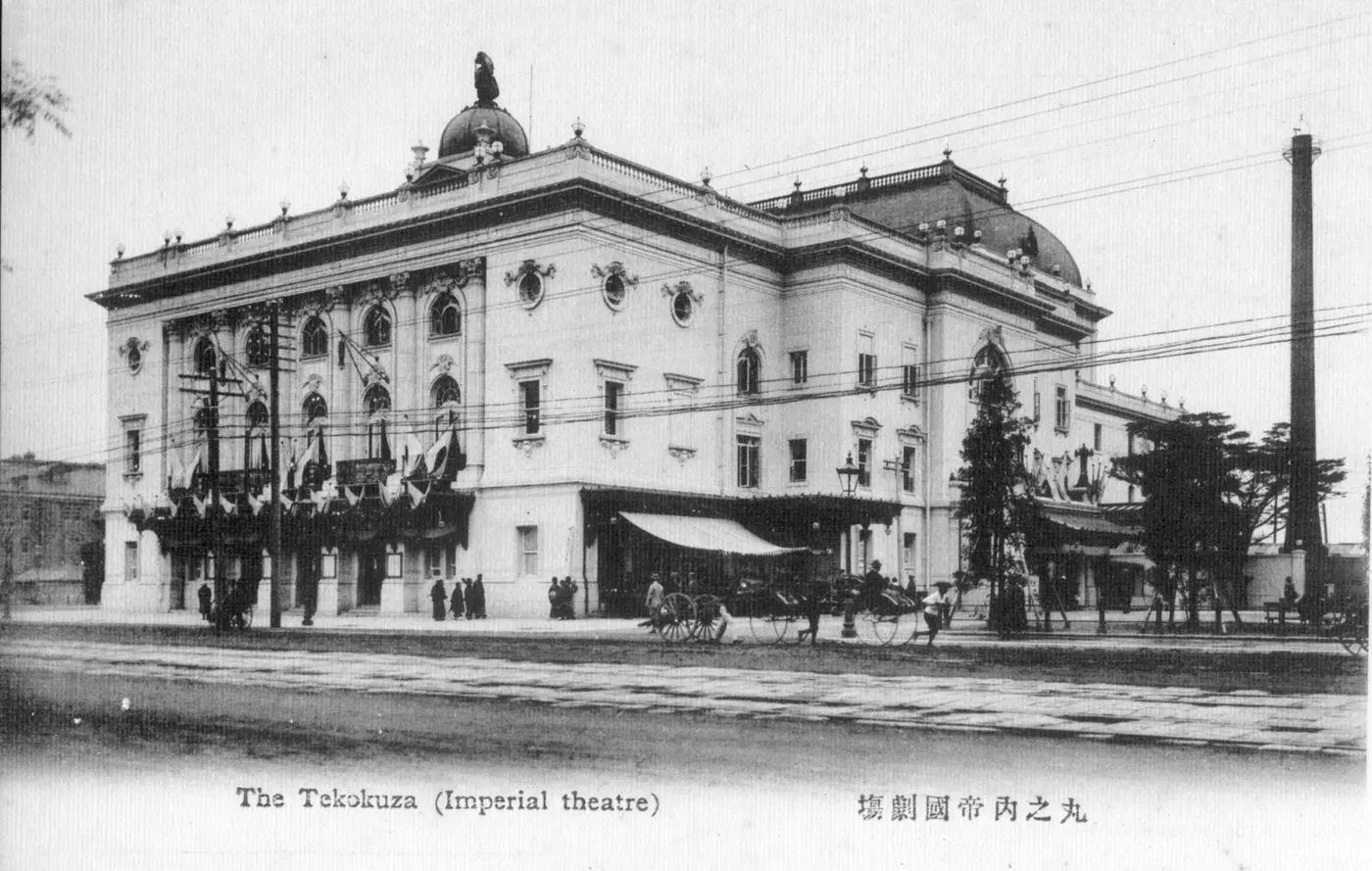

It is a comic lament from a newlywed husband whose wife serves croquettes at every meal. Its refrain, “Croquettes today, croquettes tomorrow,” caught on, and in October of that year it was sung again in The Café at Night, a production in Tokyo’s Asakusa entertainment district. That is why it is often credited to the later show. But a 2014 exhibition on Masuda at the Tsubouchi Memorial Theatre Museum of Waseda University stressed repeatedly that the song was written for Dotchadanne.
Interestingly, the song does not seem to have been mocking korokke as cheap food. The Heibonsha World Encyclopedia, discussing a 1920 revival of Dotchadanne at the Imperial Theatre, says the song spread everywhere and established korokke as a stylish dish for the modern home. Having croquettes every day was, it seems, the problem of a fashionable young household.
The “big three” of Western food
By the Taisho era (1912–1926), tonkatsu (breaded pork cutlet), curry rice and korokke had come to be known as the “three great Western dishes.” The lifestyle historian Mari Ako writes that all three had become popular by the Taisho era and were widely loved. Each one started as a European dish and was reshaped in Japan to go with a bowl of rice.
The encyclopedia Nihon Daihyakka Zensho says that the potato-based Japanese korokke spread widely in the early Showa era, around the late 1920s and 1930s, and has been a staple of home cooking ever since.
To the butcher’s counter
Buying korokke from the butcher is also said to have begun in the early Showa era. Choshiya, a butcher shop in Tokyo’s Ginza district that opened in 1927, is often described as a pioneer of the butcher-shop croquette.
A butcher has lard for frying and trimmings of meat close at hand, which makes it possible to sell good croquettes cheaply. And so korokke went from a fashionable dish celebrated on the stage to an everyday snack picked up on the way home.