Is castella a Portuguese cake?
It began as a cake the Portuguese brought to Japan, but its name comes from a Spanish kingdom, and its moist texture is a Japanese development.
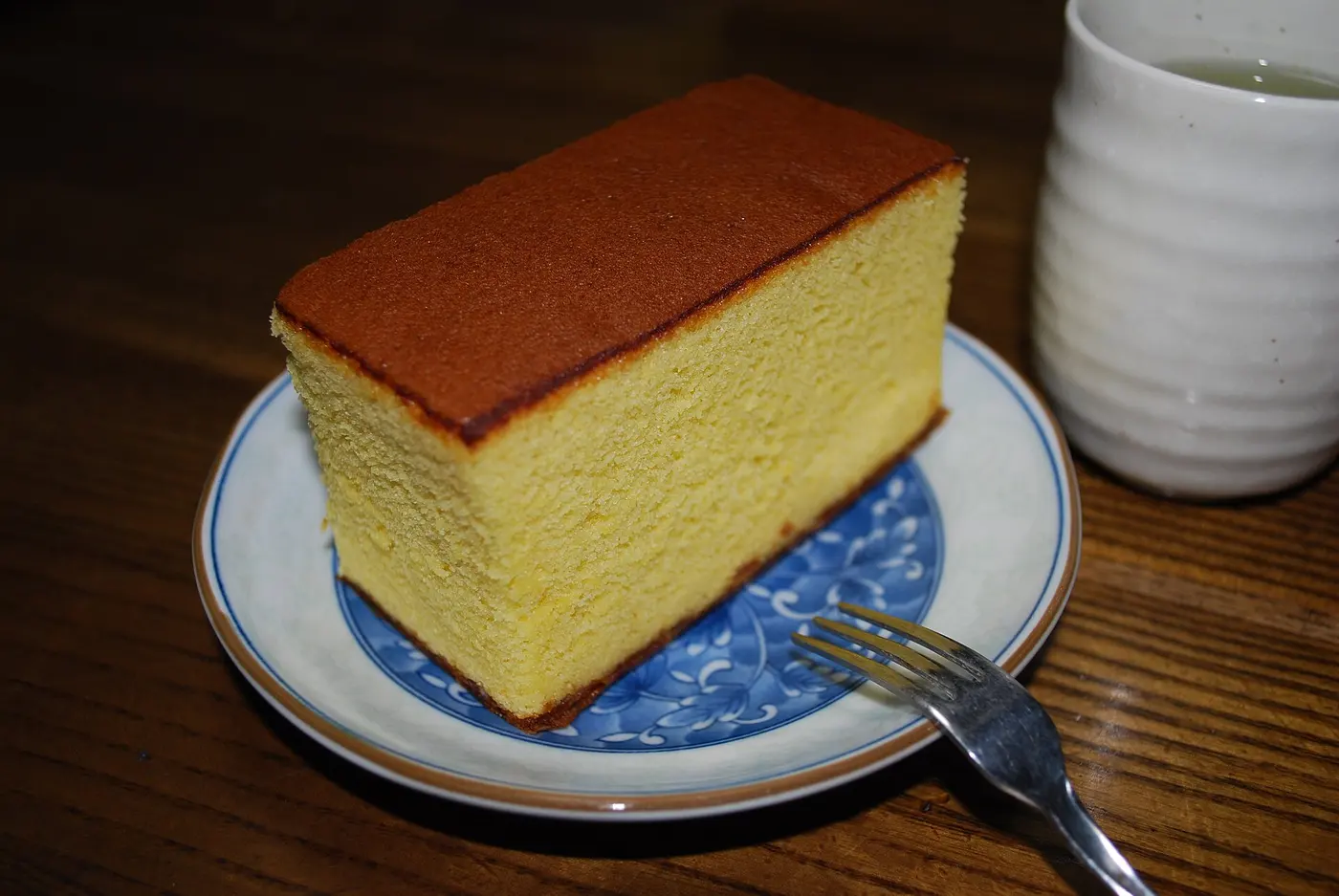
A soft yellow crumb under a dark brown top, with crunchy sugar crystals peeking out from the bottom: castella, or kasutera, is the classic souvenir of Nagasaki, the port city in southwestern Japan. It is often introduced as a “southern barbarian” sweet, the old Japanese term for things brought by Portuguese and Spanish visitors.
Yet if you walk into a pastry shop in Portugal and ask for castella, you won’t find anything quite like it. So is castella really a Portuguese cake?
Named after a Spanish kingdom
Start with the name. The leading theory traces “castella” to the Kingdom of Castile, the realm at the heart of what became Spain. In Portuguese, Castile is Castela, and the idea is that Portuguese visitors described the cake as pão de Castela (“bread of Castile”) or bolo de Castela (“cake of Castile”), which Japanese speakers shortened to kasuteira. The city of Nagasaki itself explains the name this way on its pages for children.
Another theory says bakers whipping egg whites would urge them to rise “high like a castle” (castelo), but this explanation is generally considered weak.
So what was the original cake? Its closest relative is thought to be the Portuguese pão de ló, a sponge cake made from nothing but eggs, sugar and flour, with no baking powder: it rises on the air beaten into the eggs, just like castella.
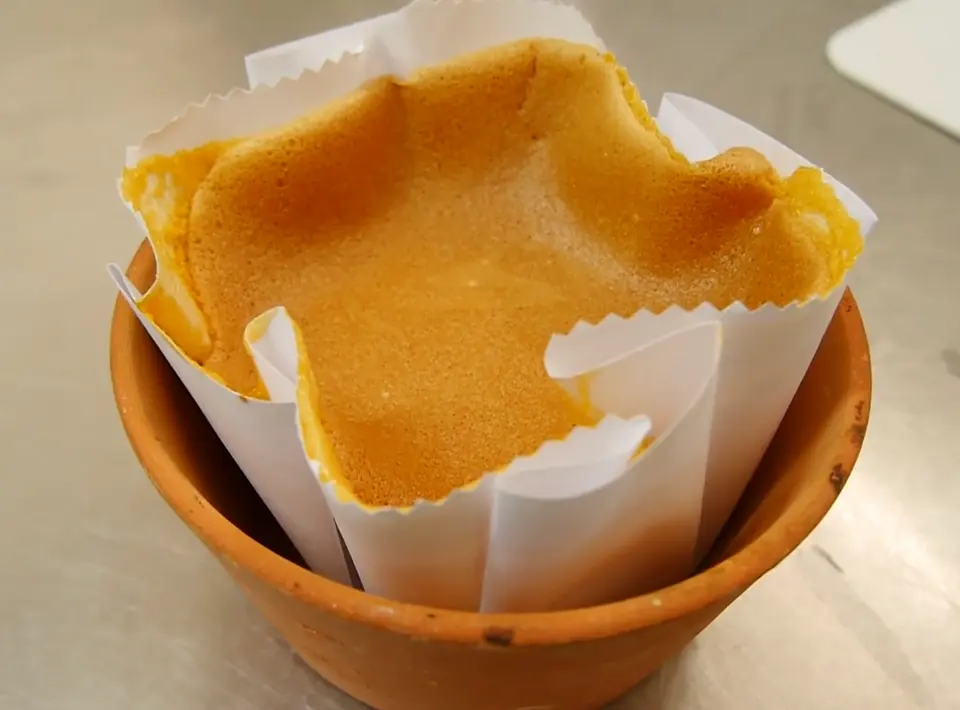

A luxury for lords
Castella is thought to have reached Japan in the second half of the 16th century, after Portuguese ships began calling at Japanese ports. Along with Christian missionaries came a whole range of “southern barbarian” sweets, including konpeitō sugar candies and bōro biscuits.
Sugar was extremely precious at the time, and castella was a delicacy for the elite. The Taikōki, a chronicle published in 1625, mentions guests who did not drink alcohol being entertained with kasuteira and bōru. The following year, 1626, when Emperor Go-Mizunoo paid a ceremonial visit to Nijō Castle in Kyoto, castella is said to have been among the southern barbarian sweets served at the banquet.
The castella of the Edo period (1603–1868), however, seems to have been rather different from today’s. The archives of Toraya, a centuries-old maker of Japanese sweets, note that period recipe books suggest it was far less sweet and far less airy than what we eat now.
The moistness is made in Japan
Fukusaya, one of Nagasaki’s oldest castella makers, was founded in 1624. According to the company, its founder, a trader dealing in sugar and other goods, learned to make castella from the Portuguese.
Over time, castella gradually changed to suit Japanese tastes. The biggest changes came from the Meiji era (1868–1912) onward. Adding mizuame, a Japanese starch syrup, gave the cake its moist texture, and ovens and other modern equipment made it possible to bake it consistently. Spreading coarse zarame sugar on the bottom, for a pleasant crunch, also became popular.

Pão de ló, meanwhile, went its own way in Portugal, developing distinct regional styles. The version from Ovar is known for a moist, almost underbaked center, and in 2016 it was registered as a Protected Geographical Indication in the European Union. From a common ancestor, the cake evolved in two different directions in Portugal and Japan. Japanese castella then traveled on to Taiwan during the period of Japanese rule, where it turned into a fluffy, soufflé-like Taiwanese castella.
Thanks to this history, castella is now often counted among wagashi, traditional Japanese confections. Its roots are a Portuguese sweet, its name comes from a Spanish kingdom, and its present-day flavor was shaped in Japan. Castella carries a little of three countries in every slice.