What is the “hayashi” in hayashi rice?
Nobody knows for sure. One story credits Yuteki Hayashi, founder of the Maruzen bookstore; the other says it is a Japanese twist on the English word “hash.”
1888
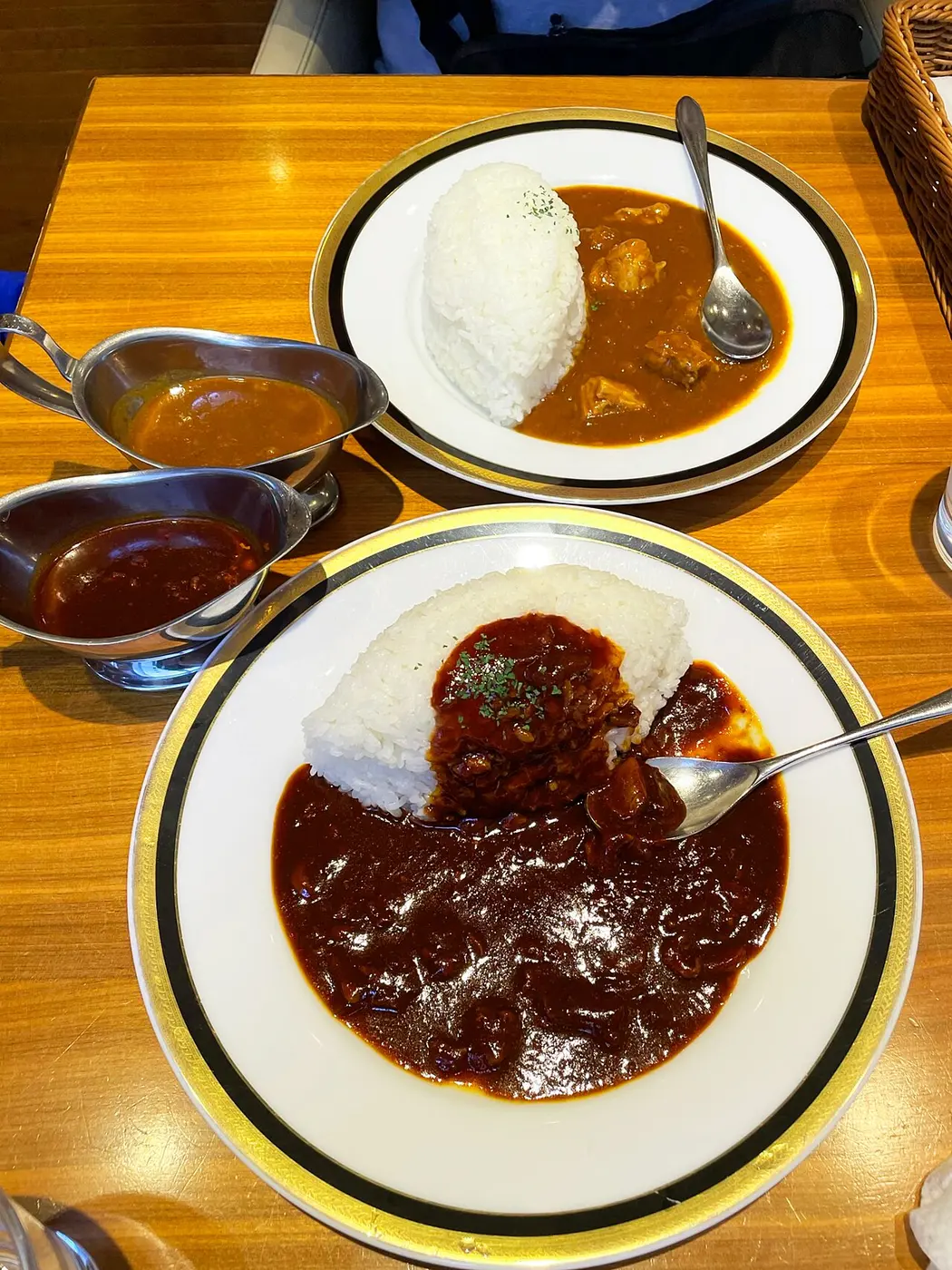
Thin slices of beef and onion, simmered in a glossy demi-glace and spooned over rice: hayashi rice is a pillar of yoshoku, the Western-style cooking that Japan adapted from European cuisine. It sits alongside curry rice on diner menus, and like curry, it comes in boxed roux for cooking at home.
But what is “hayashi”? There are two well-known answers, and the argument between them has never been settled. Follow the trail, and you end up at an unexpected sentence in an unexpected place.
The bookseller theory
The first answer is that Hayashi was a person: Yuteki Hayashi, founder of Maruzen, the venerable bookstore in Tokyo’s Nihonbashi district. His family name is written with unusual characters, but it is pronounced exactly like the dish.
According to a profile in Mita Hyoron, the magazine of Keio University, Hayashi was born in 1837 in Mino Province (today’s Gifu Prefecture) and trained as a doctor. He practiced in Edo (now Tokyo), studied at the school of the educator Fukuzawa Yukichi, and in 1868 opened a small bookshop in the port of Yokohama. The trading company he launched the following year became Maruzen, famous for importing Western books.
A 2017 announcement from the bookstore chain Maruzen Junkudo says that hayashi rice is believed to have been devised by Hayashi in the early Meiji era (1868–1912), and named after him, while adding “there are various theories.” Hayashi, the story goes, was friendly with foreign residents and familiar with Western cooking. When friends dropped by, he would stew whatever meat and vegetables were at hand and serve them with rice. People called it “Mr. Hayashi’s rice,” and eventually “hayashi rice” turned up on restaurant menus. The company has named September 8, Hayashi’s birthday, “Hayashi Day,” and its in-store café serves a dish spelled with his name.


“Rather too interesting”
There’s a catch. Maruzen’s own centennial history, published in 1980, tells the same story and then adds: “But this tale is rather too interesting.”
The history goes on to explain that “hash” in English means chopped meat, and by extension a stew of meat and vegetables. At Mikawaya, a Western-style restaurant in Tokyo’s Kanda district that Hayashi and his circle frequented, hashed beef was a popular dish. “Combining this with ‘rice,’” the history concludes, “must surely be the origin of the name hayashi rice.” Then, out of politeness to the founder, it adds that since Mikawaya was one of his favorite restaurants, one could perhaps say he was connected to the name indirectly.
That skeptical view goes back further still, to a 1935 biography of Hayashi by Hachiro Ebihara in the journal Meiji Bunka Kenkyu. Ebihara found the home-cooking story “a little too interesting,” asked Hayashi’s son Shiro about it, and learned, as he had suspected, that it was a garbled tale. As Shiro told it, hashed beef was fashionable at Mikawaya until around 1887, and somewhere along the way “hash beef” turned into “hayashi beef.” The company history follows Ebihara’s account almost step by step.
“Hayashi beef” in an 1888 cookbook
Old cookbooks back this up. A Japanese guide to Western cooking published in 1888, now viewable in the National Diet Library’s digital collections, includes a recipe called “hayashi bifu,” or hayashi beef. Slice roast beef thin, sauté it in butter with sliced onion, add stock and a little stew sauce, simmer, and serve topped with fried bread. There is no rice, but the dish is recognizably today’s hayashi.
It is also a faithful copy of an English standby. Mrs. Beeton’s famous Book of Household Management, published in Britain in 1861, lists hashed beef under “cold meat cookery”: leftover roast beef, sliced thin and warmed in gravy with minced onion and tomato sauce, garnished with toasted bread.
Why did “hash” become “hayashi”? The linguist Minoru Umegaki suggested in Nihon Gairaigo no Kenkyu, his study of Japanese loanwords, that the word was pulled toward hayasu, a verb meaning “to chop finely” that was still in common use in the Meiji era.

Even the dictionaries disagree
Japan’s dictionaries cannot agree either. The Nihon Kokugo Daijiten, the country’s largest dictionary, gives Yuteki Hayashi’s name first and mentions “hashed rice” only as an alternative theory. The Digital Daijisen lists both possibilities side by side. The encyclopedia Nihon Daihyakka Zensho says the name is said to come from hashed beef.
A third story credits a cook named Hayashi at Seiyoken, a historic restaurant in Tokyo’s Ueno Park, who supposedly served the dish to the staff. We could find no record that such a cook existed.
What we can say is that dishes called “hayashi” were in print by the late 1880s, and that Maruzen’s own history dismissed the founder theory as too good to be true. Even so, Yuteki Hayashi’s name lives on in a plate of rice at the company’s café. That easygoing ambiguity may be part of the dish’s charm.