What was the vacuum flask originally invented for?
To keep liquefied gases extremely cold. The Scottish scientist James Dewar made the first one in 1892 for his laboratory work.
−183°C
Pour in tea or coffee in the morning, and it is still hot hours later. On the way to school, on a mountain trail or on an office desk, the vacuum flask is a trusty companion. In Japan it is even called mahōbin, the “magic bottle.”
Yet the reason the flask was first made had nothing to do with keeping things warm. What it was meant to protect was an extreme cold.
Guarding liquefied gases
The inventor of the vacuum flask was James Dewar (1842–1923), a scientist from Scotland who worked at the Royal Institution in London. In the late 19th century he was busy cooling gases such as oxygen until they turned into liquids. According to Encyclopaedia Britannica, by 1891 he had built a machine that could produce liquid oxygen in quantity.
The trouble is that oxygen stays liquid only at temperatures of around −183°C (−297°F). Put it in an ordinary container, and heat seeps in from the surroundings until it boils away. How could he keep his hard-won liquids long enough to experiment with them?
His answer, in 1892, was a vessel made of two glass flasks, one inside the other, with most of the air removed from the gap between them and the neck sealed. According to the Royal Institution, it was first put on show there on Christmas Day that year. Later versions had an even narrower neck and a silvered coating to cut heat loss further.
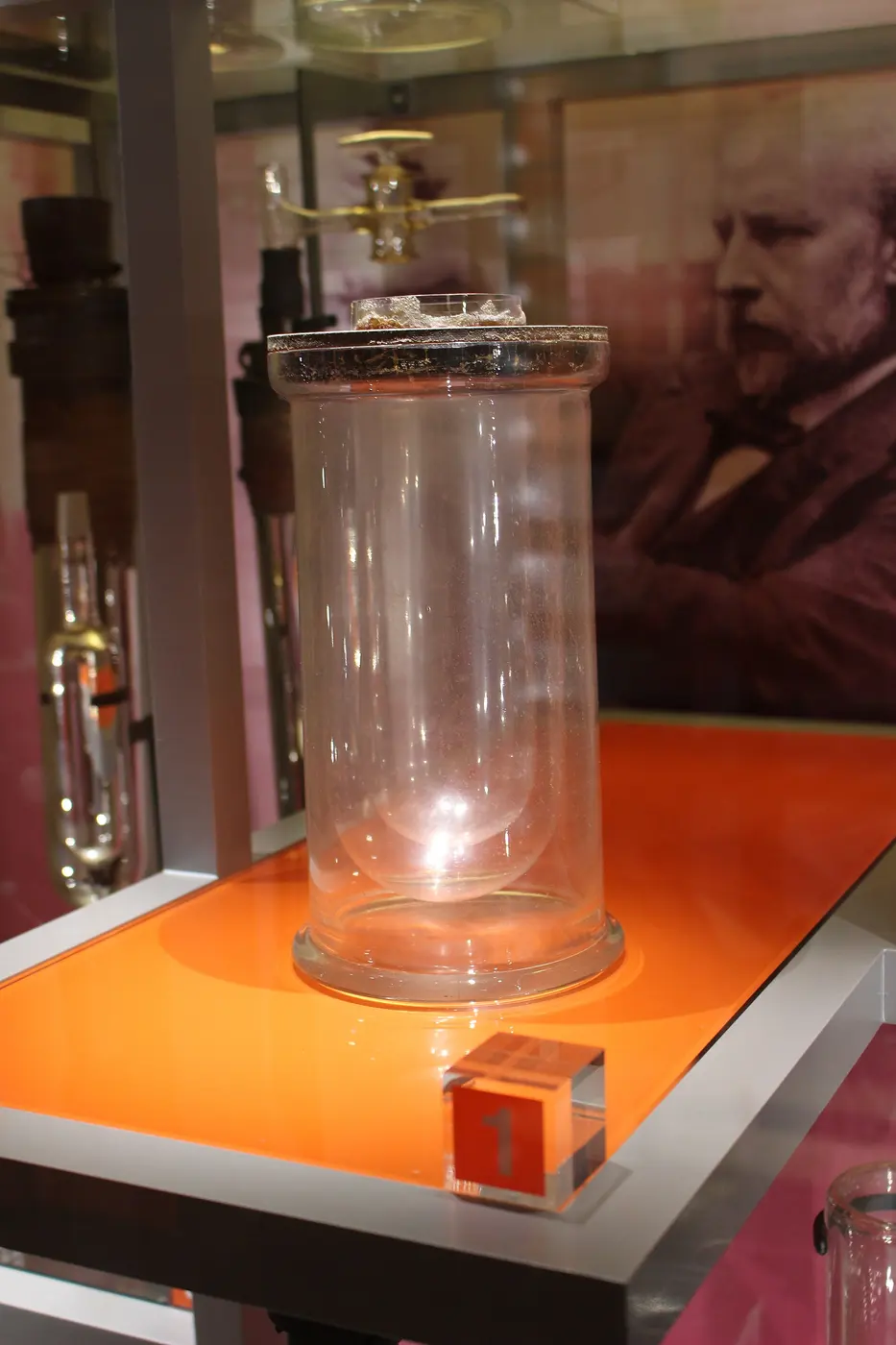

Why a vacuum stops heat
Heat travels in three main ways: conduction, passing directly from one material to another; convection, carried by moving air or water; and radiation, which crosses empty space like light.
With a vacuum between two glass walls, there is almost no air to carry heat, so conduction and convection are all but cut off. The remaining radiation is bounced back by a shiny, mirror-like surface. The result is a container that heat from outside can barely get into.
The trick works in both directions. A container that keeps outside heat from getting in also keeps inside heat from getting out. That is how a vessel designed to protect freezing-cold liquids became the perfect way to keep tea hot. In fact, 20 years earlier, in 1872, Dewar and the physicist Peter Tait had made a vacuum-insulated goblet in Edinburgh for keeping things warm.
An invention he never patented
Dewar went on pushing to ever lower temperatures, and in 1898 he became the first to produce liquid hydrogen.
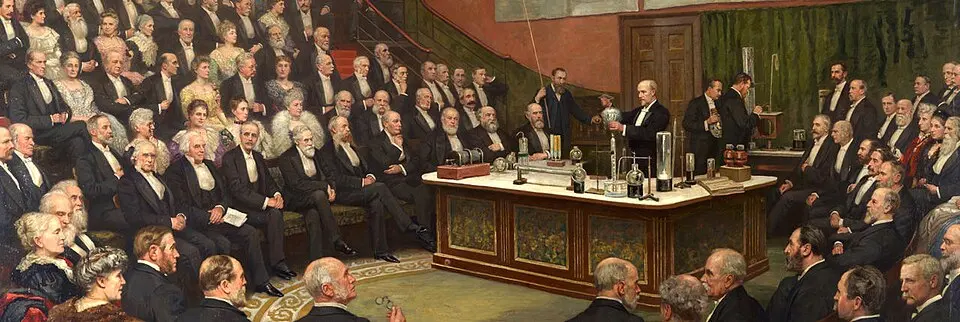

He never patented the vacuum flask, though. The Royal Institution explains that after falling out with Alfred Nobel over the patent for cordite, a smokeless explosive, Dewar never patented his flask.
The people who saw a business in it were German glassblowers. In 1904, two of them founded a company in Germany to make the first vacuum flasks for everyday use. The name was chosen through a contest: Thermos, from the Greek word therme, meaning heat. In 1907 an American firm, the American Thermos Bottle Company, acquired the rights to the German technology and the name, and the vacuum flask spread around the world.
The magic bottle comes to Osaka
Vacuum flasks reached Japan as imports at the end of the Meiji era (1868–1912), and before long they were being made in the country too, above all in Osaka. According to the manufacturer Zojirushi, the Tenma district of Osaka had many skilled glassblowers, and the industry took root with separate businesses making the glass inner bottles, the metal outer cases and the finished product. When World War I cut off European supplies to Southeast Asia, Japanese flasks were in demand there as containers for boiled water in places where tap water was unsafe to drink.
To this day, three vacuum flask makers headquartered in Osaka Prefecture are named after animals: Zojirushi (elephant), Tiger and Peacock.