How were disposable hand warmers invented in Japan?
A US Army foot warmer inspired a Japanese product called Attakasan in 1975, and a 1978 product modeled on it, Hokaron, made disposable warmers a hit.
500,000
Slipped into a coat pocket or stuck to an undershirt, disposable hand warmers, known in Japan as kairo, are an essential part of winter in the country.
Inside the packet is mostly iron powder. According to the Japan Kairo Industry Association, the warmth comes from iron combining with oxygen in the air as it rusts. Behind this handy little heater lies a long history of keeping warm inside one’s clothes, and a development story that passed through several companies.
From stones to ash to benzine
The ancestor of the kairo is the onjaku, a stone heated in the fire, wrapped in cloth and tucked inside the front of one’s kimono. It was used from around the end of the Heian period (794–1185) through the Edo period.
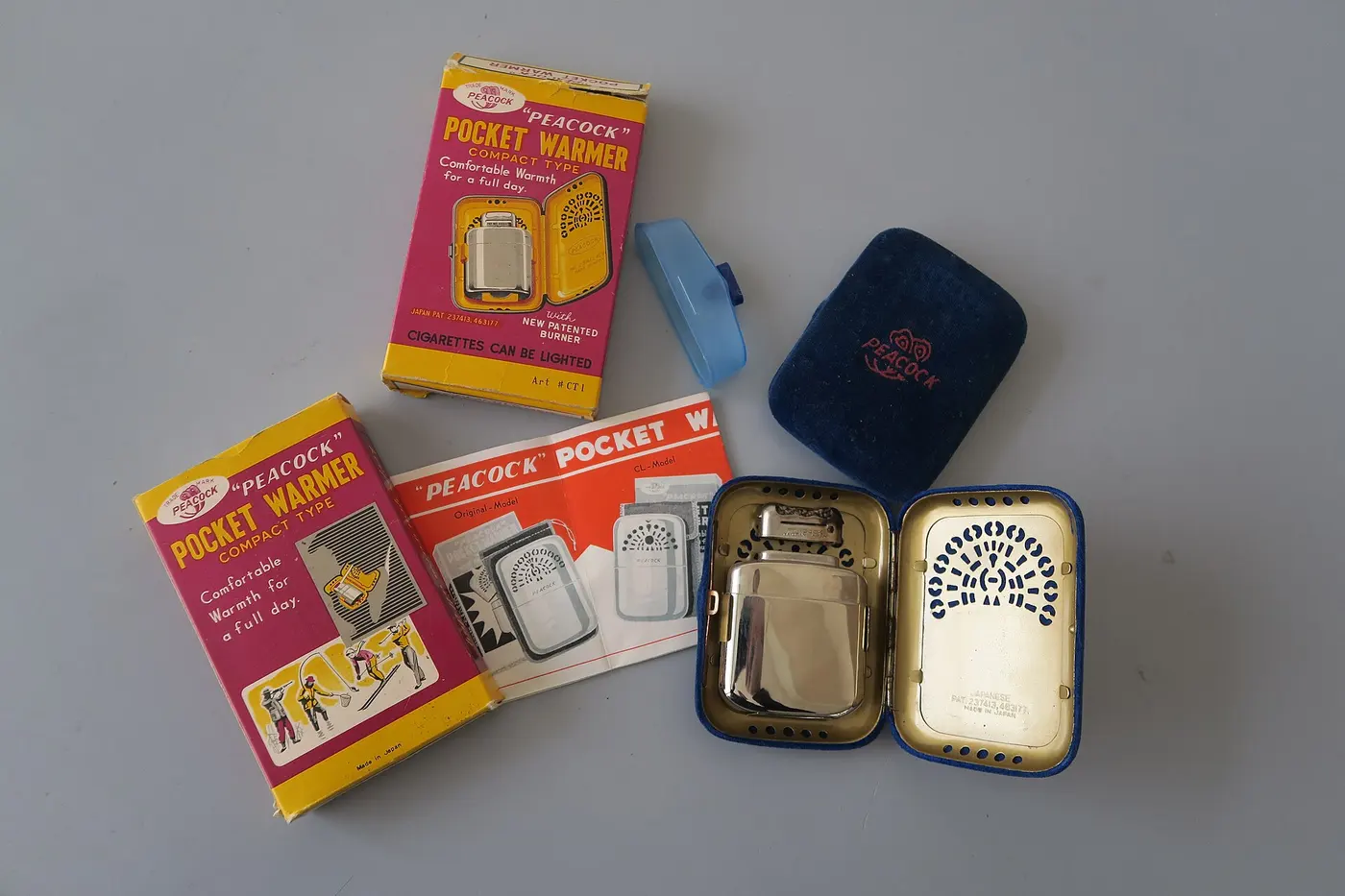
Early in the Genroku era (1688–1704), people came up with the kairo itself, literally a “pocket stove”: a metal case in which a special ash, made from burned plant stems such as eggplant and smartweed that held heat well, smoldered slowly. In modern times this kairo-bai fuel was improved by mixing ashes of paulownia wood or hemp stalks with additives to help them burn, and packing them into paper.
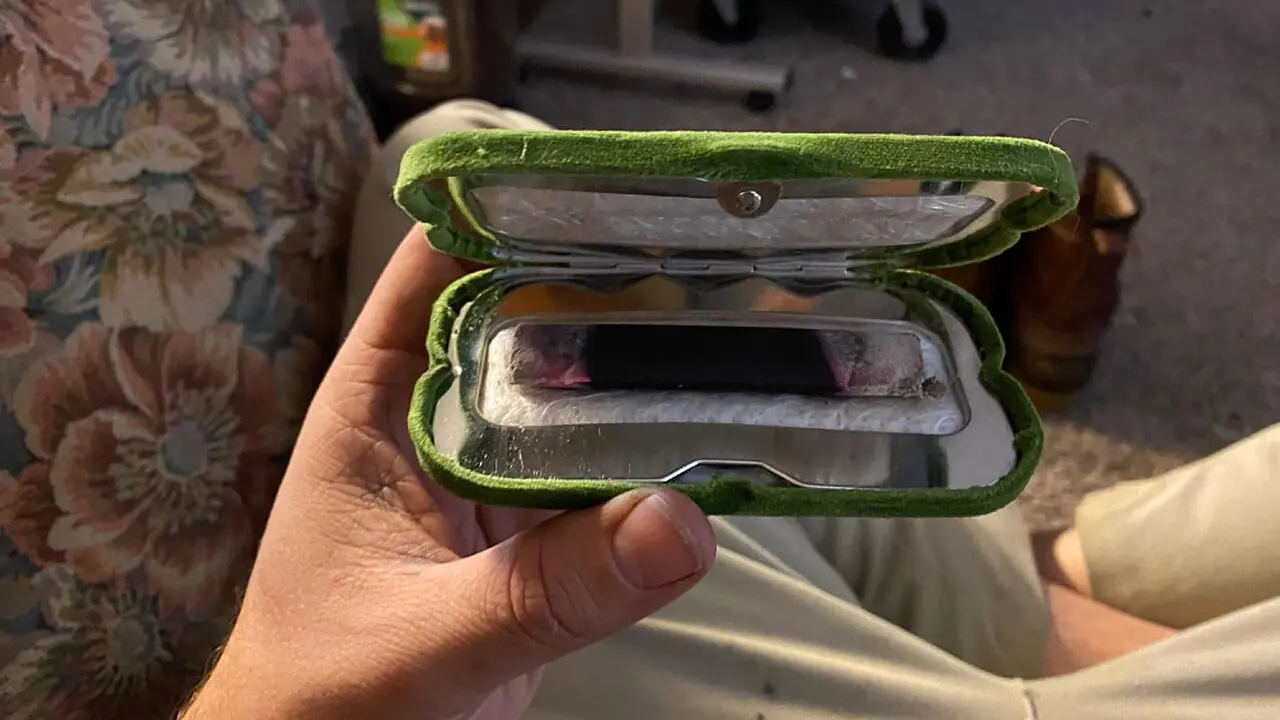

In 1923, an Osaka inventor named Matoba launched the Hakukin Kairo, or “platinum kairo.” It used the heat released when evaporated benzine oxidizes on contact with platinum, so it warms without a flame. According to the company, it produces about 13 times as much heat as a disposable warmer.

A US Army foot warmer
So where did iron-powder warmers come from? A 2005 column published by the Kyushu Bureau of Japan’s Ministry of Economy, Trade and Industry traces the story in detail.
The starting point was a “foot warmer” the US Army used when camping in the field. Pour about a cupful of water into its cloth bag of powder, and it gave off intense heat for around 30 minutes. In 1972, researchers at the Japanese chemical company Asahi Chemical Industry (now Asahi Kasei) analyzed it and found it contained iron powder and other additives. They also discovered that swapping one of the additives for ordinary salt made the heat gentler.
The result, launched by Asahi Chemical in November 1975, was Attakasan, roughly “Mr. Warm.” Its bag was divided in two by a pin, keeping the iron powder and additives apart until you pulled the pin and mixed them. It cost 300 yen and was sold mainly through acupuncturists. But the company seems to have decided that selling consumer goods was not its business, and in early 1979, after a total of 67,400 units, it stopped making and selling them.
Two packets and a bad back
The story now moves to another company. In June 1977, at the Hiratsuka plant of Nippon Pure Hydrogen (now Japan Pionics), a subsidiary of Mitsubishi Gas Chemical, the deputy plant manager, Taura, received two Attakasan packets from head office. An executive with a bad back had found them at a medical equipment store in Tokyo, said warming his back helped, and brought them up as small talk at a board meeting.
The first prototype was ready the next month. Lotte Denshi Kogyo, part of the Lotte confectionery group, agreed to handle sales and pushed hard for a price of just 100 yen. To cut costs, the developers redesigned the outer bag so that the iron powder and additives, including water, salt and activated charcoal, could be packed together in the inner bag from the start. Open the airtight outer bag, let in the air, and it begins to warm up.
Hokaron went on sale in 1978 and sold 500,000 packets in its first year. Disposable warmers quickly became a winter fixture, and in 1988 a type that sticks to clothing appeared. According to the same government column, about 1.46 billion disposable warmers were sold in Japan in fiscal 2004.