When was the automatic rice cooker invented?
In 1955. That December, Toshiba launched the first truly automatic electric rice cooker. Its inventor was Yoshitada Minami, the head of a small Tokyo factory.
400units
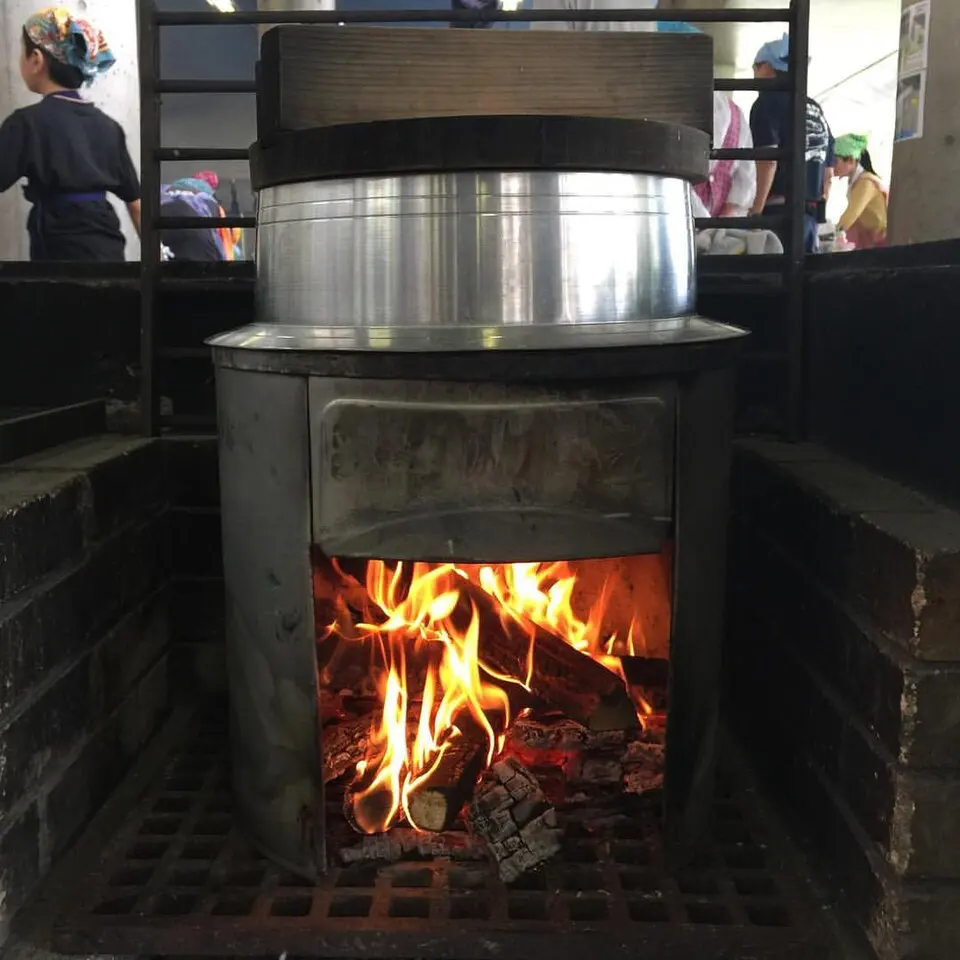
Measure the rice, add water, press the switch, and walk away. Thanks to the rice cooker, nobody has to hover over the stove waiting for rice to be done. In the days of the wood-fired kamado hearth, getting the heat right was an art, summed up in a Japanese saying about starting the fire low and then turning it high.
The first rice cooker that could do the job on its own went on sale in Japan in 1955, under the Toshiba brand. Behind it stood a small factory in Tokyo, and the family of the man who ran it.
Electric cookers came first
Cooking rice with electricity was nothing new. According to a 2023 research report by Yoji Hisamatsu of the Ehime Prefectural Science Museum, Mitsubishi Electric began selling an electric rice pot in 1923, and Matsushita Electric (now Panasonic) brought one to market in 1953. Neither was automatic.
Inventors had been filing patents for automatic rice cookers since the mid-1920s, and by 1932 one design used a bimetallic strip, two metals bonded together that bend as they heat, to cut the power. But all of these had to be adjusted in advance for the air temperature and the amount of rice and water. The same pot of rice needs different heating on a winter morning than on a summer afternoon.

A family that cooked rice day and night
According to Toshiba’s website, the automatic rice cooker was invented by Koshinsha, one of its suppliers, after Matsumoto, the head of Toshiba’s home appliance division, asked the firm to take on the job. The Institute of Electrical Engineers of Japan names the inventor as Koshinsha’s president, Yoshitada Minami (1908–1966).
Hisamatsu’s report says Minami began his research in 1953, at the age of 45. He started by cooking rice over wood and gas again and again, measuring the temperature at the bottom of the pot, inside the rice and on top of it every minute. He found that the inside of the rice had to be held close to 100°C (212°F) for about 20 minutes.
The work became a family project. At the Minami home, prototypes were used to cook rice 10 to 15 times a day, sometimes 20, while his wife recorded the temperatures in notebooks and plotted them on graphs. From the second year, the children joined in after school, one timing the cooking, another reading the thermometer. To make sure the cooker worked even in deep winter, they cooked rice outdoors in the middle of the night. The tests used close to half a bale of rice a day, and Koshinsha’s whole staff pitched in to taste the results.
When the water is gone, the switch clicks off
A 2015 article in the journal of the Institute of Electrical Engineers of Japan explains the trick. Water is poured not only into the inner pot with the rice but also into the space between the inner and outer pots. As long as that water remains, no amount of heating can push the temperature above 100°C. Once it boils away, the temperature rises, a bimetallic strip bends, and the switch turns off. The amount of water between the pots sets the cooking time, so the result barely depends on the weather, and anyone can get it right with one switch.
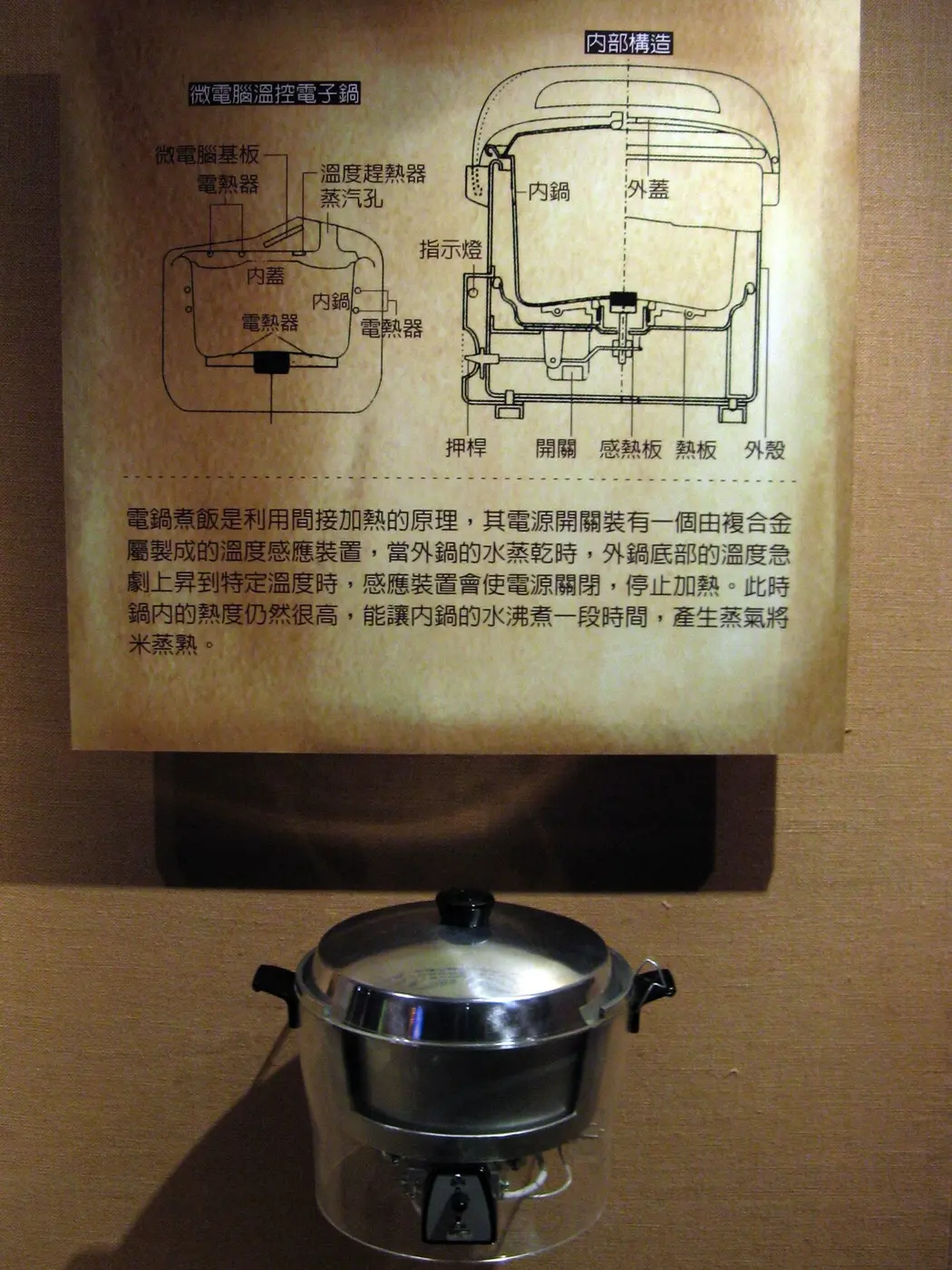

The design is often described as a double pot with indirect heating, but Hisamatsu notes that it actually had a third layer, an outer case that insulated the pot with a layer of air. The patent application filed in May 1955 was titled, in translation, “Triple Electric Automatic Rice Cooker.”
Starting with 400
Toshiba announced the cooker on December 10, 1955, but had only 400 made at first. Many in the company doubted it would sell. According to the Institute of Electrical Engineers, electrical retailers were skeptical, so Toshiba recruited the sales networks of electric power companies and sent demonstrators out across the country, including to farming villages. Hisamatsu credits Shogo Yamada, a development section manager at Toshiba, with showing audiences everywhere what the cooker could do.
It worked. Toshiba sold 1,000 cookers a month in fiscal 1956, 10,000 a month the following year and, at the peak, 200,000 a month. Electric rice cookers were in 15.6 percent of Japanese households in 1958, close to half five years later, and 99 percent by 1969.