Did the world’s first subway run on steam?
Yes. London’s Metropolitan Railway, which opened in 1863, was worked by steam locomotives, and the smoke in its tunnels remained a problem for more than 40 years.
30,000+
Tokyo, New York, Paris: in big cities all over the world, trains run under the streets. It all began on January 10, 1863, when the Metropolitan Railway opened in London.
At the time, electric trains were still years away from being practical. The world’s first underground railway was worked by steam locomotives, burning fuel and blowing out steam in the tunnels.
A trench under London’s streets
According to Old and New London, published in 1878, London’s streets, jammed with omnibuses, cabs and carts, had for years been a constant source of complaint. The answer proposed was to go underground: a railway linking the city’s scattered railway termini, so that passengers could reach the center without ever setting foot in the streets. Its champion, Charles Pearson, was dismissed as a “wild visionary,” and engineers warned that the tunnel would collapse under the weight of the traffic above and that people living along the route would be poisoned by sulfurous fumes.
Work began in 1860. The builders dug a deep trench along the road, laid the track, roofed it over with brick arches and filled the street back in, a method known as cut-and-cover. According to Grace’s Guide, an online archive of British industrial history, the work caused massive traffic disruption in north London.
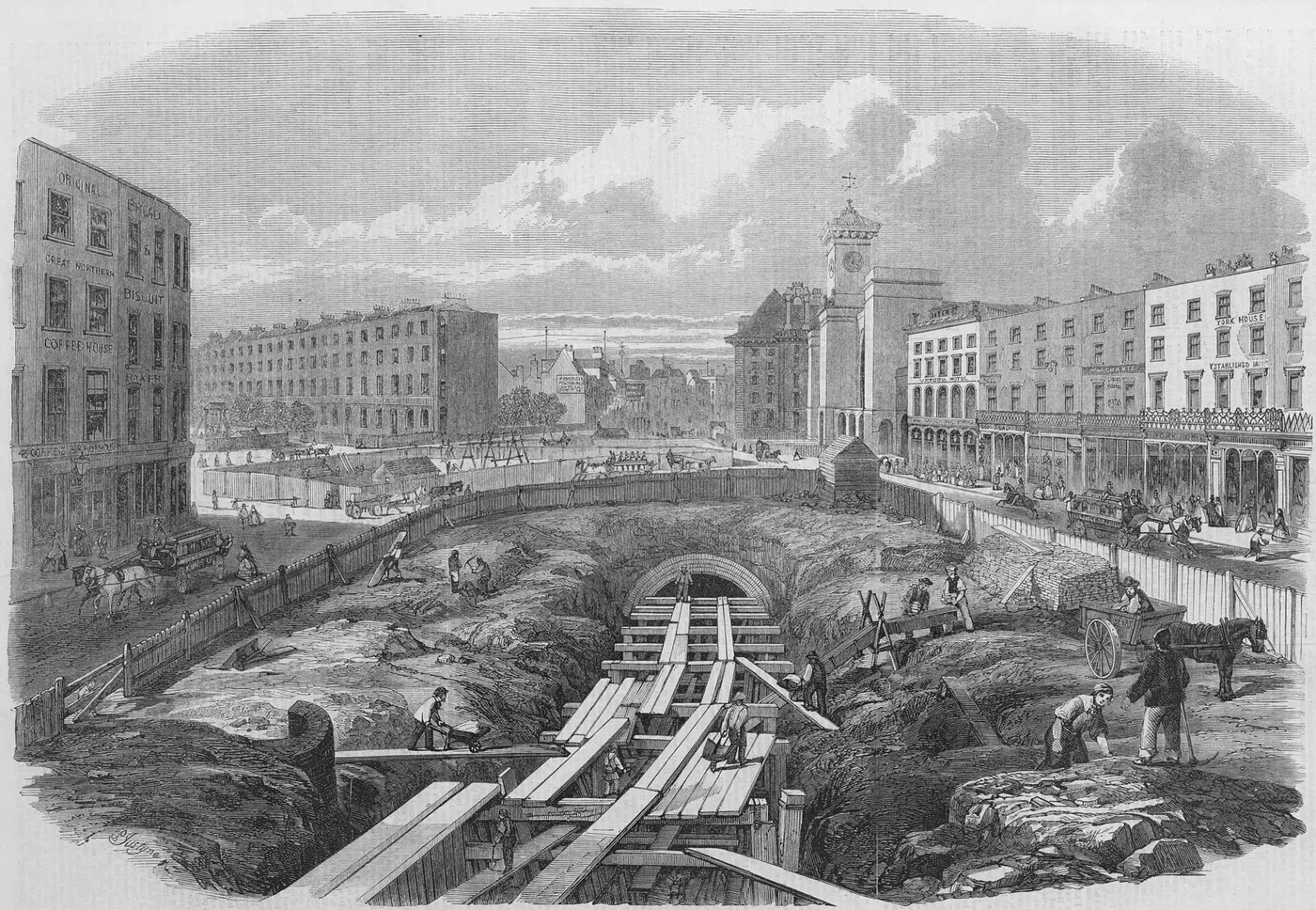

On January 10, 1863, the line opened between Paddington (Bishop’s Road) and Farringdon Street, a distance of 3.75 miles (6 km). According to Old and New London, more than 30,000 people rode it that day, and until past midday City-bound trains were too full to board at the stations along the way. In its first year, the railway carried nearly 9.5 million passengers, more than three times the population of London.
The engine that was meant to make no smoke
Steam engines underground would obviously fill the tunnels with smoke. The railway’s engineer, John Fowler, built a locomotive that was meant to store heat in firebricks so that it could run through the tunnels with its fire damped down. Known as “Fowler’s Ghost,” it was an expensive failure.
Instead, the line opened with steam locomotives of the Great Western Railway. In the tunnels, their exhaust steam was diverted from the chimney into tanks of cold water, where it condensed. For fuel the railway used coke, baked for a long time to drive out the sulfur. The engines, as Old and New London put it, could “hold their breath” underground.
The Daily Telegraph of January 10, 1863, reported that the locomotives on the ceremonial first train the day before had given off “a good deal of steam.” This, the paper explained, was due to long waits at the stations and would not happen again, since every engine was fitted with condensing apparatus. That turned out to be optimistic.
Sulfurous tunnels
Only about a sixth of the original line ran in the open air. As passengers and trains multiplied, the air in the tunnels grew worse. The railway took the covers off station domes and cut openings in the road above. In October 1871 the Globe reported that five ventilation shafts, each about 15 yards (14 meters) long, were being sunk in the Euston Road between Gower Street and King’s Cross stations. Another paper, reporting the same work, wrote of “the sulphury tunnels.”
Now it was the people above ground who suffered. In January 1880, a newspaper reported that an unusually powerful blast of steam from one of the shafts in the Euston Road had made a pair of omnibus horses shy and carry their vehicle onto the pavement. In December 1897, the Manchester Evening News reported that a Board of Trade committee on the ventilation of the tunnels had concluded that by far the most satisfactory solution was electric traction.
Going electric
London already had an electric underground railway by then. The City and South London Railway, which opened in 1890, was the world’s first deep-level “tube” railway, running through iron-lined tunnels far below the surface, and the first major railway anywhere to use electric traction. It had been designed to run on cables, but when the cable contractor collapsed during construction, the company switched to electricity, a technology that was still experimental.
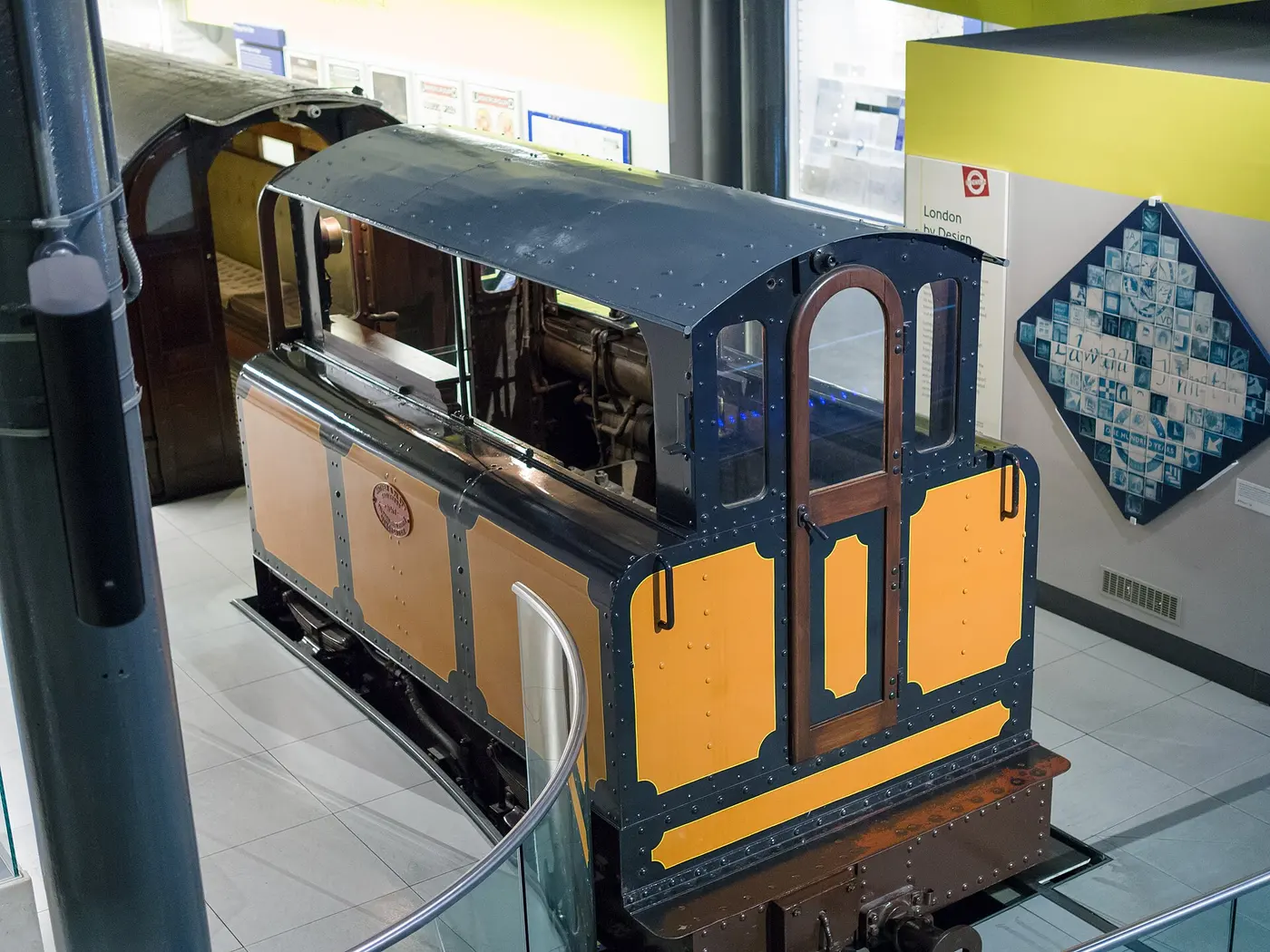

The Prince of Wales, the future Edward VII, formally opened the line on November 4, 1890, and it carried its first paying passengers on December 18. Its 3.2 miles (5 km) of line, which passed under the River Thames, served six stations. The narrow tunnels meant small carriages, and with their high-backed seats they were nicknamed “padded cells.”
Electric trains finally began running on the Metropolitan in 1905. More than 40 years after it opened, the world’s first underground railway was at last beginning to clear the smoke.