Was the tea bag invented by accident?
Probably not. The tale of customers dunking a New York merchant’s silk samples in 1908 is poorly documented, and patents for bags that held tea leaves existed years earlier.
96%
Drop a tea bag into a mug, pour on boiling water, and a few minutes later you have a cup of tea, no strainer or teapot required. Even in Britain, the great nation of loose-leaf tea, the bag has long since won.
The tea bag is often said to have been born by accident. A New York tea merchant, the story goes, sent out samples in small silk bags, and his customers, instead of emptying them, put the whole bag in the pot. Try to pin that story down, though, and the ground turns out to be surprisingly soft.
Silk bags in 1908
The UK Tea & Infusions Association, the British industry body, tells it like this. Around 1908, Thomas Sullivan, a tea merchant in New York, began sending his customers samples of tea in small silken bags. They assumed the bags were meant to go straight into the pot. Sullivan later developed sachets made of gauze, the first purpose-made tea bags. “It was thus by accident that the tea bag was born!” the association concludes, though it cites no source for the account.
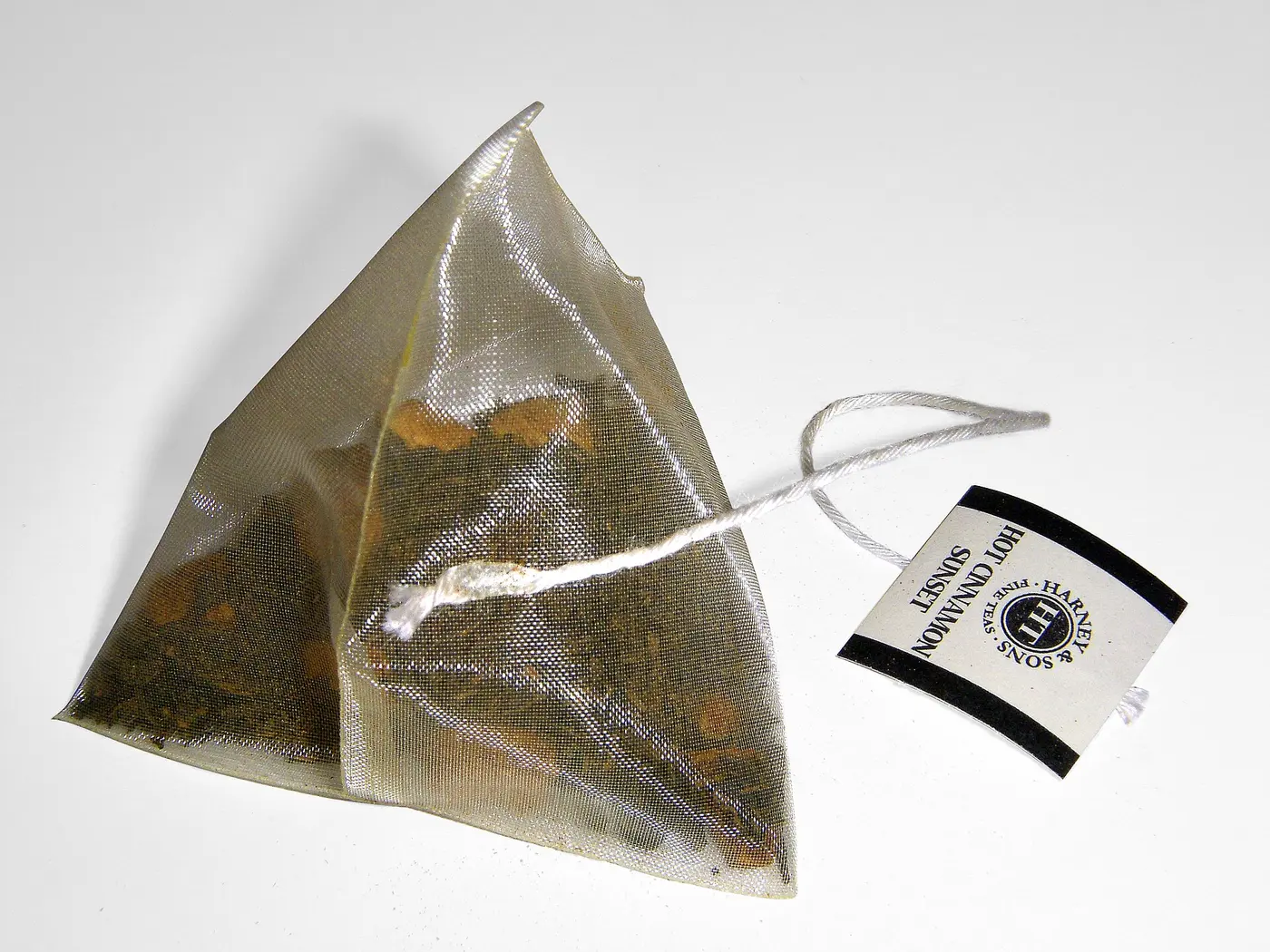

Guinness World Records, by contrast, calls the Sullivan story a legend and notes that there were earlier prototypes. And William Ukers’s All About Tea, the two-volume American reference work published in 1935, describes tea bags and how they were made in some detail without ever mentioning Sullivan. The accidental-dunking story is widely repeated, but no record from 1908 has been offered to back it up.
Bags before Sullivan
The idea of steeping tea in a bag is older still. According to Guinness World Records, the July 1836 issue of the Preston Temperance Advocate, a British temperance magazine, refers to making tea in a bag. In 1880, Thomas Fitzgerald of Boston patented a long-handled muslin bag for tea or coffee. Ukers records that the first patent for an individual tea bag was issued in 1896 to A. V. Smith of London.
U.S. patent records also contain a “tea-leaf holder” filed in August 1901 by two women from Milwaukee, Wisconsin, Roberta Lawson and Mary McLaren, and granted in March 1903. It was a pocket of loosely woven cotton fabric, stiffened with fine wire, with a flap that folded over to close it once it was filled with leaves. The patent explains the problem it was meant to solve: tea made by the potful soon goes stale and is often thrown away, so why not brew exactly one cup? The single-serving idea at the heart of the modern tea bag was already there.
From gauze to paper
According to the UK Tea & Infusions Association, tea bags went into commercial production in the 1920s. By the mid-1930s, Ukers wrote, much of the tea in the United States was brewed in little gauze bags, and at least a dozen firms made and filled tea bags for the trade. They came in several shapes, from a round piece of gauze gathered and tied at the top to oblong, circular and pillow-shaped bags, each with a string and a small tag naming the brand. Bags of perforated cellophane were also on the market. Ukers credited the tea bag with spreading tea not only in American homes but among hotel chefs and stewards.
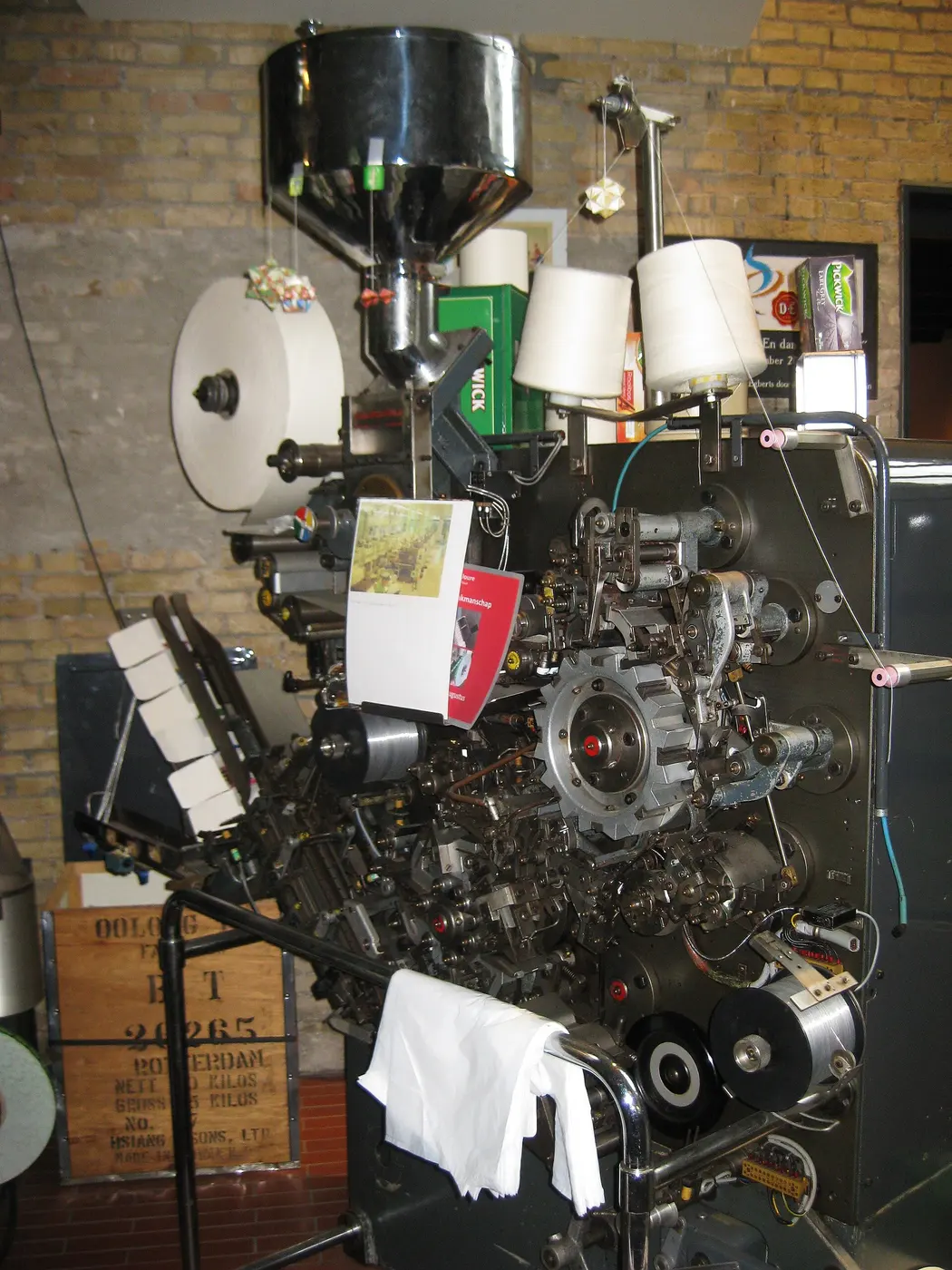
The German tea company Teekanne says its first tea bag machine, ready in 1929, turned out 35 gauze bags a minute. Its 1937 machine made bags first of perforated cellophane and later of parchment paper, and in 1949 the company patented the double-chamber bag, designed to let the tea steep more fully, which is still in use.

Britain came late
According to the UK Tea & Infusions Association, it was Tetley that introduced tea bags to Britain, in 1953. Even so, in the early 1960s tea bags made up less than 3 percent of the British market. Perhaps the habit of brewing loose leaves in a pot was simply too strong. By 2007, the figure had climbed to 96 percent.
The happy accident may be a legend, but the wish to brew just one cup, quickly and without mess, can be traced back well into the 19th century.