Do we swallow spiders in our sleep?
No. The “eight spiders a year” claim has no basis, and even the story of where it came from turned out to be made up.
“The average person swallows eight spiders a year in their sleep.” It is a staple of trivia books, TV shows and the internet, and just thinking about it is enough to make bedtime a little less inviting.
But the number has no basis in fact. Better still, this myth comes with a double twist: even the story told about where it came from turned out to be a fabrication.
A number nobody counted
Rod Crawford, curator of arachnids at the Burke Museum in Seattle, has spent years tracking down myths about spiders. According to him, no case of a sleeping person swallowing a spider is on record anywhere in the scientific or medical literature.
Crawford also points to the lack of witnesses. Countless people have spent nights watching someone sleep, yet nobody has reported seeing a spider heading for a sleeper’s mouth.
The numbers keep changing, too. The version Crawford tackles says four spiders a year. One person who wrote to him had heard of swallowing a pound (about 450 grams) of spiders. Even the eight-spider version varies: sometimes it is eight a year, sometimes eight in a lifetime. A figure that someone had actually measured would hardly wobble like that.
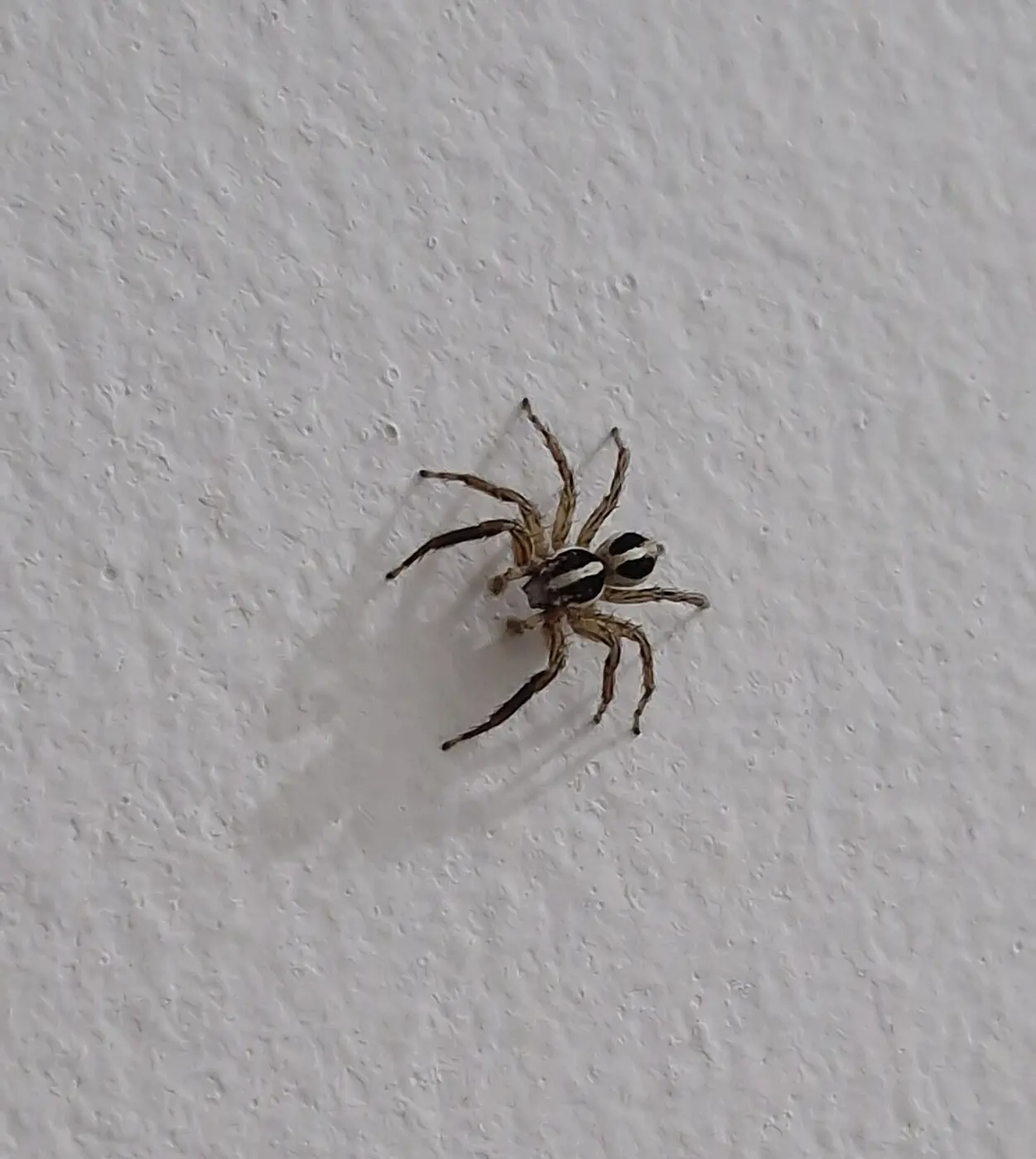

Spiders steer clear of sleepers
To a spider, a sleeping human is not an appealing destination. A 2014 article in Scientific American explained that a sleeping person’s breathing, heartbeat and, sometimes, snoring send out vibrations that warn spiders of danger. “Vibrations are a big slice of spiders’ sensory universe,” Crawford told the magazine. “A sleeping person is not something a spider would willingly approach.”
Bill Shear, a biologist at Hampden–Sydney College in Virginia, said that spiders regard us “much like they’d regard a big rock.” We are so large that, to a spider, we are just part of the landscape.
And even if a spider did climb onto a bed, it would have to cross the sleeper’s face, wander into an open mouth and then get swallowed. That would take a whole chain of unlikely coincidences, which Crawford says practically rules it out.
The hoax about the hoax
So where did the myth come from? For years, the internet offered a neat answer.
In 1993, the story went, a columnist named Lisa Holst wrote a piece for a computer magazine called PC Professional about how readily people believe whatever arrives in their email. To make her point, she listed some made-up “facts,” among them the spider statistic, which she took from a 1954 book on insect folklore. Ironically, her invented fact then spread as genuine trivia.
This origin story was published by Snopes, the American myth-debunking website. But nobody could ever find the magazine or the columnist. Eventually Snopes came clean on a page of its own. Neither PC Professional nor the columnist Lisa Birgit Holst ever existed, it said. Her name is an anagram of “This is a big troll,” and the whole thing was an “easter egg” planted in April 2001 as a wink to longtime readers. The 1954 book, Insect Fact and Folklore, is real, but the page cited says nothing about swallowing spiders.
The real source is still a mystery
In other words, the story that the statistic had been invented to show how misinformation spreads was itself misinformation. The spider myth, however, is older than the prank. Snopes notes that a 1999 list of “50 Top Pieces of Trivia” already claimed that the “average human eats eight spiders in their lifetime” after they crawl into their mouths while they sleep. Who first came up with it is still unknown; Snopes says it is still on the hunt.


A plausible number plus a plausible origin story is a powerful combination, and it is easy to believe. When checking a rumor, it pays to trace the source of the source.