Will lying down right after eating turn you into a cow?
No. It is a Japanese proverb meant to teach good manners. But lying down right after a meal does make it easier for stomach contents to flow back up into the esophagus.
2–3 hours
You finish a big meal and stretch out on the floor. Bliss. But many people in Japan grew up hearing a warning at such moments: tabete sugu neru to ushi ni naru, “Lie down right after eating and you’ll turn into a cow.”
Nobody has ever turned into a cow, of course. Yet in the eyes of modern medicine, the old saying is not entirely off the mark.
Inspired by a lounging, chewing cow
Kotowaza o Shiru Jiten, a proverb dictionary from the publisher Shogakukan, describes the saying as a warning not to lie down straight after a meal, or more broadly not to behave badly. Why a cow? Probably, the dictionary suggests, because cattle are ruminants that lie down after eating to chew their cud.
Cattle in a pasture often lie with their legs folded beneath them, jaws working away as they chew grass brought back up from the stomach. Eat, lie down, chew: to human eyes, the very picture of idleness.


Curiously, Japanese also has a proverb that sounds like the exact opposite: oya ga shinde mo shokuyasumi, “Even if your parent dies, take your rest after a meal.” According to the Nihon Kokugo Daijiten, Japan’s largest historical dictionary, it means that you should always take a break after eating, however busy you are. A similar saying goes, “Even if your aunt’s house is burning, rest after your meal.” Perhaps both are right: rest after eating, but don’t sprawl.
Lying down lets acid creep up
The medical concern is reflux. According to a 2023 patient guide on gastroesophageal reflux disease (GERD) from the Japanese Society of Gastroenterology, the junction between the stomach and the esophagus normally keeps stomach contents from flowing back, but even healthy people have some acid reflux after meals. In healthy people, though, acid sits in the esophagus for no more than about 4 percent of the day and is quickly pushed back down, so it causes no trouble.
It is a different story for people with GERD, who suffer from heartburn or from sour fluid rising into the throat. The same guide says acid reflux most often occurs within two to three hours after a meal, and it advises avoiding overeating, fatty foods and eating in the three hours before bed. The measures known to help most are losing weight for people who are overweight and sleeping with the upper body slightly raised.
In 2024, a panel of 11 gastroenterologists and family doctors from Europe and the United States published consensus advice for people with reflux symptoms, and avoiding lying down after meals, with three hours between dinner and bed, won unanimous agreement. The panel also explained that a large meal stretches the stomach, which stimulates acid production and triggers brief relaxations of the muscle at the junction with the esophagus.
Right side or left side?
So if you do lie down, which way should you face? The Japanese guide lists “sleeping with your right side down” among things to avoid, along with tight waistbands and bending forward.
Research backs this up. In 1994, gastroenterologists in Philadelphia surveyed doctors with a special interest in the esophagus; of the 87 who replied, 45 were unsure which side was worse for reflux. The team then gave 20 healthy volunteers a high-fat meal and had them lie on their right or left side for four hours while the acidity in their esophagus was measured. Acid spent about twice as long in the esophagus with the right side down, and took longer to clear.
Studies of GERD patients agree. A 1999 study that tracked the sleeping positions and reflux of 10 patients overnight found the longest acid exposure with the right side down. In 2022, a team in Amsterdam studied 57 patients and reported that lying on the left side gave the shortest acid exposure and the fastest clearance. The 2024 consensus also recommends sleeping on the left side for people with nighttime symptoms.
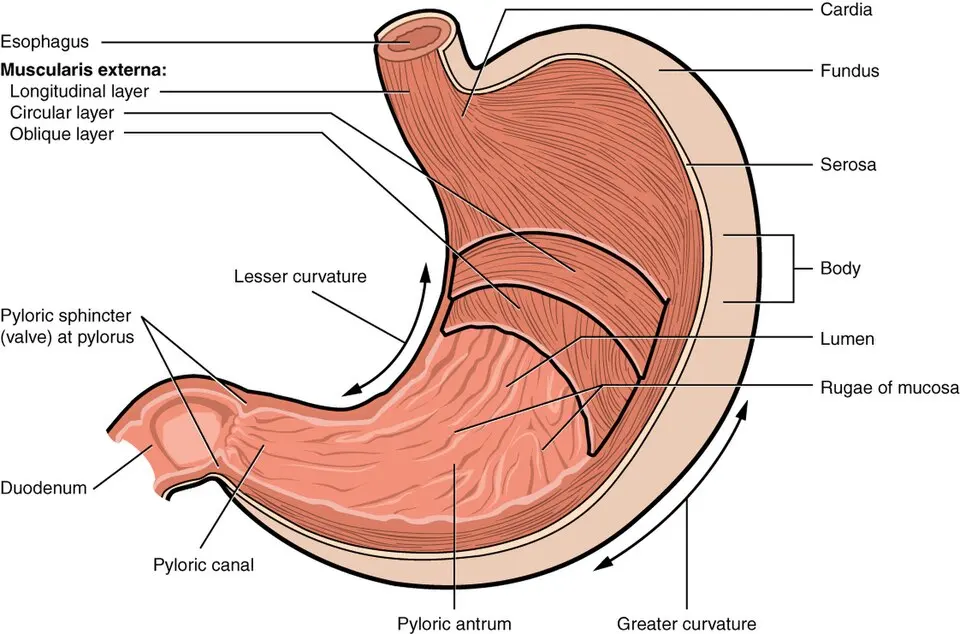

Some say lying on your right side helps food move on into the intestines. In an experiment published in 1980 in The Journal of Physiology, saline placed in the stomachs of five people did empty faster when they lay on their right side. With a glucose solution, however, there was no difference between the two sides. How much it matters for an ordinary meal is unclear.
For a rest after eating, then, sitting is the best bet, and if you must lie down, the left side seems better. If heartburn keeps coming back, review your habits and talk to a doctor.