Is the appendix useless?
You can live without it, but it isn’t useless. It is packed with immune tissue, and it may serve as a safe house for helpful gut bacteria.
32+
The appendix has long been the textbook example of a body part with no job. It is small, it sometimes becomes dangerously inflamed, and when surgeons take it out, people carry on perfectly well without it.
In Japan, the organ even gets the wrong name in everyday speech. People who have had appendicitis often say they had mōchō, the cecum, removed. But over the past two decades, researchers have begun to suspect that the appendix is not quite the leftover it was once thought to be.
The appendix and the cecum
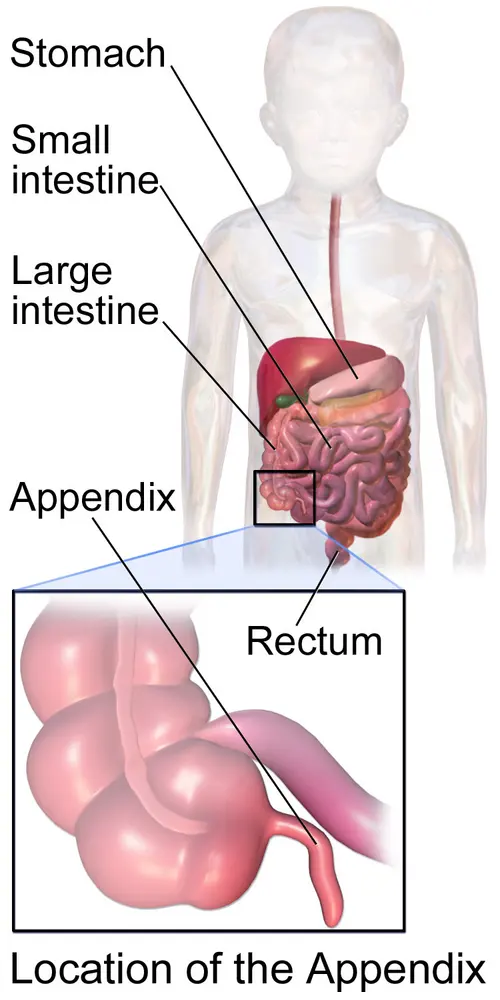
Where the small intestine joins the large intestine, there is a dead-end pouch called the cecum. It is the first part of the large intestine. The appendix is a narrow tube that branches off it. According to the Japanese medical textbook Naikagaku (Internal Medicine, 10th edition), its length varies from person to person: Western sources put it at 7 to 12 cm (about 3 to 5 inches), while in Japanese people it tends to be a little shorter, at 5 to 7 cm.
The mix-up between the two has a history. Nineteenth-century doctors blamed the painful swelling in the lower right abdomen on the cecum and the tissue around it, calling it “typhlitis” or “perityphlitis,” from the Greek word for “blind,” as in a blind-ended pouch. In 1886, Reginald Fitz, a pathologist at Harvard, showed that most of these cases actually started in the appendix. Using the name “appendicitis,” he urged doctors to diagnose it early and operate. His report helped make removing the appendix a routine operation. In Japan, the official name was standardized as chūsuien (appendicitis) in 1939, according to the encyclopedia Nihon Daihyakka Zensho, but the old word mōchō lives on in conversation.

Darwin’s verdict
One of the people who cemented the appendix’s reputation was Charles Darwin. In The Descent of Man (1871), he described it as a rudiment: the remains of a once-longer cecum that had shrunk as our ancestors’ diet and habits changed. His evidence was its small size and how much it varied from person to person. It was sometimes missing altogether, and sometimes unusually large. “Not only is it useless,” he wrote, “but it is sometimes the cause of death.”
It is true that you can live without an appendix. But being able to live without something is not the same as its having no function at all.
Immune tissue and a bacterial safe house
Naikagaku describes the appendix as the part of the digestive tract with the most highly developed lymphoid tissue, the clusters of immune cells that help defend the body against bacteria and viruses.
In 2007, William Parker, Randal Bollinger and colleagues at Duke University proposed that the appendix serves as a safe house for helpful gut bacteria. Gut microbes live in biofilms, thin communities attached to the intestinal lining. If a severe bout of diarrhea flushes out the intestines, the theory goes, bacteria sheltering in the narrow, dead-end appendix can survive and then repopulate the gut. The idea rests on circumstantial evidence rather than direct tests, and Parker acknowledged that there was no smoking gun.
In 2014, a team led by Kiyoshi Takeda at Osaka University reported evidence from mice. In mice whose appendix had been removed, the number of cells in the large intestine that produce IgA, an antibody that helps the gut lining manage its bacteria, rose much more slowly than normal, and the mix of bacteria in the large intestine changed.
There are hints in humans too. A 2011 study in the United States found that patients who still had their appendix were less likely to suffer a recurrence of Clostridioides difficile, a bacterium that causes severe colitis. Later studies have not all agreed, however, and the question remains open.
Evolved again and again
If the appendix were truly useless, you might expect evolution to have quietly done away with it. Heather Smith of Midwestern University in Arizona and her colleagues checked 361 mammal species for an appendix and mapped the results onto their family tree. In a 2013 paper, they reported that the appendix had appeared independently at least 32 times in separate lineages, and had been lost fewer than seven times. That pattern, they argued, suggests it offers some survival advantage.
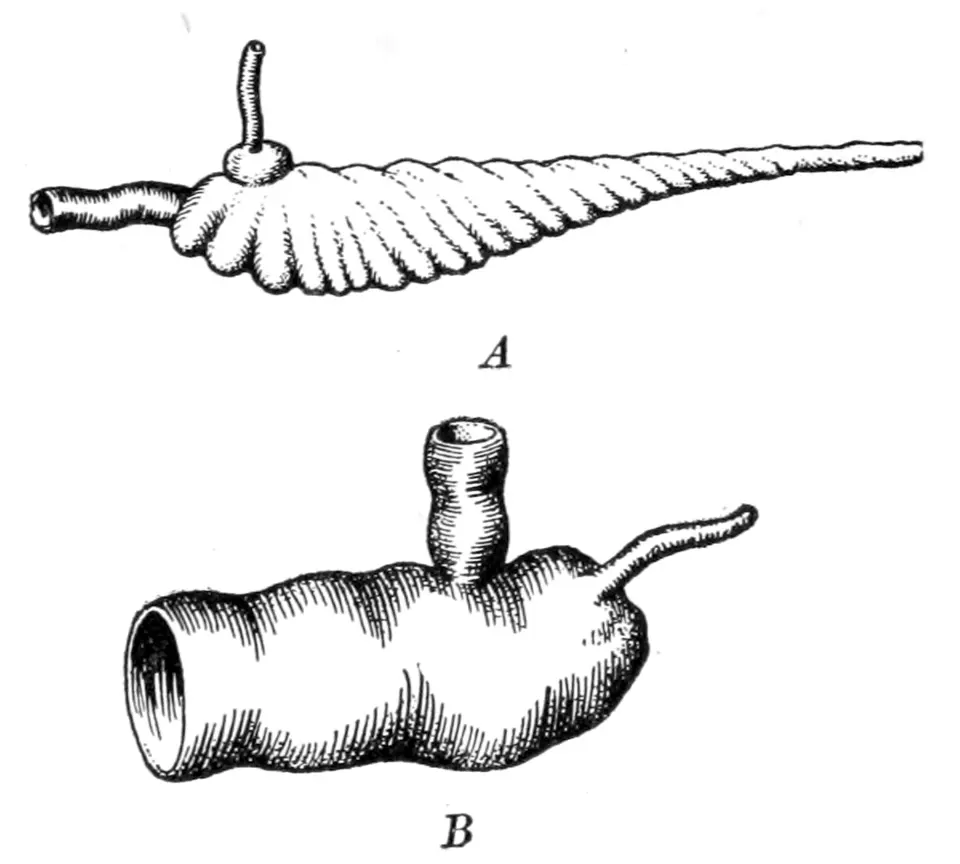

In 2017, the same team widened the analysis to 533 species. Species with an appendix tended to have more lymphoid tissue in the cecum. Diet, climate and social group size did not explain which animals had one, so exactly why the appendix keeps evolving remains unclear. Either way, writing it off as a mere leftover looks premature.