Was super glue a failed experiment?
At first it was rejected for being far too sticky. Nine years later, the same chemist saw the value in that stickiness, and it became an adhesive.
910th
Squeeze out a single drop, press for a few seconds, and a broken mug handle or a peeling shoe sole is fixed. Super glue is a fixture of the household toolbox, and more than a few of us have learned the hard way how quickly it can bond two fingertips together.
This remarkably strong adhesive was discovered by researchers who were trying to make something else. And at first, it was set aside for being far too sticky to be useful.
Rejected for gunsights
The active ingredient in super glue is a family of compounds called cyanoacrylates. According to the National Inventors Hall of Fame, the chemist who recognized their potential was Harry Coover of Eastman Kodak, the company best known for photographic film.
In 1942, during World War II, Coover and his colleagues were looking for an optically clear plastic for precision gunsights. Cyanoacrylates were among the candidates, but they stuck to everything they touched, which made them maddening to work with. As the Lemelson-MIT Program explains, the chemicals harden on contact with moisture, and since almost every surface carries a thin film of moisture, they bonded in virtually every test. The team gave up on them and moved on.
Compound No. 910
In 1951, Coover was transferred to Kodak’s chemical plant in Kingsport, Tennessee, where he oversaw research into heat-resistant materials for jet aircraft cockpit canopies.
According to his obituary in The New York Times, a researcher named Fred Joyner was working his way through hundreds of compounds. When he spread the 910th compound on the list between the two prisms of a refractometer, an optical instrument, to take a reading, he found he could not pull them apart. His first reaction was panic at having ruined an expensive piece of lab equipment. Coover’s daughter later said such instruments cost around $3,000 in the 1950s.
Coover, however, saw an opportunity in the same stubborn chemical he had abandoned nine years earlier. It could bond things quickly with no heat and no pressure. When he and his team tried it on all sorts of items in the lab, every pair stuck fast. Joyner, for the record, was not punished for wrecking the refractometer.
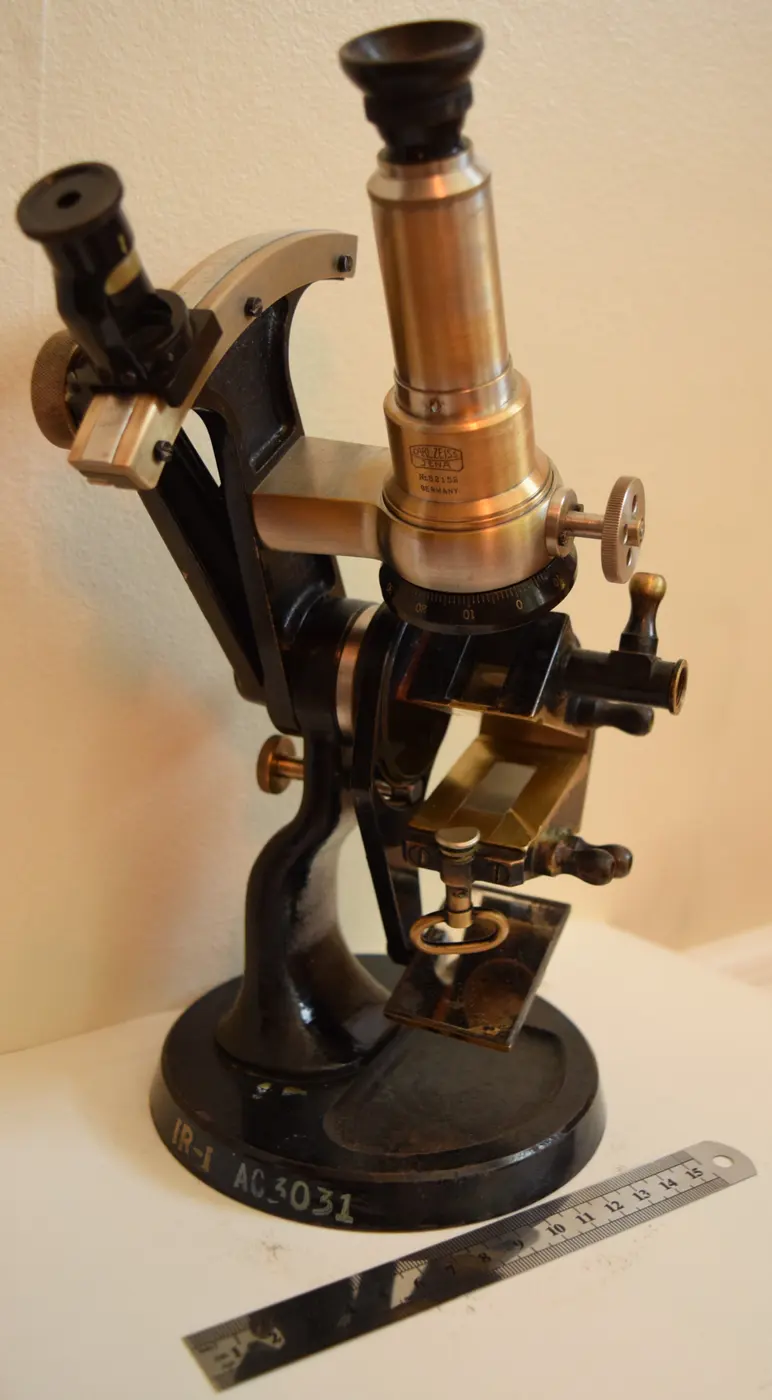

Hanging from a drop of glue
Coover filed for a patent in 1954 and received it in 1956. One example in the patent describes two pieces of glass bonding in “only 5 seconds.” In 1958, the adhesive went on sale as Eastman 910.
Coover also appeared on the TV game show I’ve Got a Secret. On live television, he joined two metal parts with a dab of the glue, took hold, and was lifted into the air. Then the host, Garry Moore, grabbed on too. The bond held.
During the Vietnam War, medics carried cyanoacrylate in spray form and used it on wounds to stop bleeding. Coover’s daughter said this was one of the accomplishments he was proudest of. Kodak, though, never managed to make much money from the discovery, and it sold the business in 1980.
Japan’s Aron Alpha
In Japan, the name most people associate with instant glue is Aron Alpha, made by Toagosei. According to the company, the project began with Eastman 910. Toagosei’s engineers noticed that its main ingredient was chemically very similar to the acrylic esters the company was already producing. Serious research began in 1960, and an industrial version of Aron Alpha went on sale in 1963. In 1966, the glue made headlines when it was used to lift a car on an NHK television program.
Because the glue sets so readily, keeping it stable in storage was a major challenge. After improvements such as adding a desiccant to the packaging, a household version finally appeared in 1971. Two years later, in 1973, it went on sale in the United States as Krazy Glue.
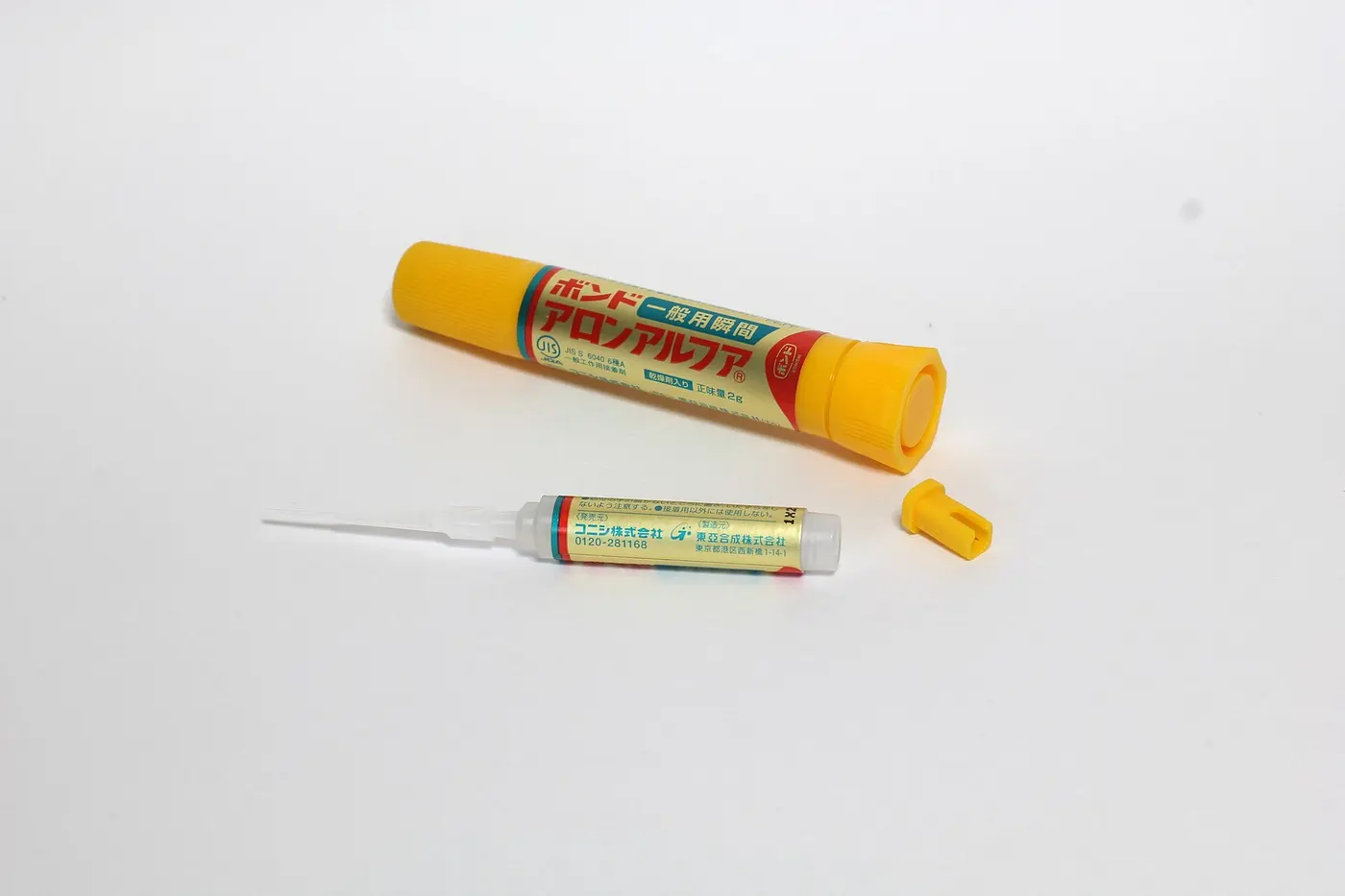

Aron Alpha hardens because it reacts with moisture in the air and on the surfaces being joined. Toagosei warns that if the glue soaks into fabric or tissue paper, it can set suddenly and give off heat, reaching around 100°C (212°F) in some clothing.