When were electric Christmas tree lights invented?
In 1882, Edward Johnson, a vice president of Edison’s electric light company, decorated his tree at home with about 80 red, white and blue bulbs.
80bulbs
Every December, Christmas trees go up everywhere and colored lights brighten the night. The sight is so familiar that it is easy to forget that electric tree lights are less than 150 years old.
They were born in New York, at a time when the electric light bulb itself was brand new, and the man who came up with the idea worked right alongside Thomas Edison.
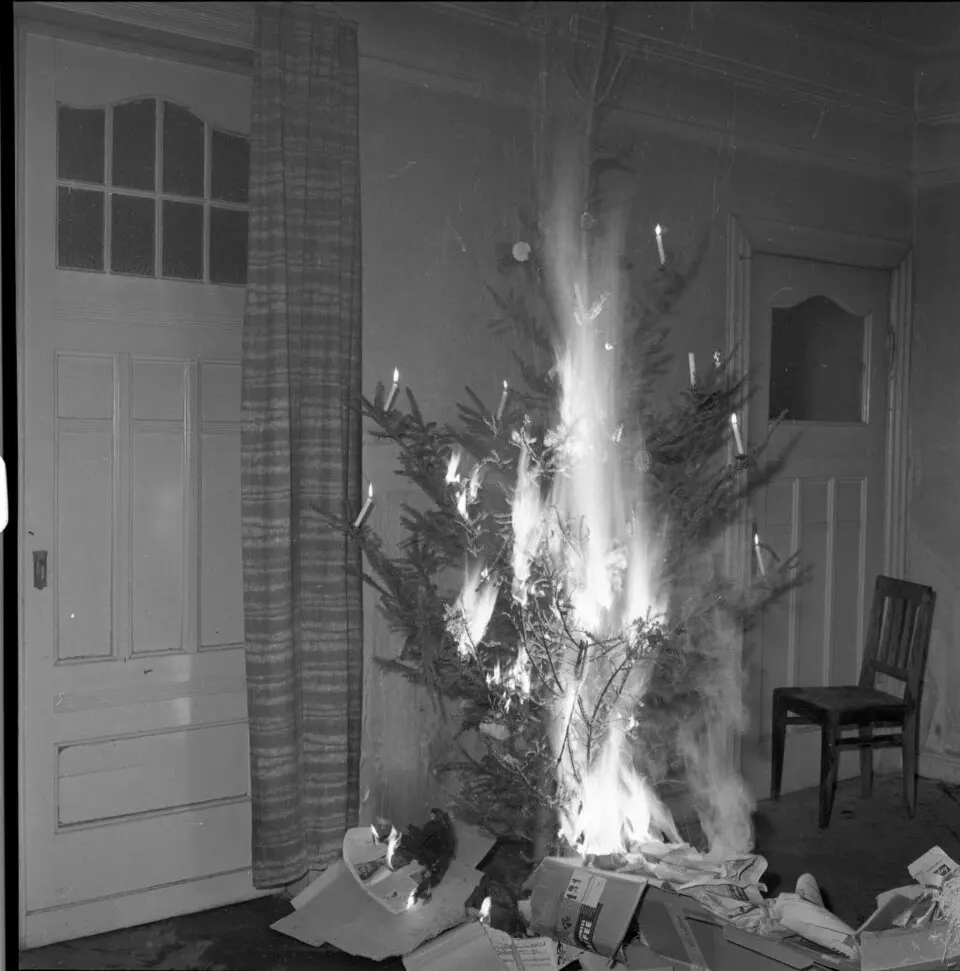
Candles were a fire hazard
Before electric bulbs, trees were lit with candles. The custom had gone on for centuries, and folklore even traces it back to the 16th-century reformer Martin Luther.
But fastening lit candles to the dry branches of a tree was always risky. According to the History Channel’s website, newspapers reported tree fires every holiday season, some of them deadly. Even so, candles remained the way most families lit their trees into the early 1900s.

Eighty bulbs from one of Edison’s men
On December 22, 1882, what is generally recognized as the first electrically lit Christmas tree was unveiled in the parlor of a New York home. The man behind it was Edward H. Johnson, a vice president of Edison’s electric light company and chief engineer of the electric power system Edison had switched on in lower Manhattan that September.
The Detroit newspaper reporter William Augustus Croffut, who came to see it, counted about 80 lamps on the tree, each in a glass globe about the size of an English walnut, split roughly evenly between white, red and blue, and all wired by hand. On top of that, the tree turned about six times a minute, driven by a hidden electric mechanism beneath the floor. As it revolved, the lamps went off and on so that the colors seemed to keep changing places.
Two years later, in 1884, The New York Times described Johnson’s tree, which by then had grown to 120 lights.
A luxury at first
Electric tree lights did not catch on right away. The earliest bulbs had no screw-in sockets and had to be wired one by one. Wealthy New Yorkers reportedly paid electricians up to $300 a tree to install and look after the lights. By 1890 the Edison Lamp Company was advertising miniature bulbs for garlands and trees, but for years such displays remained a pastime of the well-off.
Still, electricity had a clear selling point: safety. A 1900 advertisement from General Electric promised “No Danger, Smoke or Smell,” in contrast to gas and candles.
The turning point came in 1903, when GE introduced sets of sockets already wired onto a cord. According to an article in IEEE Spectrum, the magazine of the Institute of Electrical and Electronics Engineers, a 24-light set cost $12, around $325 in today’s money. For those who could not afford one, some department stores rented sets out for $1.50. Because the bulbs were wired in series, one dead bulb blacked out the whole string.
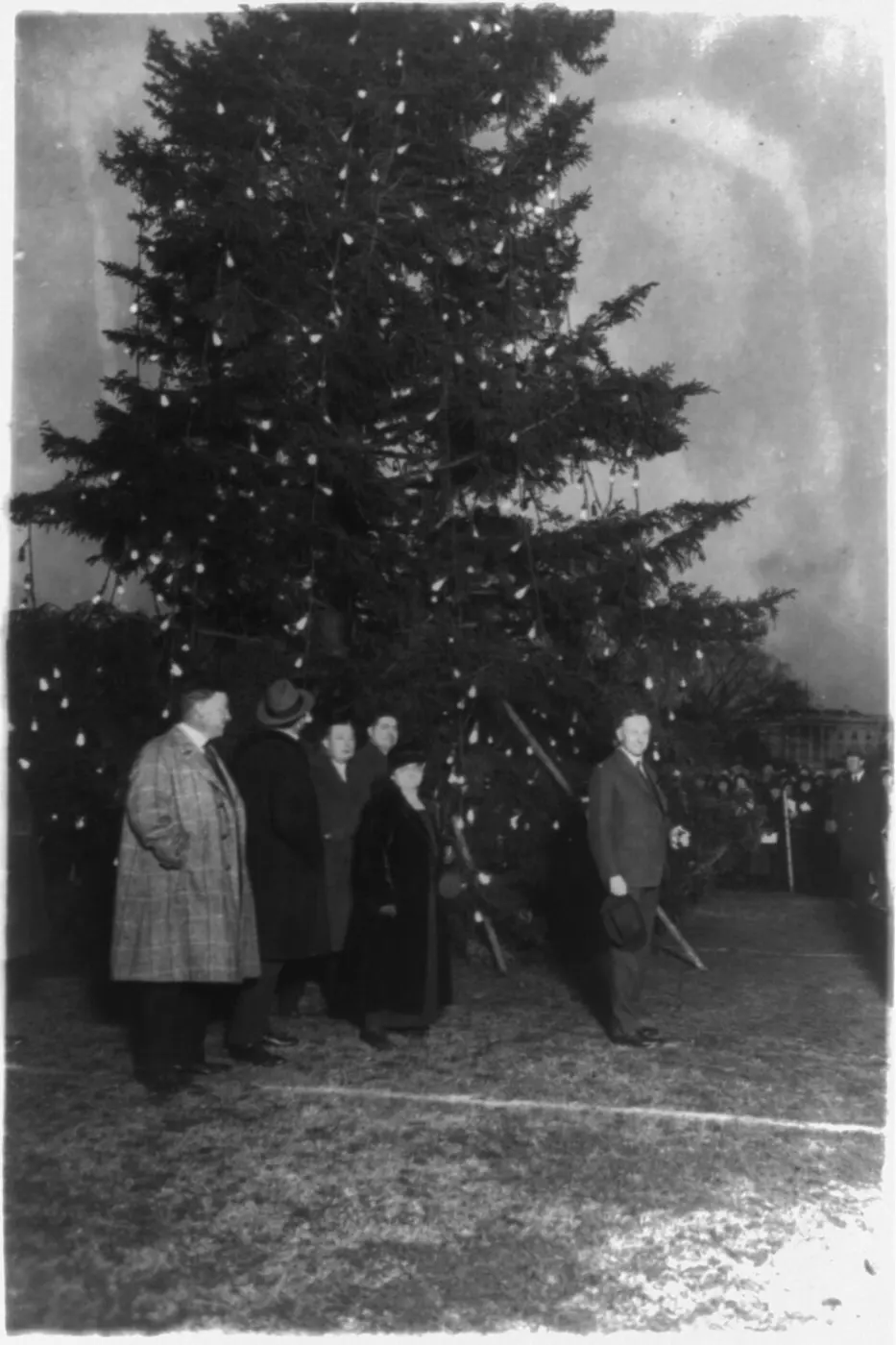

As other companies entered the market, prices came down. Within about four years, a Chicago firm was advertising an eight-bulb set for $5. On December 24, 1923, the first National Christmas Tree lighting took place on the Ellipse near the White House. According to the US National Park Service, the fir that President Coolidge lit carried 2,500 red, white and green bulbs. In 41 years, the number of lights on a showcase tree had grown more than thirtyfold.
By the 1940s, electric lights had replaced candles on most trees in America.