Was the cash register invented to stop staff from stealing?
Yes. In 1879 James Ritty, a saloonkeeper in Dayton, Ohio, came up with it because his bartenders were helping themselves to the takings.
$1,000
A register is a record, and to register something is to record it. A cash register, then, is a machine that keeps a record of the money coming in. In Japan, the checkout counter itself is called the reji, short for “register.”
Its original job was not to make adding up easier. According to the Smithsonian’s National Museum of American History, as American cities and businesses grew after the Civil War (1861–1865), owners increasingly hired strangers to deal with customers. And it was all too easy for clerks and barkeepers to keep part of the money they took in.
A saloonkeeper’s problem
In 1976 the Dayton Daily News pieced together James Ritty’s story from old city directories. A carpenter turned saloonkeeper, by the late 1870s he was running the Empire Saloon on Main Street in Dayton, Ohio. The trouble was that the day’s takings never matched the amount of liquor poured from the bottles. His bartenders were robbing him blind.
As the story goes, by 1878 Ritty was close to a nervous breakdown and took an ocean voyage to Europe to recover. In the ship’s engine room, he noticed a dial that counted the revolutions of the propeller. If a machine could count revolutions, why not sales? The paper presented the voyage as legend, but noted that Ritty and his brother had a machine built within a year of the trip.
A dial like a clock
Ritty went to work with his older brother John. Their first machine had keys along the front for amounts in 5-cent steps up to 95 cents and in dollars up to $9. Pressing a key moved two hands on a large dial above, with cents marked around the outside and dollars on the inside. Locked inside were adding wheels that kept a running total of the day’s sales.
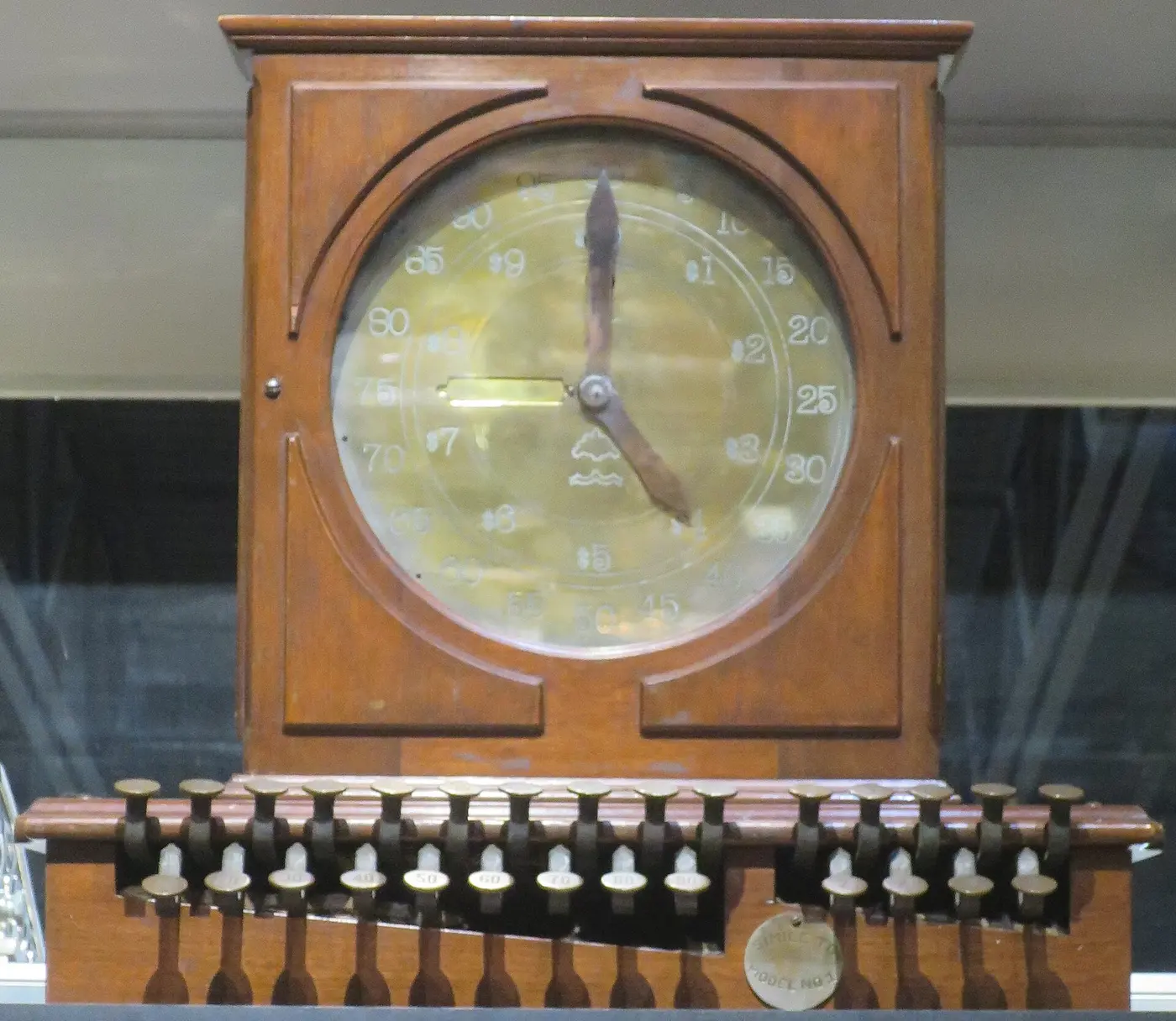

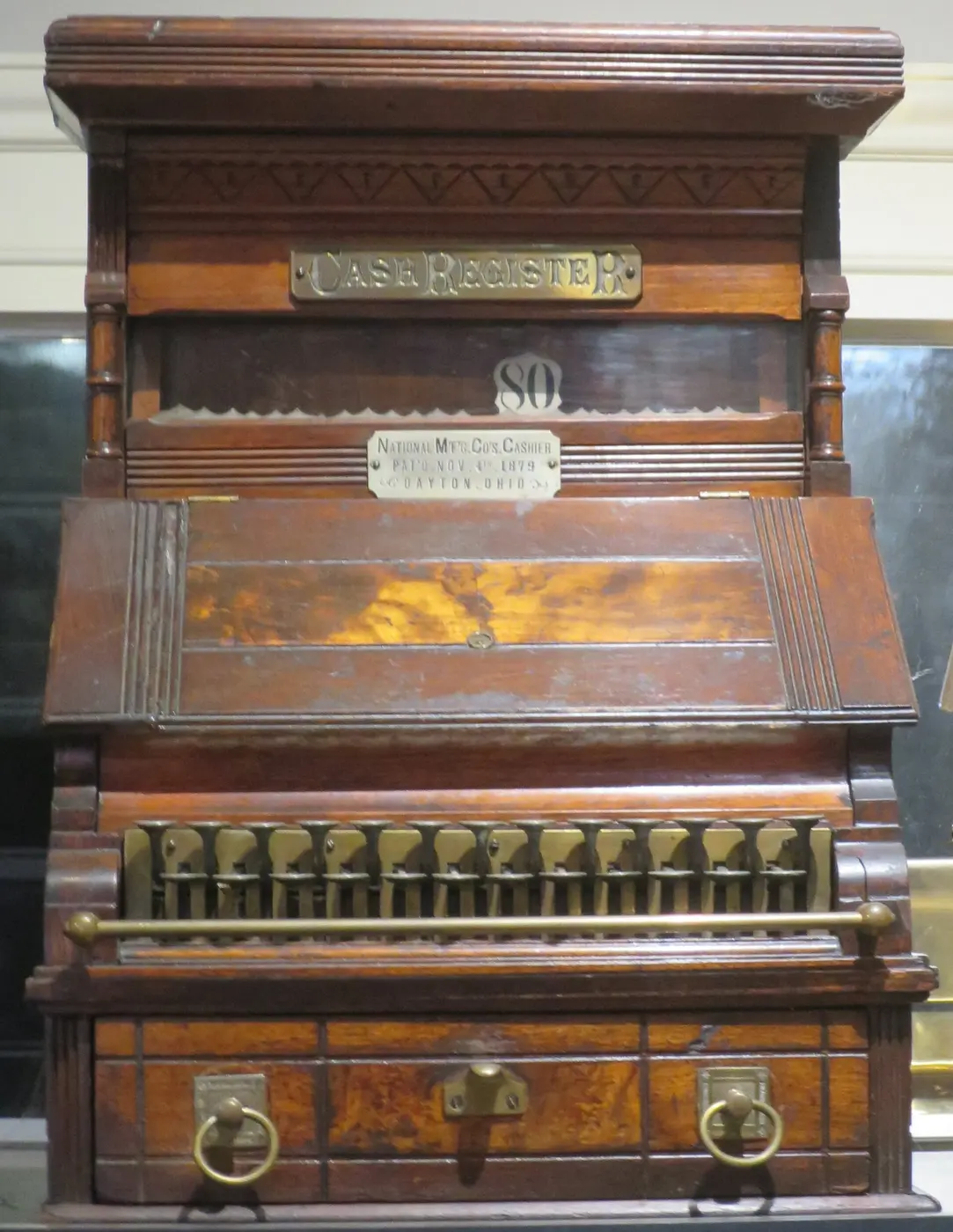
Each payment was displayed in large numbers for everyone to see, while the day’s total was locked away where only the owner could read it. Compare that total with the cash at closing time, and any skimming would show up at once. The brothers patented an improved second model on November 4, 1879. A third, which replaced the dial with pop-up number tabs, was named “Ritty’s Incorruptible Cashier.” The Smithsonian owns the Rittys’ first machine, or an early replica of it.
Sold for $1,000
The fourth model recorded sales by punching holes in a roll of paper, one column for each amount. It was the first to be offered for sale, and a few were sold. Two went to a miners’ supply store in Coalton, Ohio, which had lost $3,000 in two years despite brisk business. With the registers in place, the store turned around. Its owner was a man named John H. Patterson.
Few other customers followed. Worn out from running both a saloon and a factory, Ritty sold the rights in 1881 to Jacob H. Eckert, a Cincinnati salesman, for $1,000, and went back to the business he knew best. The Pony House, the saloon most often linked with his name, was actually his second establishment, opened in 1882, after he had given up on registers.
Eckert formed the National Manufacturing Company to make the machines, and Patterson bought shares. Still the registers didn’t sell. In 1884 Patterson and his brother bought control of the company for $6,500 and renamed it the National Cash Register Company, later known as NCR. When Dayton’s businessmen laughed at the purchase, Patterson is said to have replied: “I’m going into the cash register business and I’ll make a success of it.”

The bell
Among the improvements was a bell that rang every time a sale was rung up. According to the SPARK Museum of Electrical Invention in Bellingham, Washington, that bell reminded everyone, the owner included, that a sale had been made and that someone had a hand in the till. The cheerful ding was, in effect, a watchman.
Patterson poured his energy into training salesmen and advertising, and sold registers around the world. By the time he died in 1922, according to the Dayton Daily News, nearly 2 million NCR registers had been sold.