Was bubble wrap invented as wallpaper?
Yes. In 1957, two American inventors were trying to make a textured wallpaper. Their bubbly failure found its calling as packaging a few years later.
400+
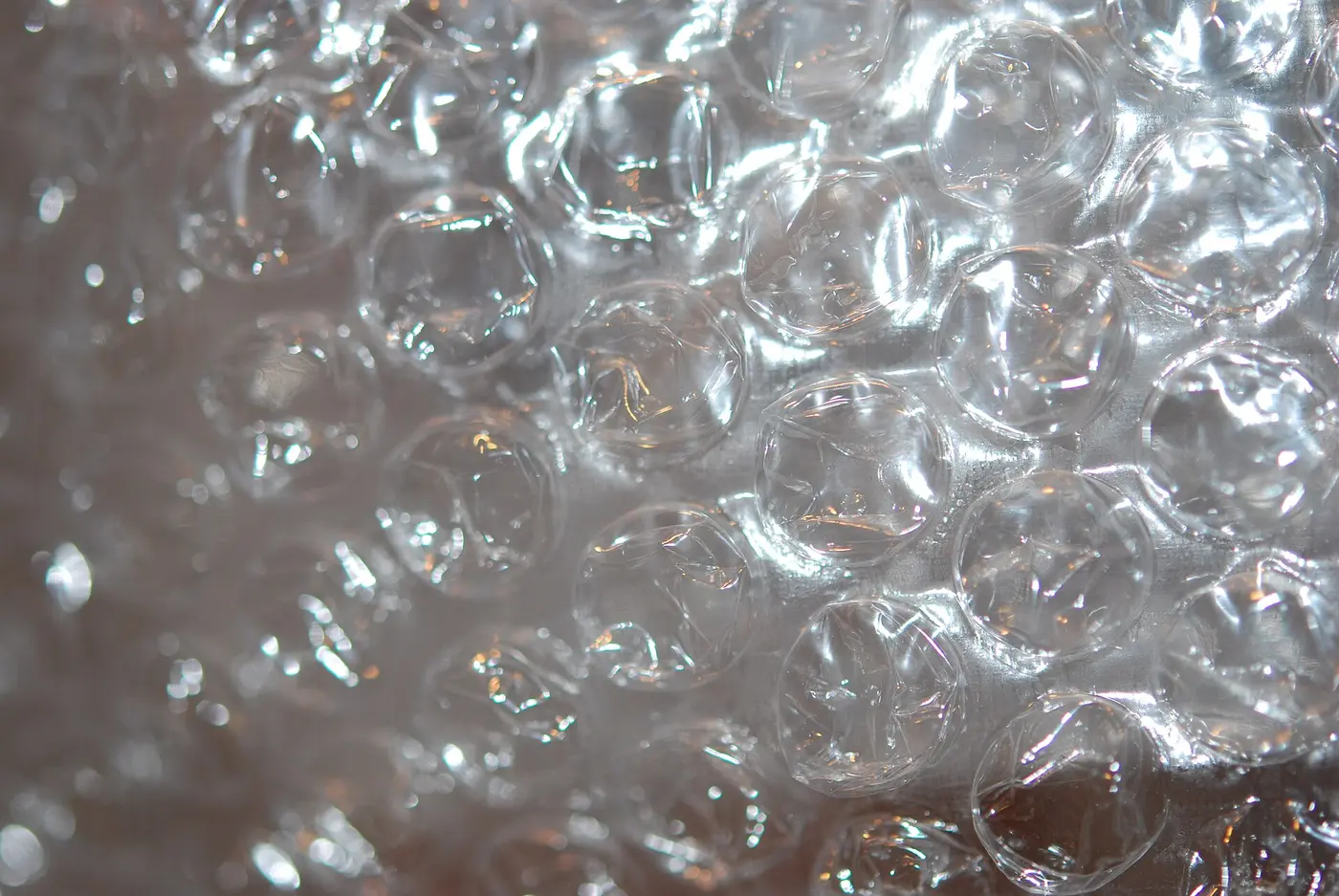
Open a parcel and there it is: a clear plastic sheet studded with little pockets of air, wrapped snugly around whatever is inside. Squeeze one bubble and it pops. Squeeze another, and before you know it you have popped an entire row.
Bubble wrap was born in the United States in the late 1950s. But the two men who invented it were not trying to protect anything. They were trying to make wallpaper.
Two shower curtains
According to a 2019 article in Smithsonian magazine, the inventors were Alfred Fielding, an American engineer, and his business partner Marc Chavannes, a Swiss chemist. In 1957 they set out to create a textured wallpaper that would appeal to the up-and-coming Beat generation.
They ran two pieces of plastic shower curtain through a heat-sealing machine. What came out was a sheet of film with air bubbles trapped inside it, and as wallpaper it was a disappointment.
Still, they did not throw the idea away. According to Stevens Institute of Technology, Fielding’s alma mater, the work took place in a machine shop in New Jersey. The pair patented their process and equipment for embossing and laminating plastic, then began brainstorming uses for the material. They came up with more than 400.
The greenhouse that stayed cold
One idea that made it off the drawing board was greenhouse insulation. Trapped air is a poor conductor of heat, so the sheets seemed a natural fit. Smithsonian reports that the product was actually tested in greenhouses but proved ineffective, and it sold about as well as the wallpaper had.
Even so, in 1960 Fielding and Chavannes founded the Sealed Air Corporation to develop their invention. They branded it Bubble Wrap, a name the company still holds as a registered trademark.

Rescued by a computer
The turning point came the following year, 1961, when the company decided to market Bubble Wrap as packaging.
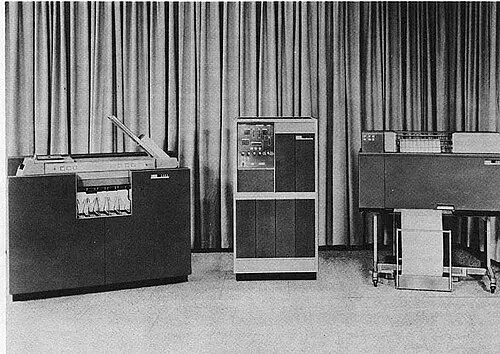
The timing was perfect. In 1959 IBM had announced the 1401, a computer that the company itself calls “the Model T of the computer industry.” According to IBM, more than 5,200 orders arrived in the first five weeks, and by the mid-1960s over 10,000 systems were in use. IBM needed a way to get these large and delicate machines to customers without damage, and Bubble Wrap was the answer.
“It was the answer to IBM’s problems,” a Sealed Air executive told Smithsonian. Until then, the usual way to protect goods in transit was to stuff the box with balled-up newspaper, which smeared ink on the product and on the people handling it, and did not offer much protection anyway. Once IBM had shown the way, many other businesses began using Bubble Wrap too.

In Japan, it’s “puchi-puchi”
In Japan, most people call bubble wrap puchi-puchi, after the little popping sound the bubbles make. Strictly speaking, though, Puchi-Puchi is a brand name, registered as a trademark in 1994. It belongs to Kawakami Sangyo, a company founded in 1968 and now renamed Puchi-Puchi Co., Ltd. According to the company’s website, its predecessor, the Kawakami Laboratory, began developing bubble cushioning in 1963.
The company points out that only its own products can properly be called Puchi-Puchi, and that the generic Japanese term is kihō kanshōzai, literally “air-bubble cushioning material.” Other Japanese manufacturers sell the same kind of sheet under their own names, such as Sakai Chemical Industry’s Minapack and Air Cap. In 2000, the company also declared August 8 to be Puchi-Puchi Day.