Why does hail fall in summer?
In early summer the ground is warm while cold air lingers aloft, so thunderclouds build strong updrafts that let ice grow large.
It is a warm, sticky afternoon when the sky suddenly darkens, thunder rolls, and chunks of ice come clattering down. Hail can dent cars, crack windows and batter fruit and vegetables just before harvest. It is an unwelcome delivery from the sky.
Since it is made of ice, you might expect hail to belong to winter. Yet in Japanese haiku, where seasonal words matter, hyō (hail) is a word of summer. Why do lumps of ice choose the warm season to fall?
Hail and graupel are told apart by size
The Japan Meteorological Agency defines hail as “lumps of ice 5 millimeters or more in diameter falling from cumulonimbus clouds.” Ice pellets smaller than 5 millimeters are called arare, roughly graupel or small ice pellets. In haiku, too, hail is a summer word and arare a winter one.
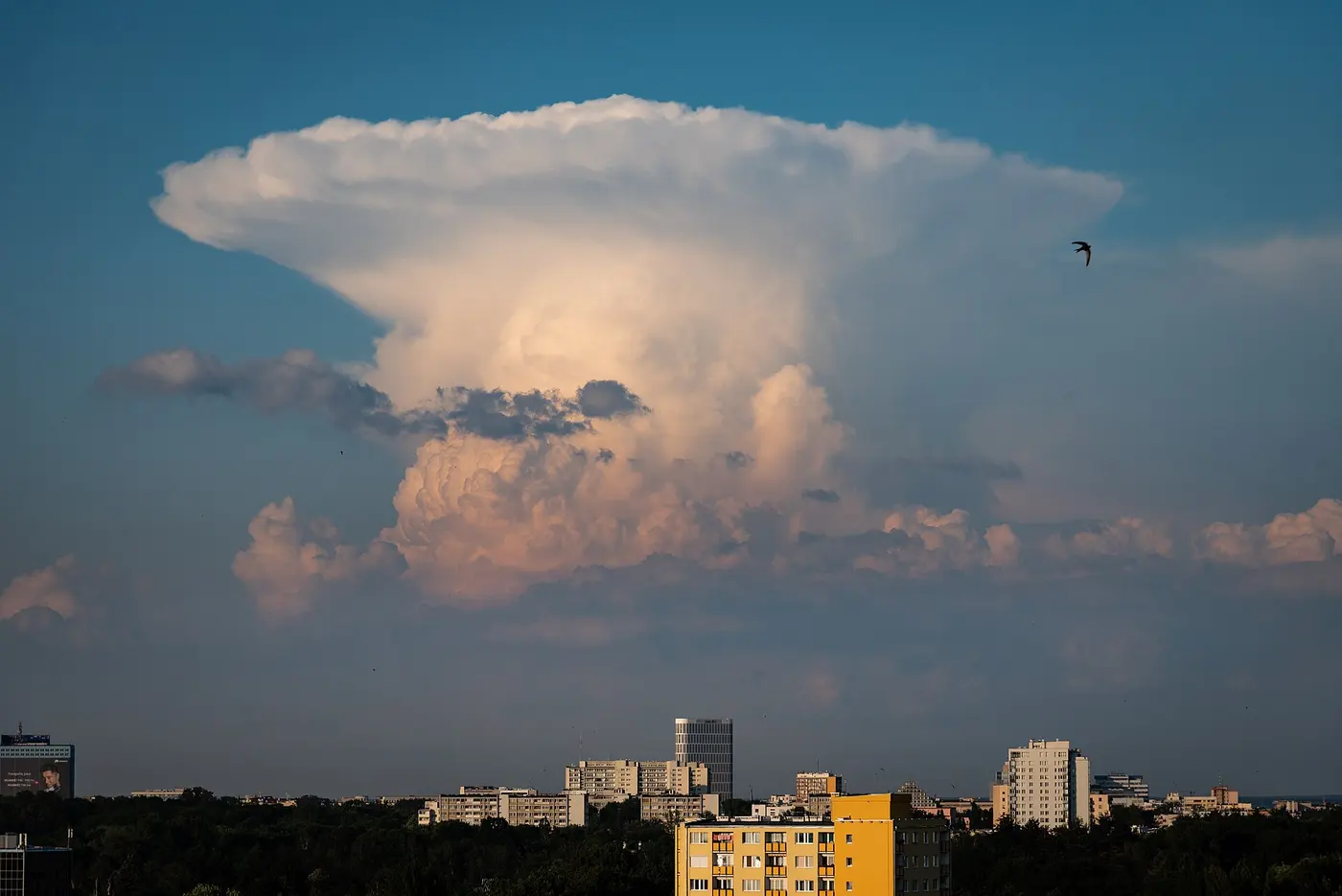
Hail comes from cumulonimbus clouds, the towering thunderheads of summer. Inside them, powerful updrafts sweep air high into the sky, and the upper part of the cloud is below freezing even when it is summer on the ground.

Up and down, again and again
High in the cloud float countless tiny droplets that stay liquid even below freezing, known as supercooled droplets. When a small piece of ice bumps into them, they freeze onto its surface and the ice grows little by little.
Normally a particle that gets heavy simply falls out. But when a thundercloud’s updraft is strong, the growing ice cannot fall, and it is carried up and down inside the cloud, collecting more droplets as it goes. Only when it becomes too heavy for the updraft to hold does it finally drop to the ground.
According to the US National Oceanic and Atmospheric Administration (NOAA), growing a golf-ball-sized hailstone, 4.4 centimeters (1.75 inches) across, takes an updraft of more than 100 kilometers per hour (about 64 miles per hour).
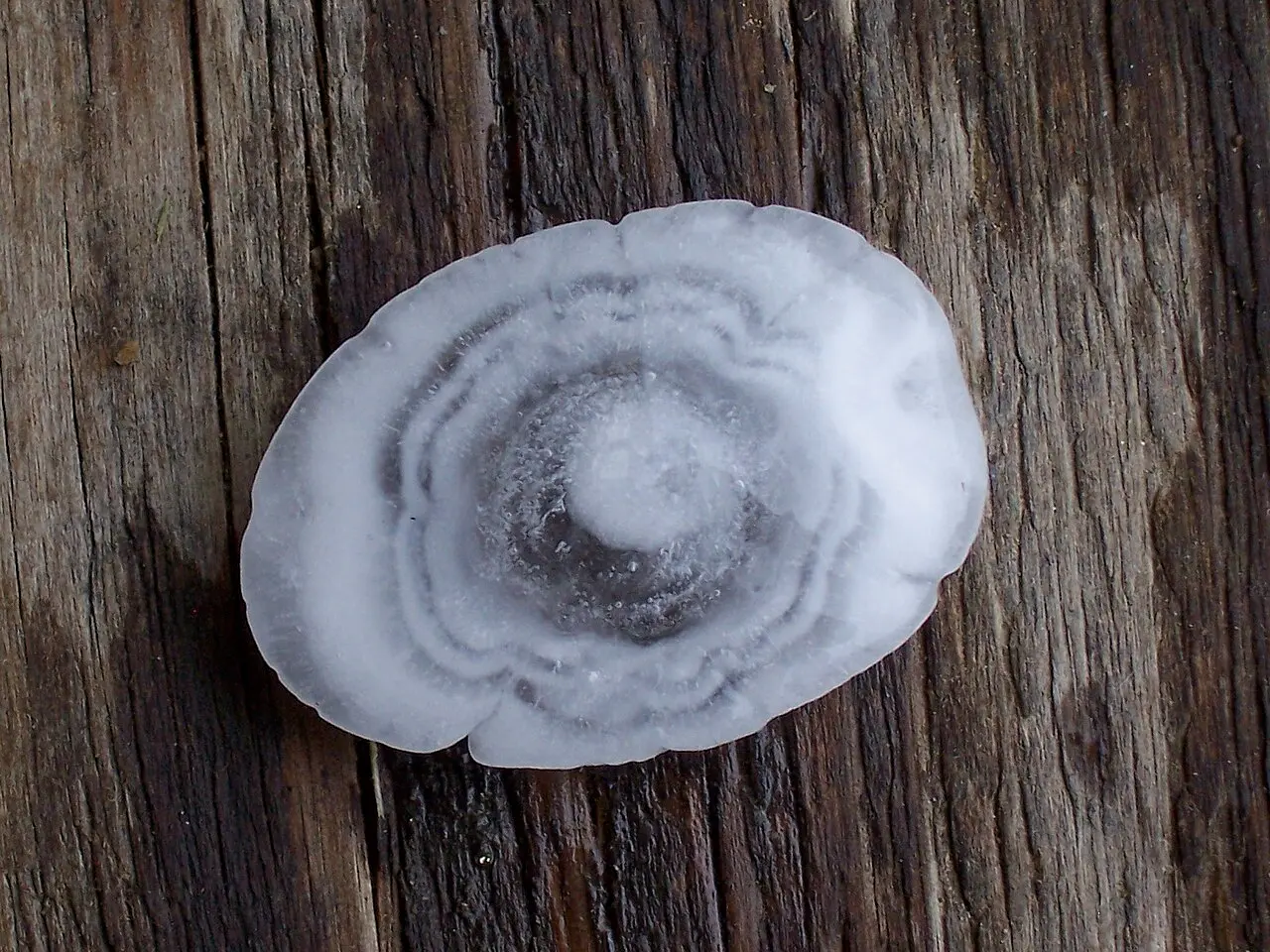
Cut a large hailstone in half and you may find rings like those of a tree, alternating layers of clear ice and cloudy white ice. Where it is only just below freezing, water freezes slowly and the air escapes, leaving clear ice. Where it is much colder, water freezes instantly and traps air bubbles, leaving white ice. The pattern of layers is a record of the hailstone’s journey through the cloud.

Why early summer beats midsummer
Thunderclouds grow most vigorously when the air near the ground is warm and the air high above is cold. Warm air is light and wants to rise, cold air is heavy and wants to sink, and the atmosphere becomes unstable.
In Japan, those conditions come together most often in early summer. Around May, the strengthening sun warms the ground, while cold, almost wintry air can still flow in high overhead. A tally of Japan Meteorological Agency data for the ten years up to 2005 found that hail was reported most often in May, about 115 times, followed by July, about 70 times.
In midsummer, thunderclouds still grow tall. But the upper air is warm too, so large ice has a harder time growing, and what does form tends to melt on the way down, arriving as big raindrops instead. In winter, by contrast, thunderclouds rarely grow strong enough to produce hail. Incidentally, the haiku calendar begins summer at rikka, the traditional “start of summer” in early May, so May hail really does count as a summer event.
Hail the size of a pumpkin
In Japan, the most famous hailstorm struck Saitama Prefecture, north of Tokyo, on 29 June 1917. According to the Kumagaya Local Meteorological Office, one hailstone measured about 29.5 centimeters (nearly 12 inches) across, and a pumpkin-sized lump is said to have still weighed 3.4 kilograms (7.5 pounds) after partly melting.
Among officially recognized records, a hailstone found in Vivian, South Dakota, on 23 July 2010, about 20 centimeters (8 inches) across, holds the US records for both size and weight. The World Meteorological Organization lists hailstones of up to 1.02 kilograms (2.25 pounds) that fell in Bangladesh on 14 April 1986 as the heaviest in the world.