What is the omiwatari of Lake Suwa?
A ridge of cracked, upthrust ice that runs across the frozen lake like a mountain range. People have recorded it for more than 580 years.
580years+
Lake Suwa, near the center of Nagano Prefecture in the mountains of central Japan, is a shallow lake about 13 square kilometers (5 square miles) in area and averaging only about 5 meters (16 feet) deep. In a hard winter, its surface freezes over completely, and then a line of cracked ice pushed up into a ridge appears across it. This is the omiwatari, “the god’s crossing.”
According to Nagano Prefecture, the ridge stands anywhere from 30 centimeters to 1.8 meters (1 to 6 feet) high and runs across the lake from the south shore to the north.
How an ice mountain range forms
The omiwatari is born from ice shrinking and swelling as the temperature changes.
Once the lake is frozen over and the ice has thickened, the cold before dawn makes the ice contract until it cracks. Lake water wells up into the crack and quickly freezes into a thin layer. When the air warms during the day, the whole sheet of ice expands, but the crack is now sealed with new ice, so the sheets have nowhere to go: they shove against each other and buckle upward. Repeat this over and over, and the ridge grows little by little.
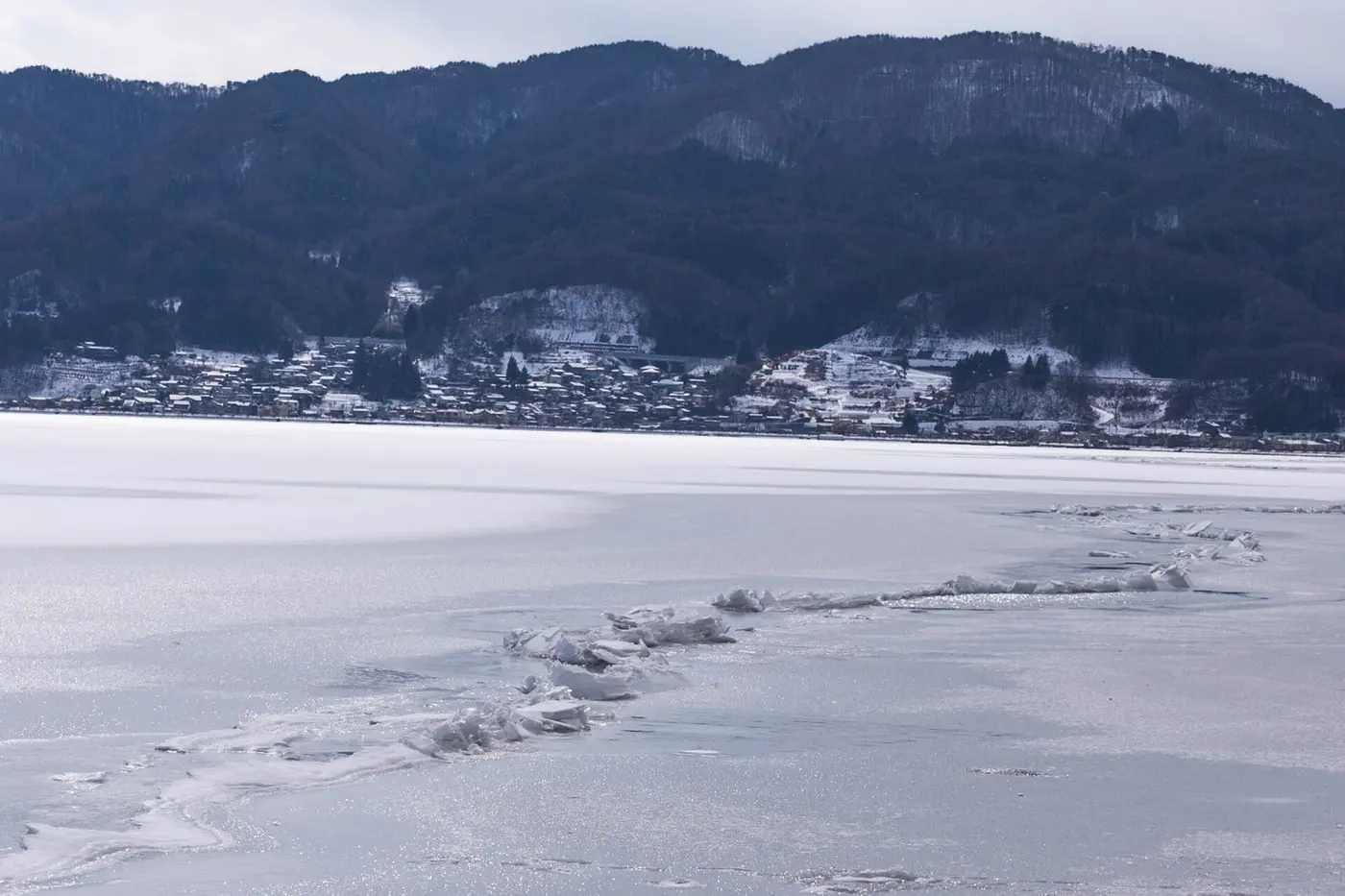

First, though, the whole lake has to freeze thick. According to a Japanese weather forecaster writing for the weather site tenki.jp, an omiwatari on Lake Suwa needs about a week of days around minus 10°C (14°F).
The path of a god
Local tradition holds that the omiwatari marks the path taken by the male god of the Upper Shrine of Suwa Taisha, a major Shinto shrine, as he crossed the ice to visit the female god of the Lower Shrine.
When an omiwatari appears, about 60 people, including the priest of Yatsurugi Shrine in Suwa City and leading parishioners, go out to inspect the cracks. Based on the ridges’ path, they divine the year’s harvest, the fortunes of society and the weather. This ritual is designated an intangible folk cultural property by Suwa City.
The frozen lake has also inspired drama. In Honchō Nijūshi Kō, a puppet play first staged in 1766, the heroine Princess Yaegaki crosses the iced-over lake with the help of fox spirits.
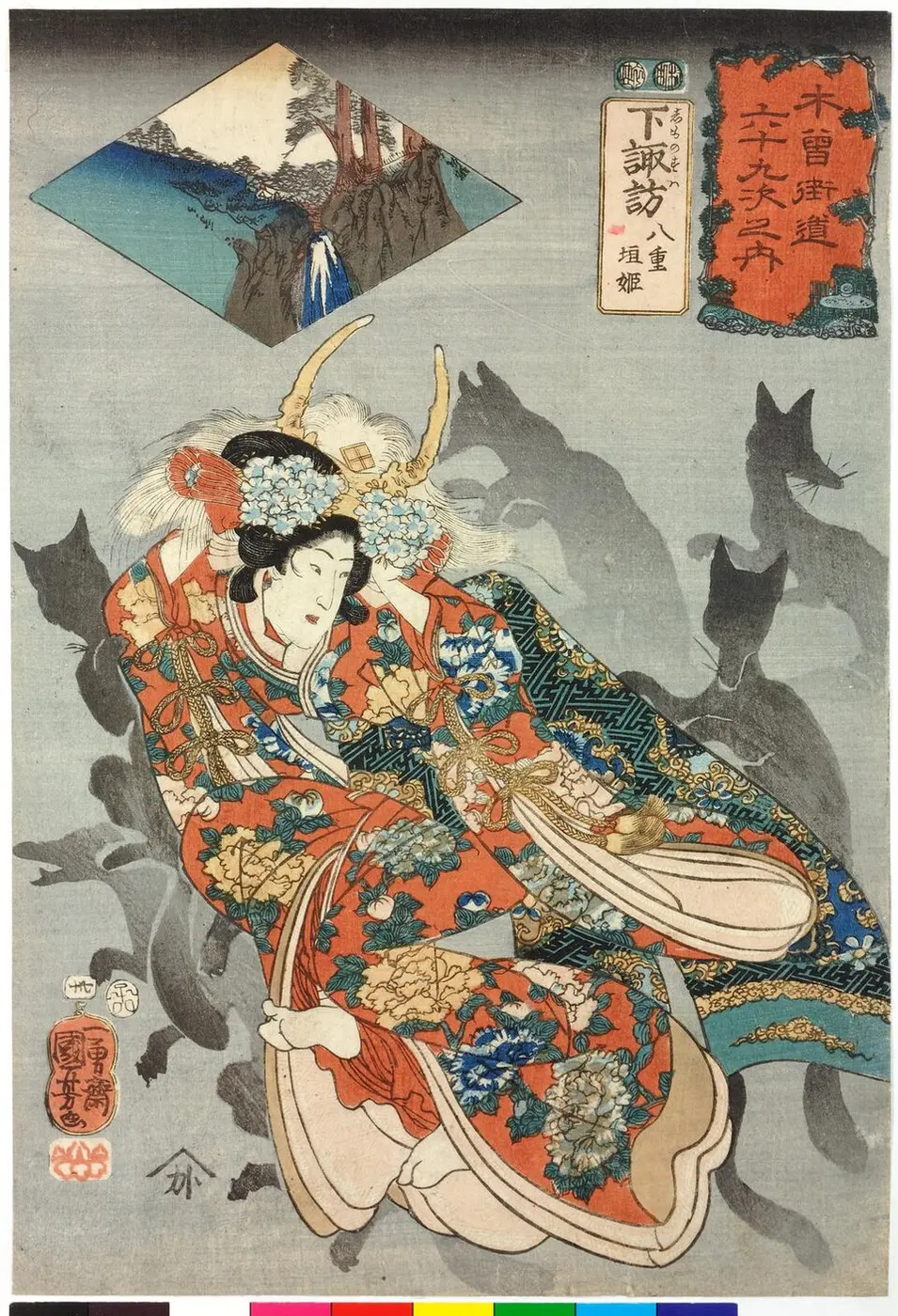

A winter diary 580 years long
What makes the omiwatari special is the length of its record. Notes of the dates when the lake froze and when the ice ridge appeared survive almost without a break from the 1440s, in Japan’s Muromachi period. Since 1683, priests of Yatsurugi Shrine have kept the record, and they still do.
Climate scientists around the world have taken notice. In 2016, a team led by researchers at York University in Canada analyzed Lake Suwa’s freeze dates from 1443 to 2014, together with records of ice breakup on the Torne River in Finland, and published the results in Scientific Reports. Before the Industrial Revolution, they found, Lake Suwa froze over in 99 percent of winters; recently it has done so only about half the time. The trend toward later freezing also sped up from 0.19 days per decade before the Industrial Revolution to 4.6 days per decade afterward, 24 times faster.
As National Geographic reported, in the first 250 years of the record there were only three winters when the lake did not freeze. Between 1955 and 2004, there were 12, and between 2005 and 2014 alone, there were five.
Eight “open sea” winters in a row
A winter that ends without an omiwatari is called ake no umi, “open sea.” Lately, that is almost all there has been.
The last omiwatari appeared in 2018. In 2025, small lines formed in the ice, but they never grew into a ridge. In 2026, the lake froze over completely on January 26, only to thaw a few days later, and an open sea was declared on February 4. According to the news agency AFP, eight straight winters without an omiwatari ties a stretch in the early 16th century as the longest on record. Kiyoshi Miyasaka, the priest of Yatsurugi Shrine, told AFP: “Nature doesn’t lie.”