How far down can you drink through a straw?
At sea level, about 10 meters is the absolute limit no matter how hard you suck. In practice, people can manage a few meters at most.
10m
Sipping juice through a straw is something we do without thinking. But imagine joining straws end to end and trying to drink from a glass on the ground from a second-floor window, then the third floor, and higher still. How far could you go?
The answer doesn’t depend only on how strong your lungs are. When you drink through a straw, it isn’t really your mouth that lifts the liquid.
The air does the pushing
When you suck on a straw, you remove some of the air in your mouth and the straw, lowering the pressure inside. Meanwhile, the air around you is always pressing down on the surface of the drink. That air pressure, the atmospheric pressure, pushes the liquid up into the straw where the pressure is lower. The liquid rises until the weight of the raised column balances the difference in pressure inside and outside the straw.
So what if you removed every last bit of air from the straw, leaving a vacuum? Even then, the push on the water can be no greater than atmospheric pressure. At sea level that is about 1,013 hectopascals, which balances the weight of a column of water about 10.3 meters (34 feet) tall. However you suck, then, water at sea level won’t rise more than about 10 meters. In reality the limit is a little lower, because water evaporates into the empty space at the top of the tube.
The width of the straw makes no difference. A wider tube holds a heavier column of water, but the air also presses on a correspondingly wider patch of the surface.
Galileo’s pump story
People who used pumps ran into this barrier centuries ago. In his 1638 book Two New Sciences, the Italian scientist Galileo Galilei has one of his characters tell this story.
A cistern had been fitted with a pump that drew water up by suction. It worked perfectly while the water was high, but stopped once the level dropped. The workman called in to fix it said the pump was fine: no machine that lifts water by suction, large or small, could raise it “a hair’s breadth above eighteen cubits.” The unit in the original Italian was the braccio, an old Italian measure of length, and 18 braccia comes to a little over 10 meters. The same holds, another character adds, even for a pipe “as fine as a straw.”
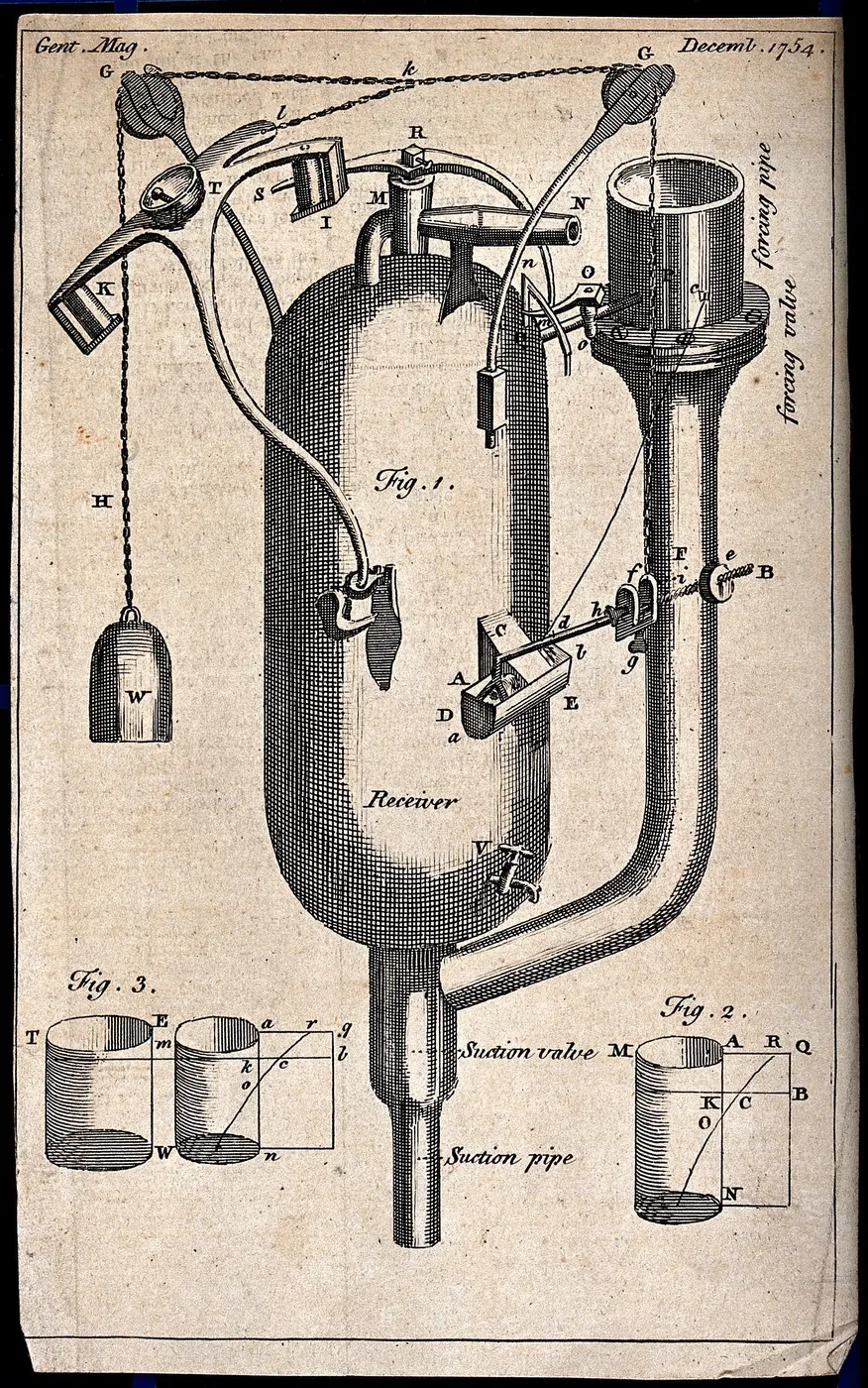

In the book, the limit is explained as the column of water snapping under its own weight, the way a long rope breaks if it hangs from one end. It was his student Evangelista Torricelli who worked out that the real reason was air pressure.
Human suction tops out around a meter
Of course, no one can create a vacuum with their mouth. Doctors measure the strength of a person’s in-breath with a test called maximal inspiratory pressure, often expressed in the same units as the height of a column of water. A 2025 study of about 390 adults in Singapore found median values of 112 centimeters of water for men and 83 centimeters for women. Breathing in alone, then, can lift water only about a meter.
People vary a lot, though. An American science education project notes that some people struggle with a straw about 0.9 meters (3 feet) long, while others can drink while standing about 2.4 meters (8 feet) above their drink.
How do 100-meter trees do it?
Yet nature routinely beats the 10-meter barrier. Trees such as the coast redwoods of California grow more than 100 meters (330 feet) tall. How do they get water all the way to the top?
The leading explanation is the cohesion-tension theory, proposed more than a century ago. As water evaporates from the leaves, it pulls on the water in the narrow conduits that run from the roots to the leaves. Water molecules cling strongly to one another, so water in these narrow tubes can be pulled without breaking apart. Instead of pushing water up from below, a tree hauls up a continuous column of water from above.
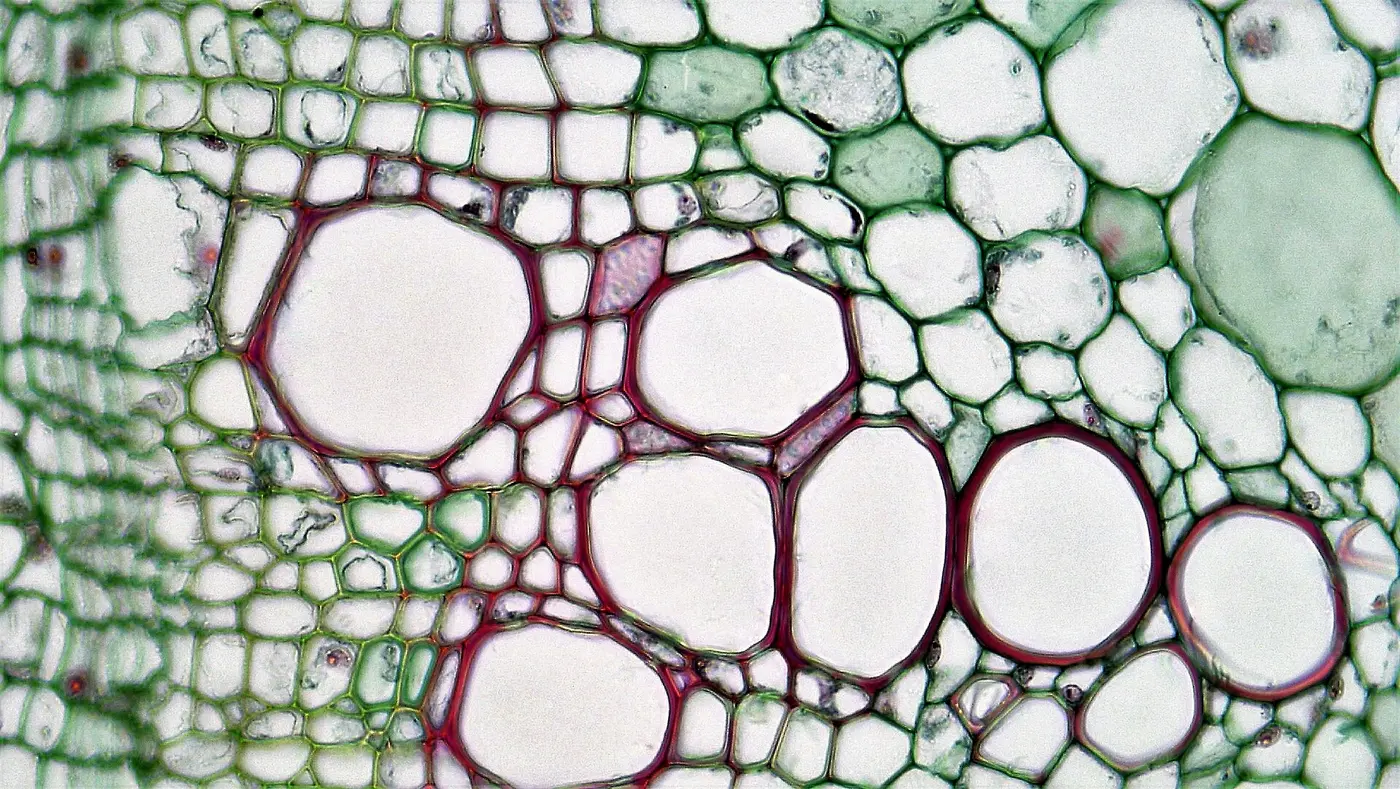

At the top of a 100-meter tree, just supporting the weight of the water means it is being stretched with a force of nearly nine times atmospheric pressure. If an air bubble gets into a conduit, the column snaps and that pipe stops carrying water. Galileo’s picture of water pulled like a rope was wrong for pumps, but it turns out to describe what really happens inside trees.