Why are railway tracks 1,435 mm apart?
Because George Stephenson, the “father of railways,” carried over the gauge used on the colliery wagonways of northern England.
1435mm
The distance between the two rails of a railway track is called its gauge. Japan’s Shinkansen, Europe’s high-speed trains, and most railways in the United States and China all share the same gauge: 1,435 mm. About 60 percent of the world’s railway lines use it, which is why it’s called standard gauge.
Still, 1,435 mm is an awkward number. Why not 1,400 or 1,500? How did the tracks end up exactly this far apart?
From colliery wagonways
The answer lies in northeastern England in the early 19th century. At the coal mines there, horses pulled wagons loaded with coal along rails of wood or iron. These tracks were known as wagonways.
George Stephenson, later called the “father of railways,” grew up in this region and worked as an engineer at the collieries. On the local wagonways he favored a gauge of 4 feet 8 inches (about 1,422 mm), and he used it on the line he built at Killingworth colliery. The Stockton and Darlington Railway, which opened in 1825, adopted the same gauge so that the existing wagons could run on it unchanged.
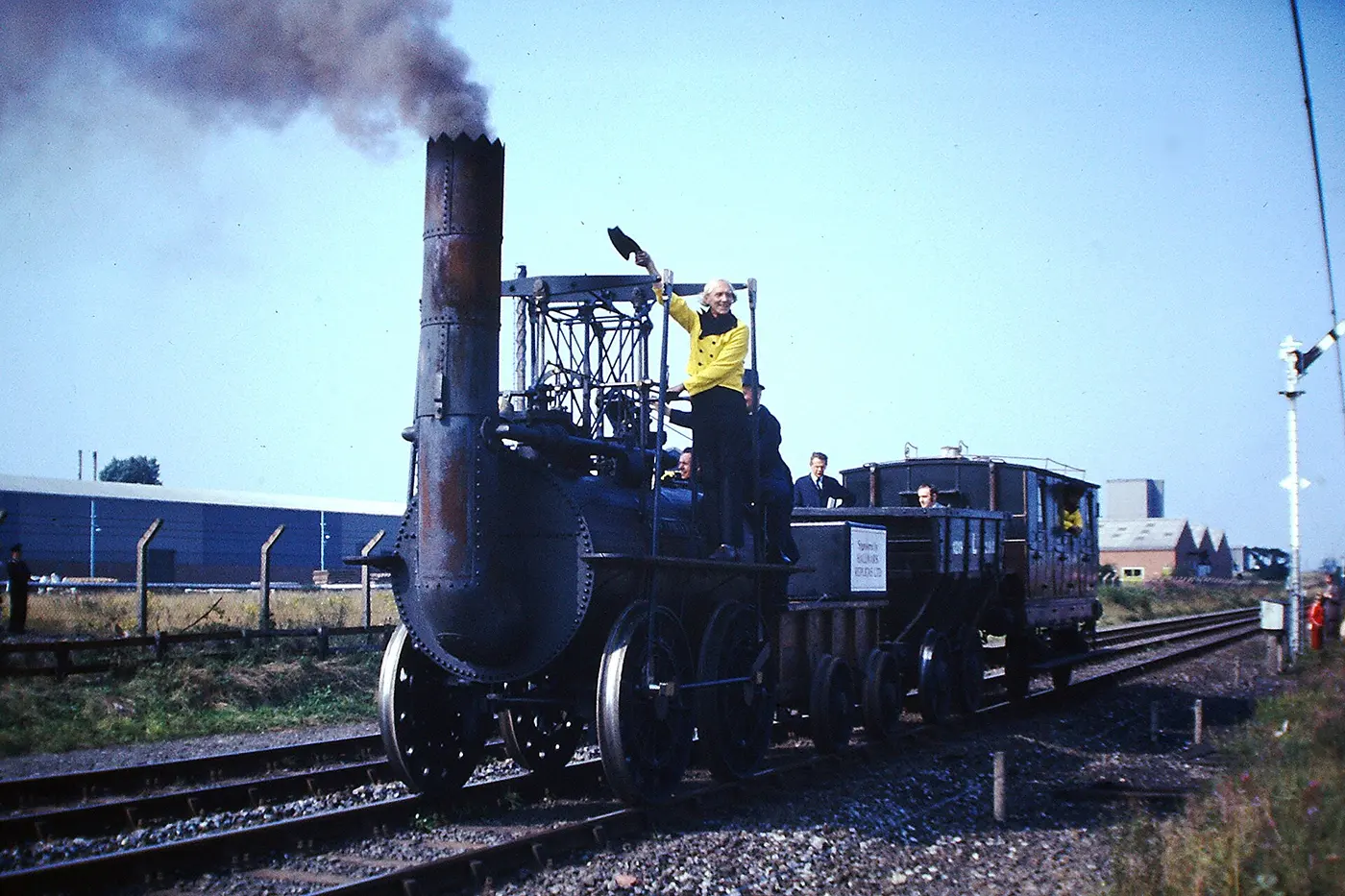

So where did the extra half inch come from? When building the Liverpool and Manchester Railway, which opened in 1830, Stephenson widened the gauge by half an inch (about 13 mm) to keep the wheels from binding on curves. The resulting 4 feet 8½ inches works out to 1,435 mm.
Was it really Roman chariots?
There’s a famous story about this gauge. The wheels of Roman chariots wore ruts into Roman roads; carriages were built to fit those ruts; wagons inherited the carriages’ width; and that width eventually became the railway gauge. So, the story goes, the gauge was set by the width of two horses’ rear ends.
It’s a neat tale, but you can’t take it at face value. An American fact-checking site rates it “false,” adding that it might more fairly be called “partly true, but for trivial and unremarkable reasons.” In that view, wagon widths were broadly similar simply because the convenient size for a horse-drawn vehicle didn’t change much from one era to the next. There was no straight line running from Rome to the railways.
The battle of the gauges
In fact, 1,435 mm didn’t become the standard without a fight. The British engineer Isambard Kingdom Brunel built the Great Western Railway to a broad gauge of about 2,140 mm. He is said to have believed that a wider gauge would let trains run faster and more steadily.
At stations where tracks of different gauges met, passengers had to change trains and freight had to be unloaded and reloaded every time. The chaos became known as the “gauge war.” In the end, Stephenson’s gauge, which already covered more miles of track, won out, and an 1846 act of Parliament required new passenger railways in Britain to use it. The Great Western finally abandoned its broad gauge altogether in 1892.
Why are Japan’s tracks narrower?
Most of the regular, non-Shinkansen lines run by Japan’s JR companies, by contrast, use not 1,435 mm but a narrow gauge of 1,067 mm. This gauge has been used since Japan’s first railway opened between Shinbashi and Yokohama in 1872.
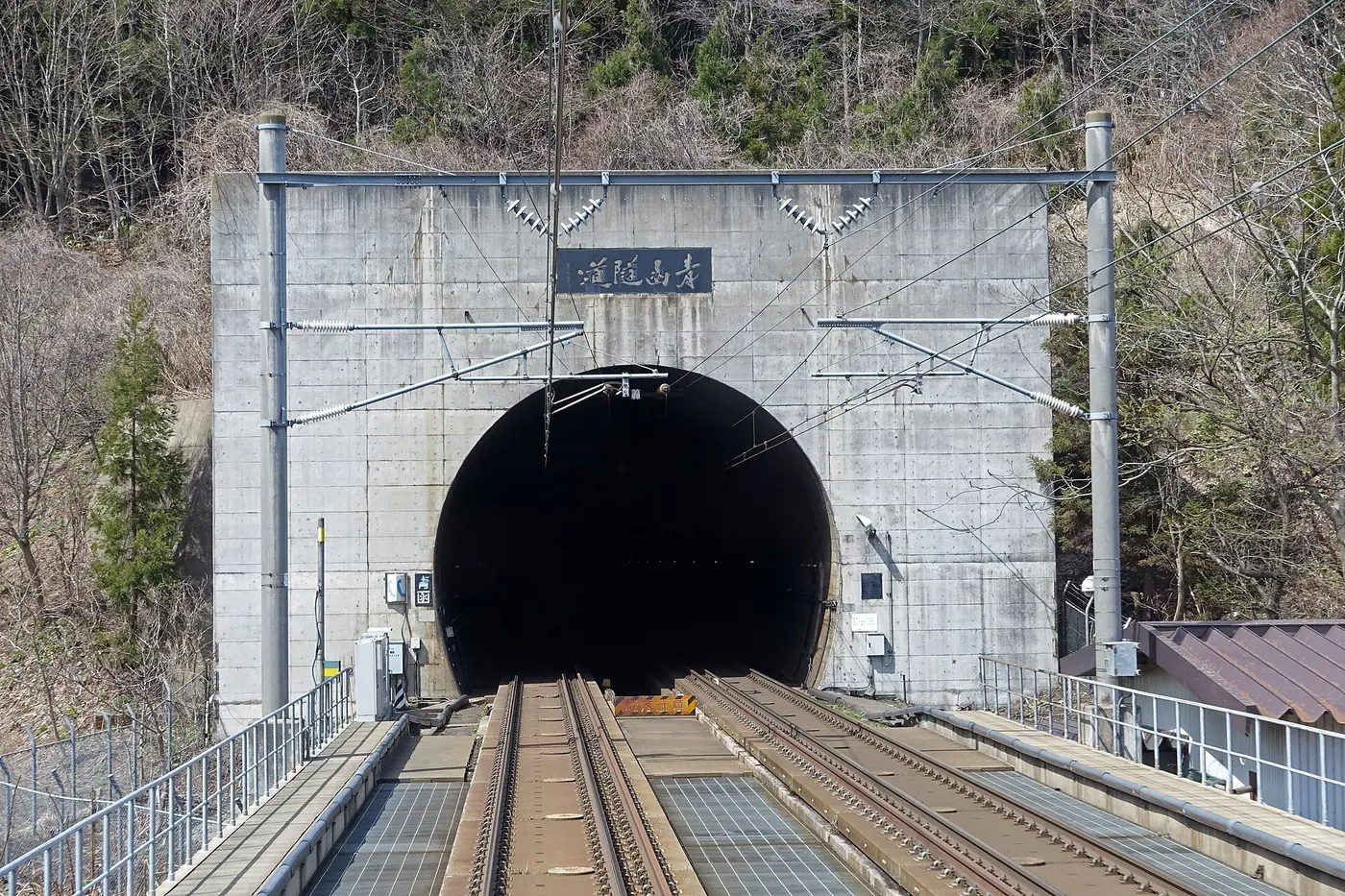

The gauge is said to have been chosen by Edmund Morel, a British engineer hired by the Meiji government, in consultation with the statesman Ōkuma Shigenobu. Lower construction costs in a mountainous country are said to have been among the reasons. Proposals to convert to standard gauge came up again and again over the years, but expanding the network took priority, and the change never happened.
The first national railway line to use standard gauge was the Tōkaidō Shinkansen, which opened in 1964. Some private railways, such as Keikyū, had been using standard gauge even earlier. To this day, the Shinkansen and the conventional lines run on different gauges. That’s why, on routes like the Yamagata and Akita Shinkansen, where bullet trains continue onto conventional lines, those lines were rebuilt to standard gauge.