When was the toothbrush invented?
The bristle toothbrush was born in China, and mass production began in England around 1780.
1780
Once when you get up, once before bed. For many of us, brushing our teeth is one of the most familiar habits there is, and swapping in a new toothbrush every few months is simply what we do.
Yet the toothbrush as we know it, with nylon bristles set in a plastic handle, isn’t all that old. The wish to keep our teeth clean, on the other hand, goes back a very long way. Let’s trace the road that led humanity to the toothbrush.
It started with a chewed twig
The ancestor of the toothbrush was a twig. You chewed the end until the fibers frayed, then scrubbed your teeth with it like a brush. These “chew sticks” are said to have been in use in Sumer, in Mesopotamia, by around 3500 BCE.
In India, the Buddha is said to have taught his disciples to keep their mouths clean, and monks used tooth sticks, called shiboku (歯木) in Japanese: twigs of willow or similar trees chewed into a tuft. The practice traveled with Buddhism through China to Japan, where it eventually came to be called yōji (楊枝).
Even today, in the Middle East, Africa, and South Asia, people use the miswak, a chewing stick cut from the branches of the Salvadora tree.
China’s bristle brush
The toothbrush with bristles set in a handle, close to today’s form, is said to have originated in China. It had a handle of bone or bamboo fitted with stiff hairs from the back of a hog’s neck. Hogs from colder regions grew stiffer bristles, so hair from Siberian and northern Chinese hogs was prized. Exactly when it appeared is unclear; some say it goes back as far as the Tang dynasty (7th to 10th centuries).
Travelers brought this toothbrush to Europe in the 17th century. Europeans, however, seem to have found hog bristles too harsh and preferred softer materials such as horsehair.
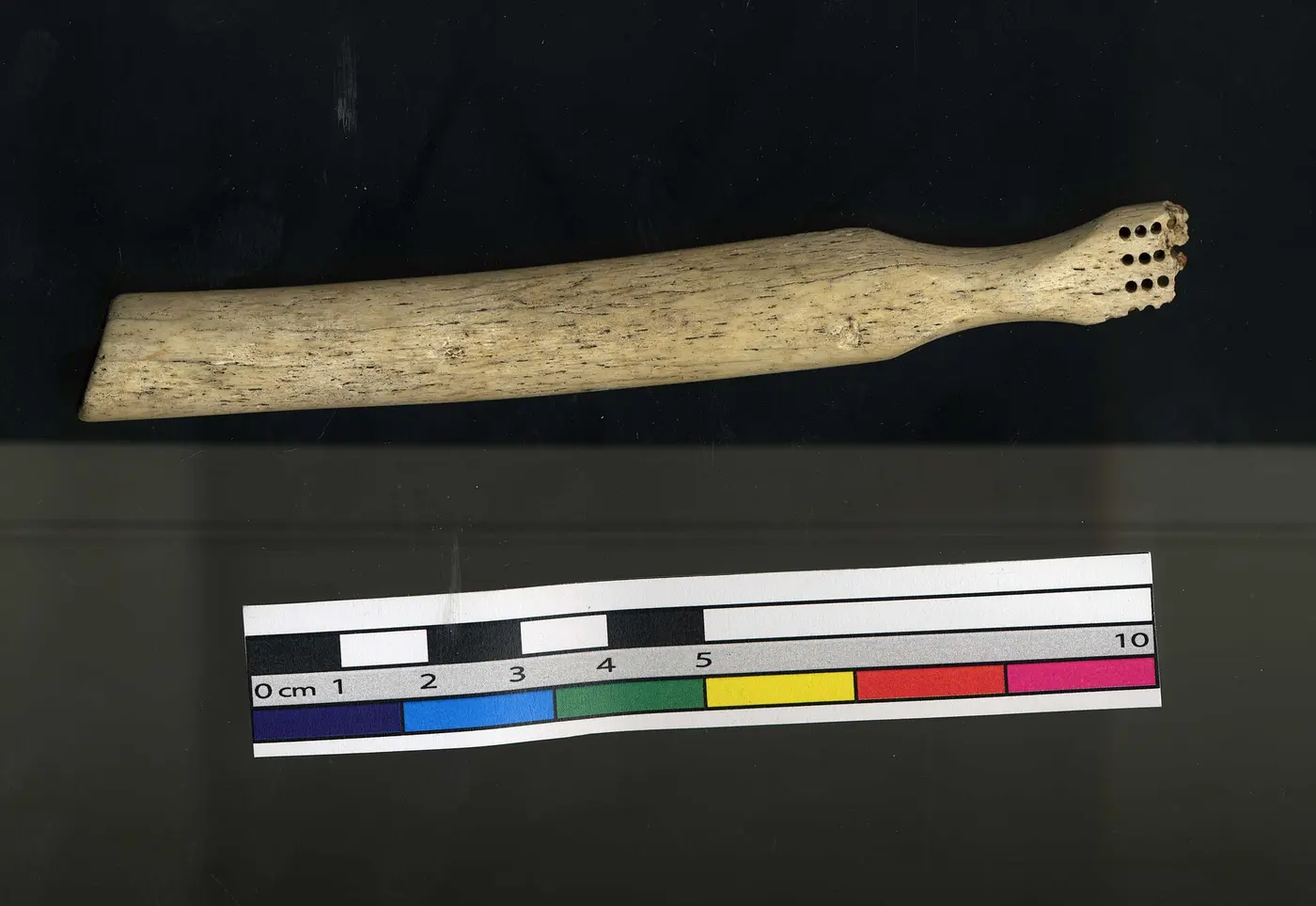

Mass production, born in a prison cell
The person who set the toothbrush on the path to everyday use was William Addis of England. Jailed in 1770 for causing a riot, he is said to have come up with the idea while behind bars. At the time, people usually cleaned their teeth by rubbing them with a cloth dipped in soot or crushed shells. Addis drilled small holes in a bone left over from a meal, threaded through them tufts of hog bristle he got from a guard, and fixed them in place with glue.
After his release, Addis began mass-producing toothbrushes around 1780. His company remained in family hands until 1996 and still makes toothbrushes today.
In the United States, a man named H. N. Wadsworth received the first toothbrush patent in 1857. Mass production in America, however, didn’t begin until around 1885.
The 20th century brought a big change in materials. On February 24, 1938, a toothbrush went on sale with bristles made of nylon, developed by the American chemical company DuPont. Unlike animal hair, nylon dried quickly and was more hygienic, and it caught on in no time.
Edo Japan’s fusayōji
In Japan, ordinary people took up toothbrushing in the Edo period (1603–1868). Their tool was the fusayōji (房楊枝), or “tufted toothpick.” Made by splitting willow, kuromoji (spicebush), or similar wood into thin sticks, boiling one end, and pounding it with a mallet until it frayed into a tuft, it was essentially a toothbrush made of wood.
A single fusayōji did several jobs. You brushed your teeth with the tufted end, cleaned between your teeth with the pointed end, and scraped your tongue with the curved part of the handle. Tooth powder was often made of fine sand from the Bōsō Peninsula mixed with fragrance.
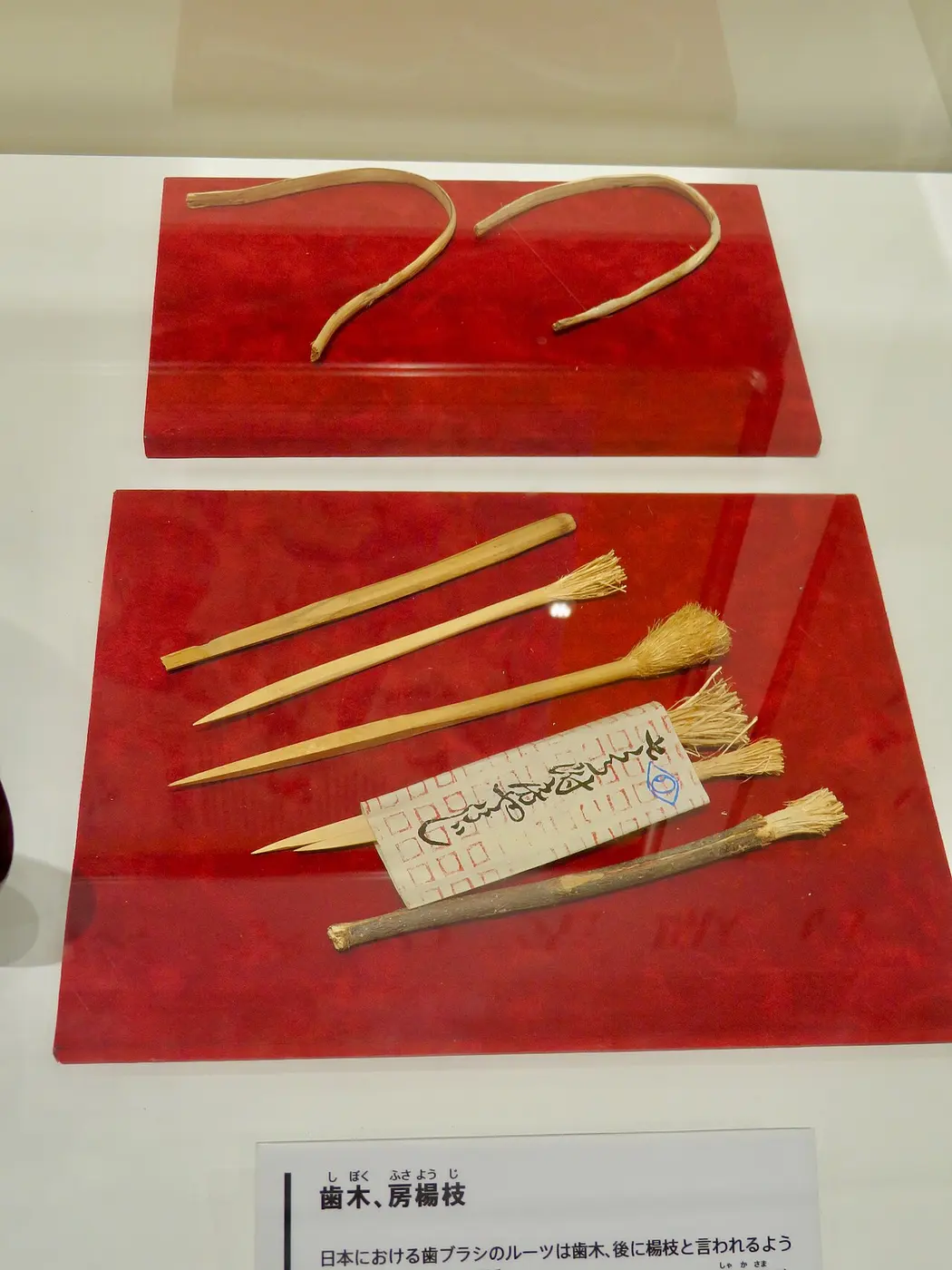

In the Meiji era, Western-style toothbrushes began to be made in Japan. Around 1872, a toothbrush called the kujira yōji, with horsehair set in a handle of whale baleen, is said to have gone on sale.