Who invented braille?
Louis Braille of France. Blind himself, he devised the six-dot system at around age 15.
63patterns
Fingertips trace tiny bumps on a page, and the bumps become words. For people who are blind or have low vision, braille is an indispensable form of writing.
It was devised by a French boy who was himself blind. And when the framework of his system took shape, he is said to have been just 15 years old.
The boy who lost his sight at three
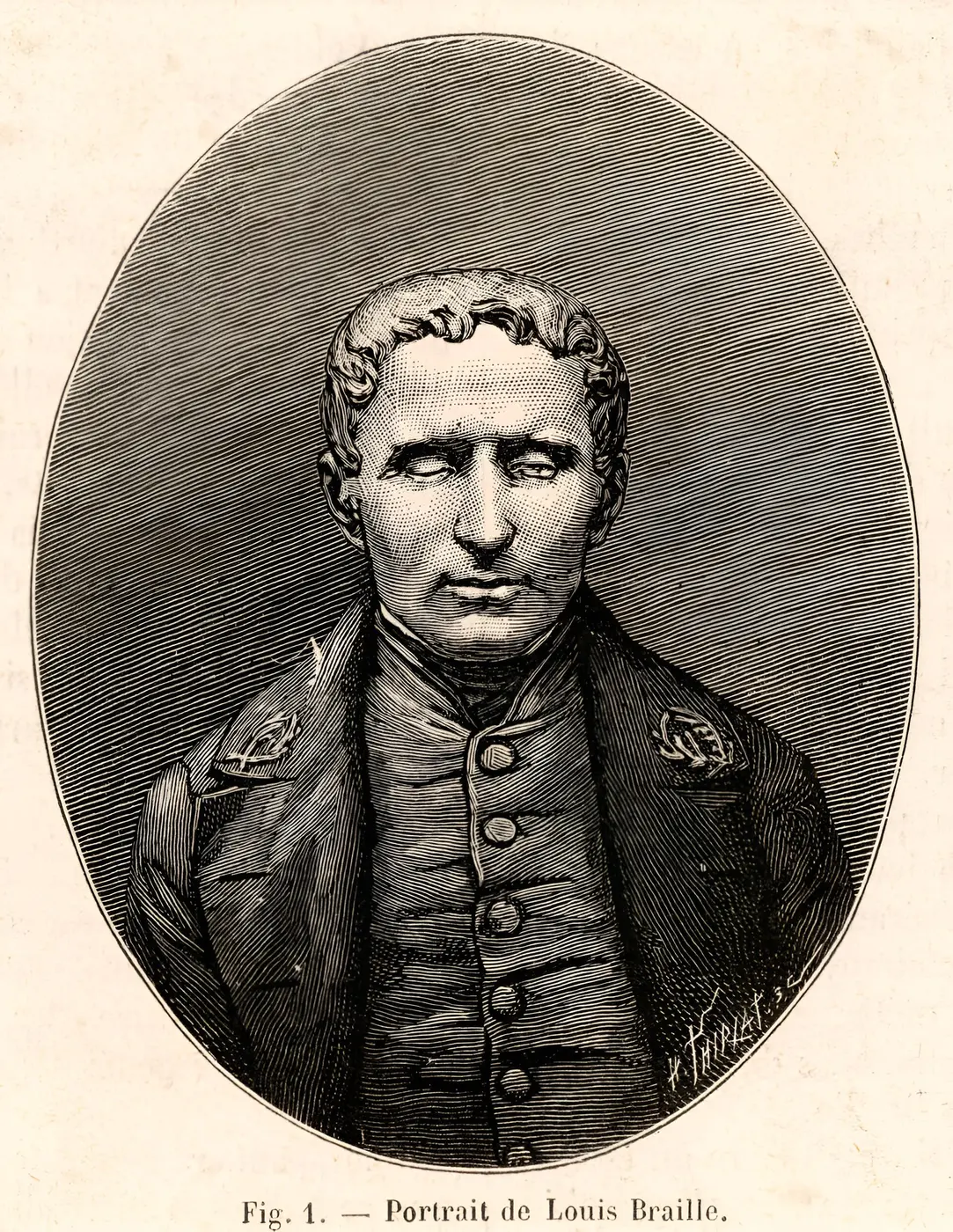
Louis Braille was born on January 4, 1809, in Coupvray, a small village east of Paris. His father was a harness maker. At the age of three, in his father’s workshop, Louis injured one eye with an awl-like tool used to punch holes in leather. The wound became infected, the infection spread to his other eye, and by about age five he was completely blind.
In 1819, at the age of ten, Louis entered the Royal Institute for Blind Youth in Paris. The school had books in which ordinary letters of the alphabet were embossed in large raised type. But these raised letters were complicated shapes to trace with a finger, and even a single letter took time to make out. The books were big and heavy, and the students had no way to write in that form themselves.

The inspiration: “night writing”
The turning point came in 1821, when a system called “night writing,” invented by the former army officer Charles Barbier, was introduced at the school. It worked by reading combinations of dots punched into paper with the fingers. It is often described as a code created for soldiers to use in the dark, but there is no clear record of that. Barbier himself later wrote that the method could also be useful in the army and in hospitals.
Writing with dots was a groundbreaking idea, but the system had its drawbacks. It used up to twelve dots, in two columns of up to six, too many to feel with one fingertip at once. And it represented sounds rather than letters, so it could not show spelling, punctuation, or numbers.
From twelve dots to six
Louis threw himself into improving night writing. What he arrived at was a way of representing each character with six dots, arranged three high and two wide. Depending on which of the six dots are raised, 63 combinations are possible, not counting the blank cell. That is enough for the alphabet, plus punctuation and numbers. Above all, six dots can be read with a single fingertip in one touch.
Louis first showed his system to his classmates in 1824, at around 15. In 1829 he published the first book explaining it, which even included a way of writing music. He later became a teacher at his old school, and died of tuberculosis on January 6, 1852, at the age of 43. The school officially adopted braille two years later. In 1952, a hundred years after his death, his remains were moved to the Panthéon in Paris.
Ishikawa Kuraji and Japanese braille
Braille eventually spread around the world and was adapted to each language. Japanese braille was created by Ishikawa Kuraji, a teacher at the Tokyo School for the Blind and Deaf.
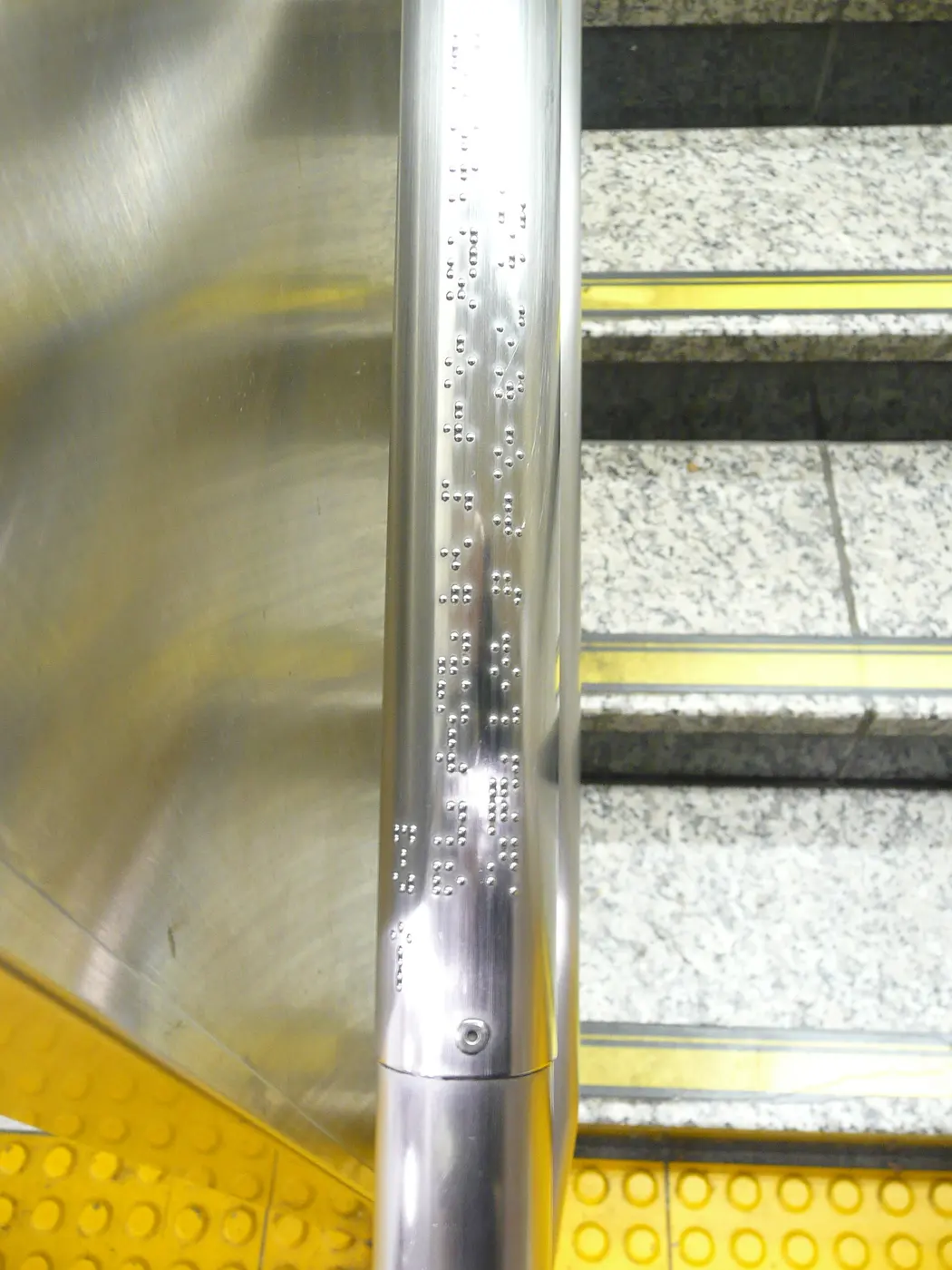

The Latin alphabet has 26 letters, but the Japanese kana syllabary has around fifty basic sounds, plus voiced and semi-voiced variants. Fitting all of that into six dots was no easy task. At the school, several proposals, including ones from other teachers and from students, were compared through repeated trials. Then, at a selection meeting on November 1, 1890, Ishikawa’s proposal was adopted. It was a clever scheme suited to the structure of kana: the three dots in the upper left of the cell show the vowel, and the three in the lower right show the consonant row. The system was published in the government gazette in 1901 as “Nihon Kunmō Tenji” (Japanese braille for the blind), and in honor of the selection meeting, November 1 is marked in Japan as the anniversary of the establishment of Japanese braille.