Did NASA spend millions on a space pen while the Soviets used pencils?
No. The pressurized space pen was developed privately by Paul Fisher’s pen company with its own money, and both NASA and the Soviet Union bought it for a few dollars apiece.
$2.39
Ballpoint pens don’t work in zero gravity, the story goes, so NASA spent years and a fortune developing a pen that could write in space. The Soviets used a pencil.
It is a popular parable about overthinking a problem, and in the retelling the price tag keeps climbing, from a million dollars to a hundred million to a billion. The records from the time tell a very different story. In fact, they turn it almost upside down.
The $128 space pencil
According to a 2006 article in Scientific American, NASA historians say that American astronauts, like Soviet cosmonauts, originally used pencils.
And it was the pencils that caused a scandal. As the space historian Dwayne A. Day recounted in The Space Review, newspapers reported in March 1965, shortly before the Gemini 3 flight, that the mission would carry pencils costing about $128 apiece. NASA had paid a Houston company $4,382.50 for 34 mechanical pencils. The public was outraged, and members of Congress demanded an explanation.
NASA explained that the expensive part was the housing. It was made of lightweight, high-strength materials, could be attached inside the spacecraft and had been enlarged so the astronauts could use it while wearing bulky spacesuit gloves. The writing mechanism inside came from a local office supply house and cost $1.75.
A pen built with private money
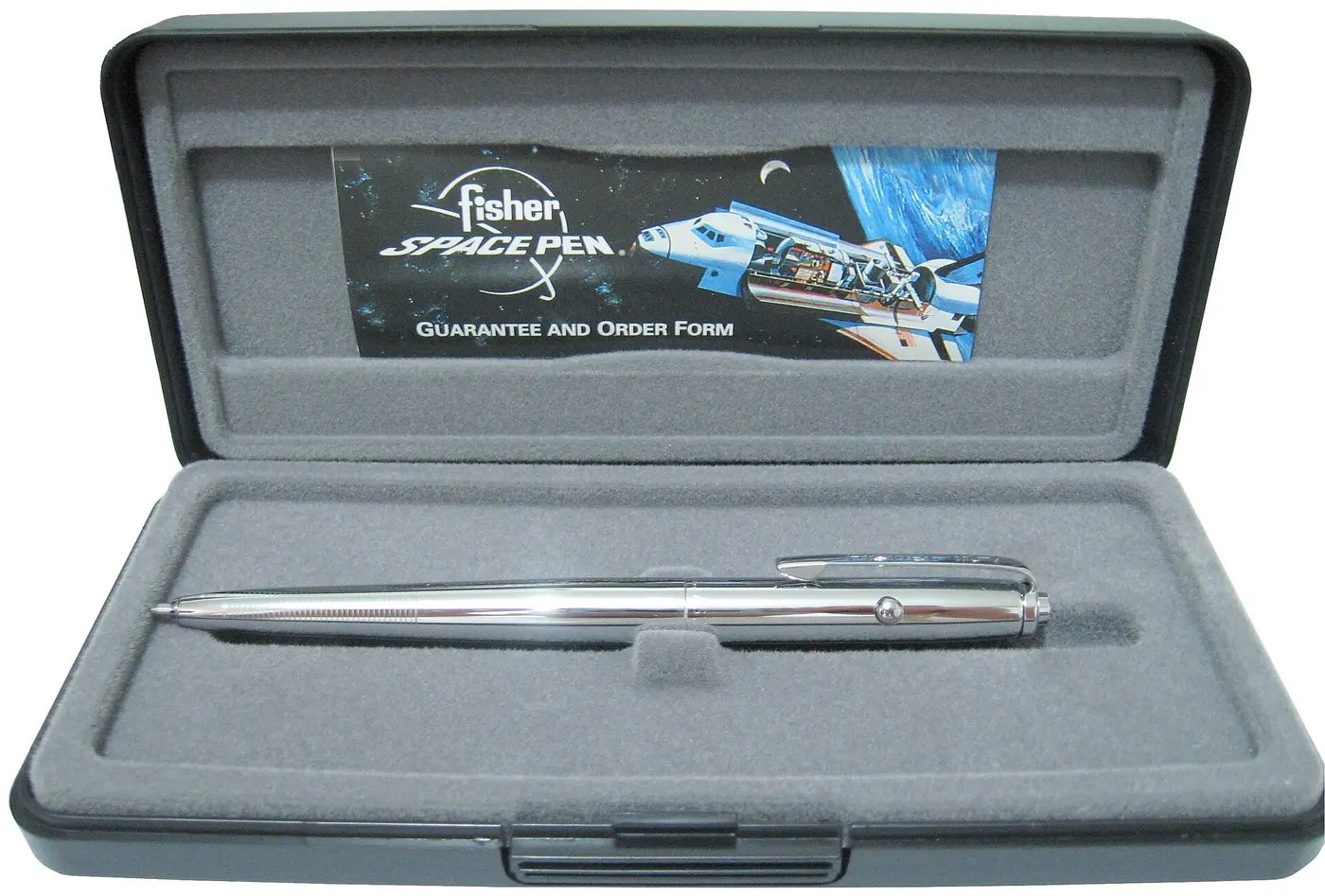
So where did the space pen come from? Its creator was Paul C. Fisher, who ran a pen company in the United States.
An ordinary ballpoint relies on gravity to feed ink to the ball at its tip. Fisher’s idea was to seal the ink in a cartridge pressurized with nitrogen at about 35 psi (2.4 atmospheres), which pushes the ink toward the tip. The ink is a gel that liquefies only as the ball rolls, so the pen doesn’t leak. It can write upside down and even underwater. Fisher filed for a patent in May 1965 and received it the following year for what he called an “anti-gravity pen.”
The development cost is often put at $1 million, but nobody knows the real figure. What is certain is that the money was Fisher’s, not NASA’s. According to NASA’s Spinoff publication, Fisher was already working on a pressurized pen before the agency got involved. And according to The Space Review, when a NASA official reviewed Fisher’s advertising, he noted that the company had never been under contract to NASA to supply writing instruments for crewed spacecraft.

Why NASA didn’t want pencils
NASA still had good reasons to adopt the pen. According to Spinoff, pencil leads break easily, and a broken tip floating around a weightless cabin could harm the astronauts or sensitive electronics.
Then there was fire. In January 1967, a fire broke out inside the Apollo 1 spacecraft during a ground test, killing three astronauts. After that, Scientific American notes, NASA wanted to avoid carrying flammable objects aboard, and pencils burn.
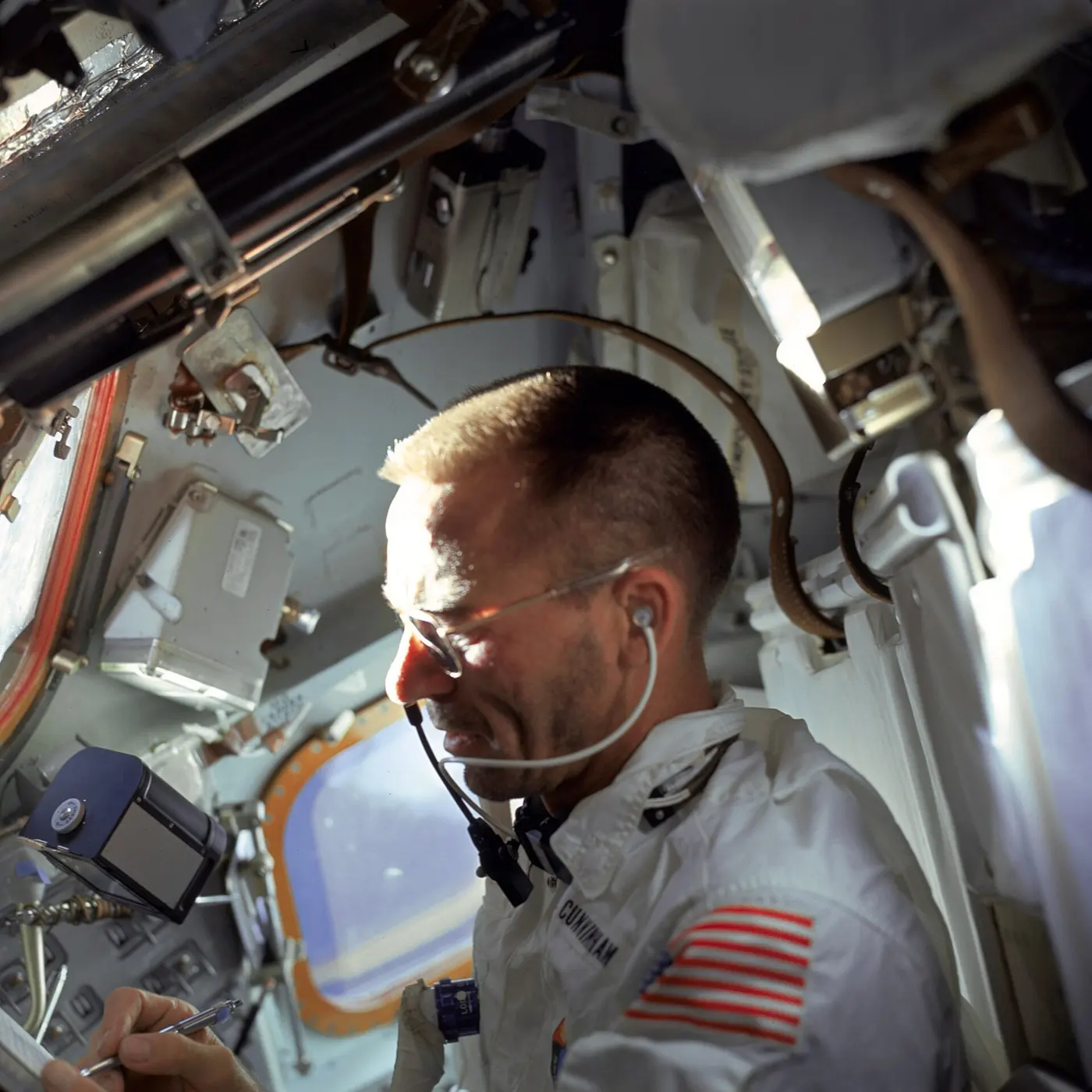
After NASA’s testing, the space pen made its first trip to space in October 1968 aboard Apollo 7, the first crewed Apollo mission. According to Spinoff, the mission commander, Walter Schirra, showed it off on live television, blowing on it to make it drift across the weightless cabin.

The Soviets bought the same pen
And the price? Scientific American cites a February 1968 Associated Press report that NASA ordered 400 of the pens for the Apollo program. A year later, according to United Press International, the Soviet Union ordered 100 pens and 1,000 ink cartridges for its Soyuz missions. According to the AP, both got the same 40% bulk discount, paying $2.39 per pen instead of $3.98.
Spinoff says cosmonauts have used space pens since 1969. The expensive writing instrument in this story was the pencil. The pen was developed with private money, and both superpowers bought it cheaply.