Why is snow white?
Light bounces again and again between clear grains of ice and the air around them, and every color comes back out together.
90%
You wake up after a night of snowfall, and the roofs, roads and branches are white as far as you can see, so bright that you have to squint.
Think about it for a moment, though, and something seems odd. Snow is just frozen water. The ice in your freezer and the icicles hanging from the eaves are nearly transparent. If it is all the same ice, why is snow the only one that looks white?
Each grain is clear ice
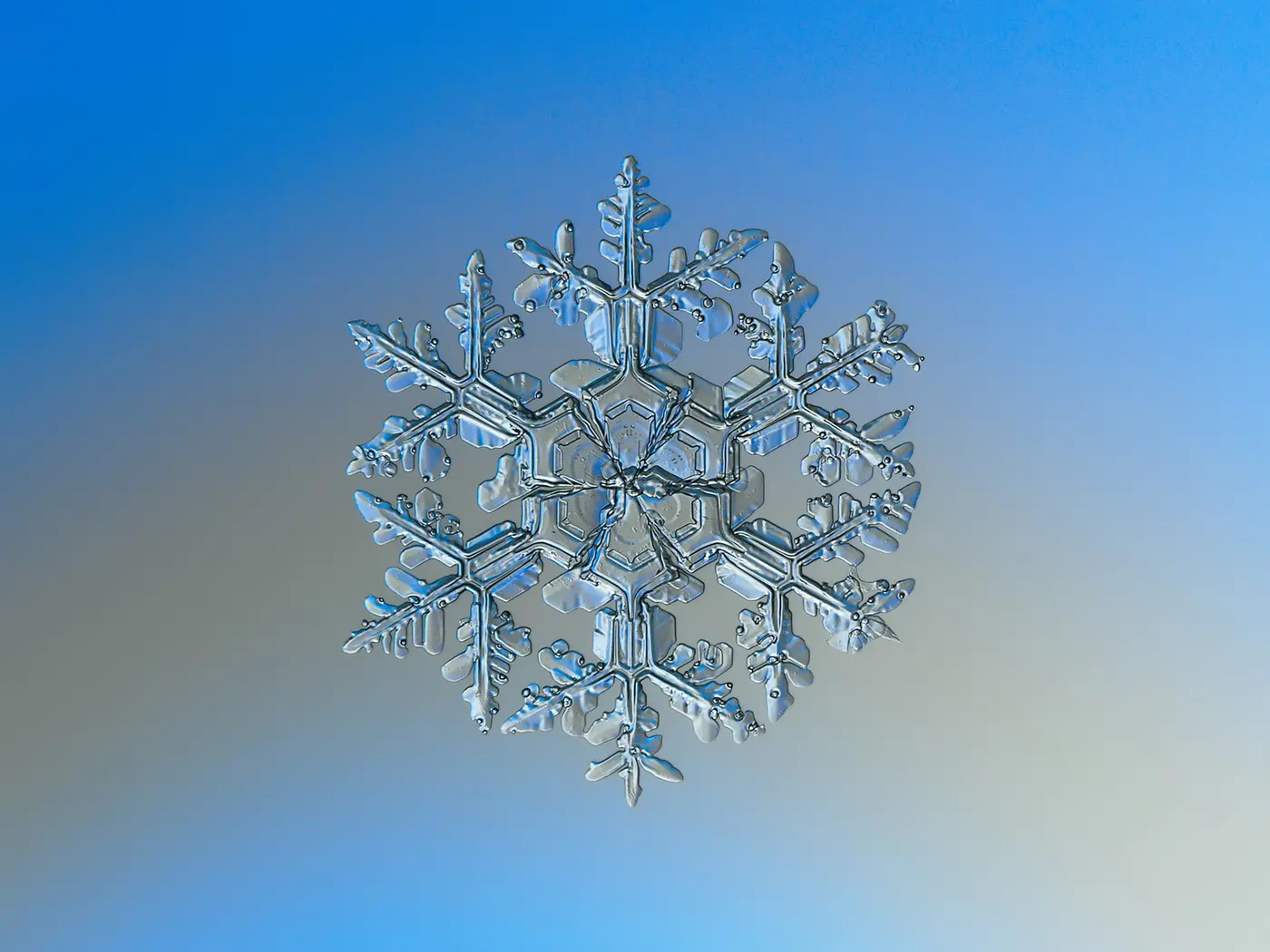
Look at a snow crystal under a magnifying glass and you will see that each one is as clear as a piece of glasswork. Snow is not colored white at all.
The difference is the air around the ice. Freshly fallen snow has a density of only about 0.03 to 0.15 grams per cubic centimeter, while solid ice is about 0.92. So by volume, new snow is somewhere between 80 and more than 90 percent air, with tiny grains of ice loosely piled up among the gaps.

Light gets lost, then finds its way back
Every time light passes from air into ice, or from ice back into air, a little of it is reflected at the boundary and the rest bends as it carries on. A solid block of ice has only two such boundaries, front and back. Inside snow, though, ice grains and air pockets are tangled together in countless layers.
Light entering snow is reflected or bent at grain after grain, changing direction each time. After enough of these bounces, much of it never gets very deep and instead escapes back out of the surface in every direction. And ice absorbs almost no visible light, letting every color through about equally. With red, green and blue all coming back to your eyes together, snow looks white.
Clouds and milk are white for a similar reason: countless small, clear particles scattering light.
Clean, freshly fallen snow is one of the brightest natural surfaces there is, reflecting up to about 90 percent of the sunlight that hits it. The open ocean reflects only about 6 percent. According to the Japan Meteorological Agency, fresh snow also reflects as much as 80 percent of ultraviolet light, compared with 10 percent or less for grass or asphalt. That is why skiers sunburn so easily, and why the glare can cause snow blindness.
Why is the bottom of a deep hole blue?
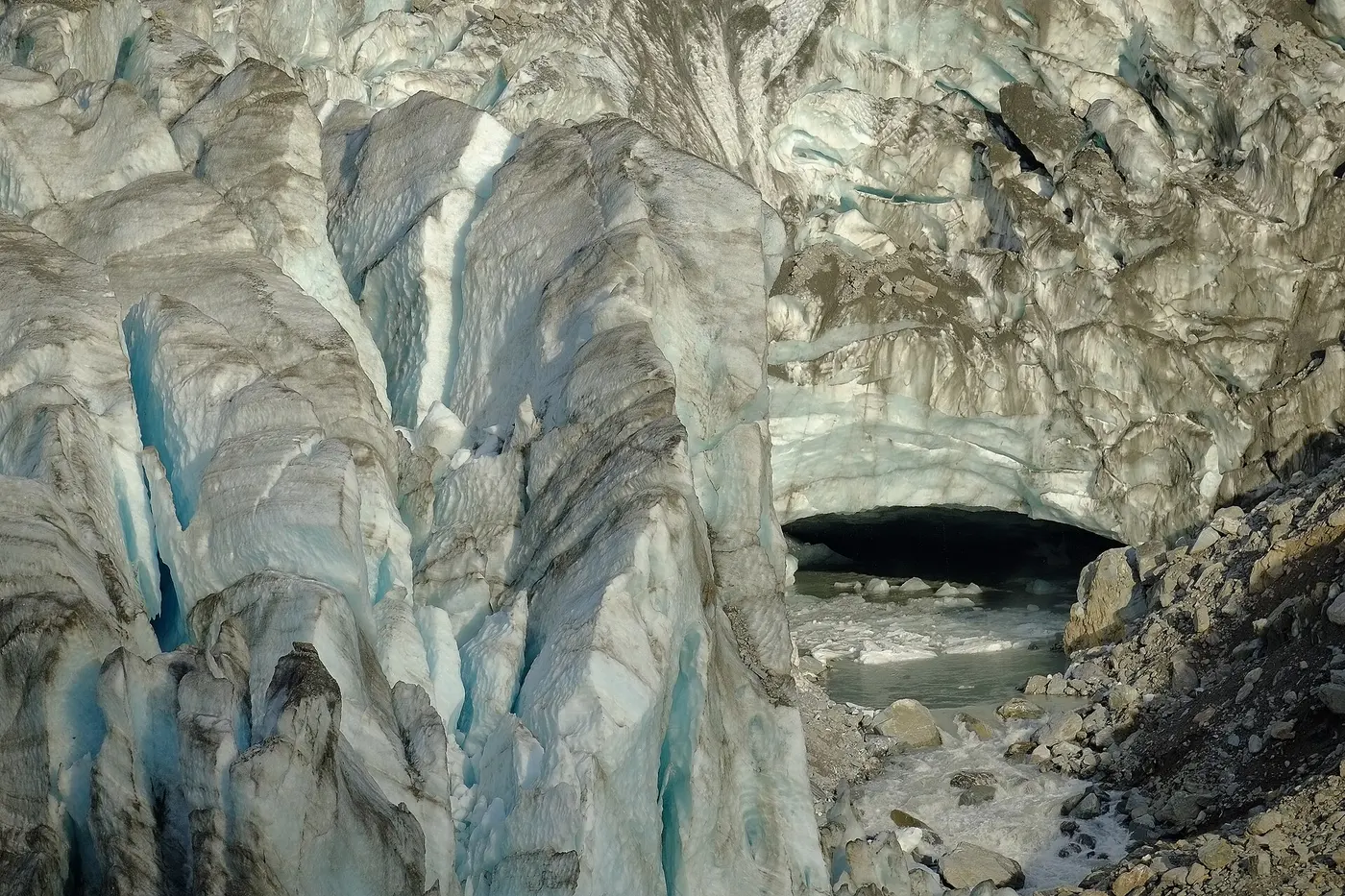
Dig a deep hole in snow and peer in, or look down into a crack in a glacier, and the depths may seem to glow a faint blue.
Ice absorbs very little visible light, but not none. It takes up red light very slightly more than blue. Over a few centimeters the difference is invisible, but once light has traveled a meter (about 3 feet) or more through ice, enough red has been lost that what comes out looks bluish. Glacier ice, with few air bubbles, lets light travel deep inside, so it turns an especially vivid blue.
Blue shadows on snow and the blue in shallow dips are mostly a different effect, however. Where direct sunlight is blocked, a larger share of the light comes from the blue sky, and the snow takes on its color.

Why old snow turns dull
Snow that has lain for a while, or is starting to melt, is never quite as white as fresh snow. As it settles and becomes denser, or as water fills the gaps, there are fewer boundaries to bounce light back, and light gets deeper inside. Mix in dust or soil, and those dark specks absorb light, dulling it further.
This difference in brightness matters for the climate as well. White snow sends most sunlight back into space, but once it melts and exposes ground or sea, those darker surfaces soak up far more heat, which in turn melts more snow and ice. The whiteness of snow works like a parasol that helps keep the planet cool.