Can frozen laundry still dry?
Yes. Even below 0°C, ice can turn straight into water vapor without melting first, a process called sublimation, so the water slowly escapes.
On a bitterly cold winter morning, you reach for the washing you left out overnight and find the towels frozen stiff as boards. In cold places, it is a familiar sight.
So does frozen laundry have to wait until the temperature rises above freezing and the ice melts before it can dry? Not at all. Even while it stays frozen, laundry slowly dries.
Ice can vanish without melting
When water is heated, it evaporates and becomes water vapor. In the same way, ice can turn directly into vapor without first melting into water. This is called sublimation. It is the same change that turns dry ice straight into gas, though with ordinary ice it happens far more gently and slowly.
Water molecules are constantly escaping from the surface of ice. If the surrounding air holds little water vapor, more molecules leave than return, and the ice gradually shrinks. If the air is already saturated with vapor, sublimation all but stops. Snow and ice sublime gradually even below 0°C (32°F). When a blanket of snow slowly shrinks during a cold spell, part of the reason is that it settles under its own weight, but sublimation plays a part too.
Frozen laundry works the same way. The water soaked into the fibers stays frozen but little by little turns into vapor and drifts off into the air. It won’t dry as quickly as on a summer day, but given time, it will dry.
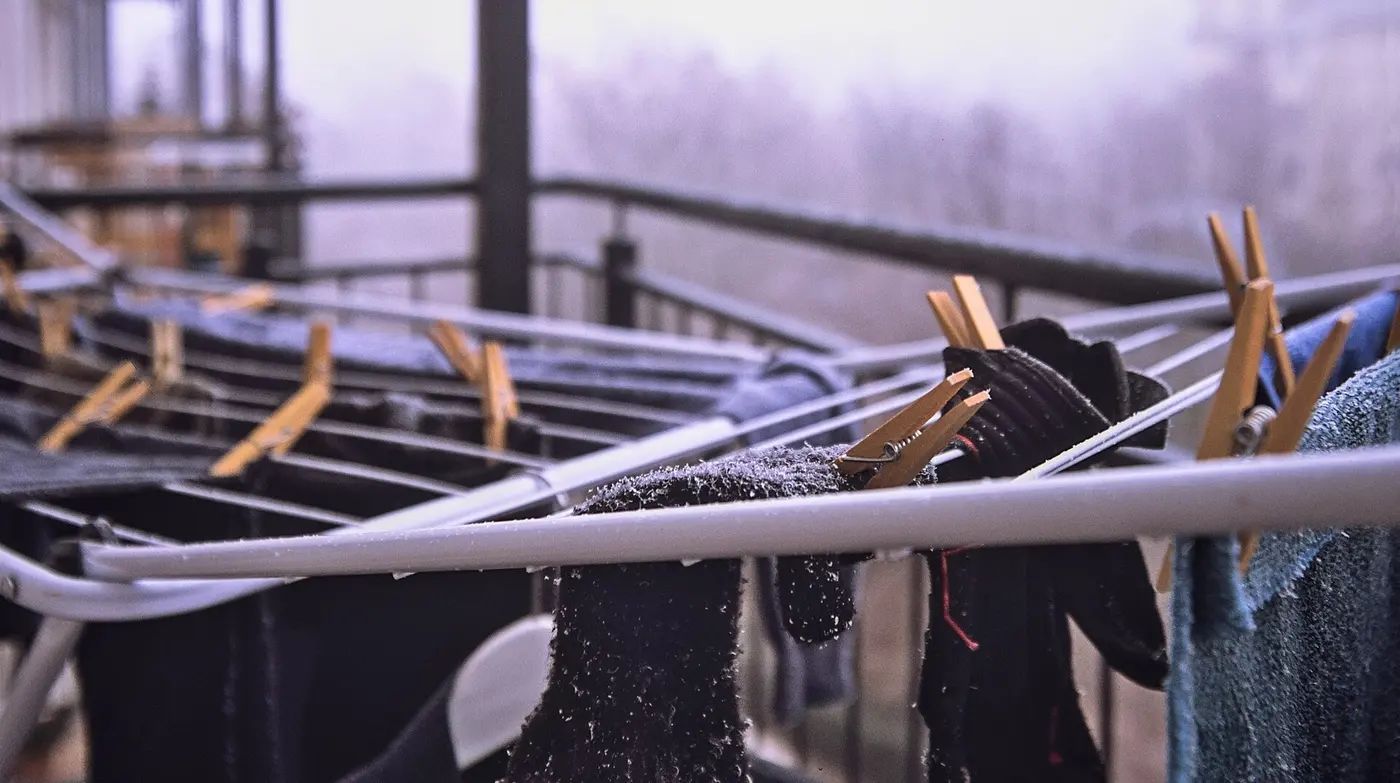

The best freezing days for drying
What kind of weather is best for drying frozen washing? According to an explainer from Weather & Radar, a British weather service, the key conditions are a frost and relatively dry air, ideally with sunshine and a light breeze. The wind carries away the moist air near the clothes and keeps bringing in drier air. Even so, cold air can hold only a little water vapor, so frozen washing never dries as fast as it does on a summer day.
Freeze-drying on purpose
Industry puts sublimation to work in freeze-drying. Food or other material is first frozen, then the pressure around it is lowered so that the ice sublimates away. About 95 percent of the water is removed by sublimation in the first stage, and the finished product typically retains only about 1 to 4 percent.
Compared with heat drying, freeze-drying preserves more of the aroma, and the results are light and long-lasting. It is used for instant coffee, food for hikers and military rations, and meals for astronauts. During World War II, it was developed as a way to keep blood plasma and penicillin stable without refrigeration. Its main drawback is cost: it is considerably more expensive than conventional drying.
Foods made by winter cold
Long before machines, people used winter cold to draw the water out of food. Japan has two famous examples.
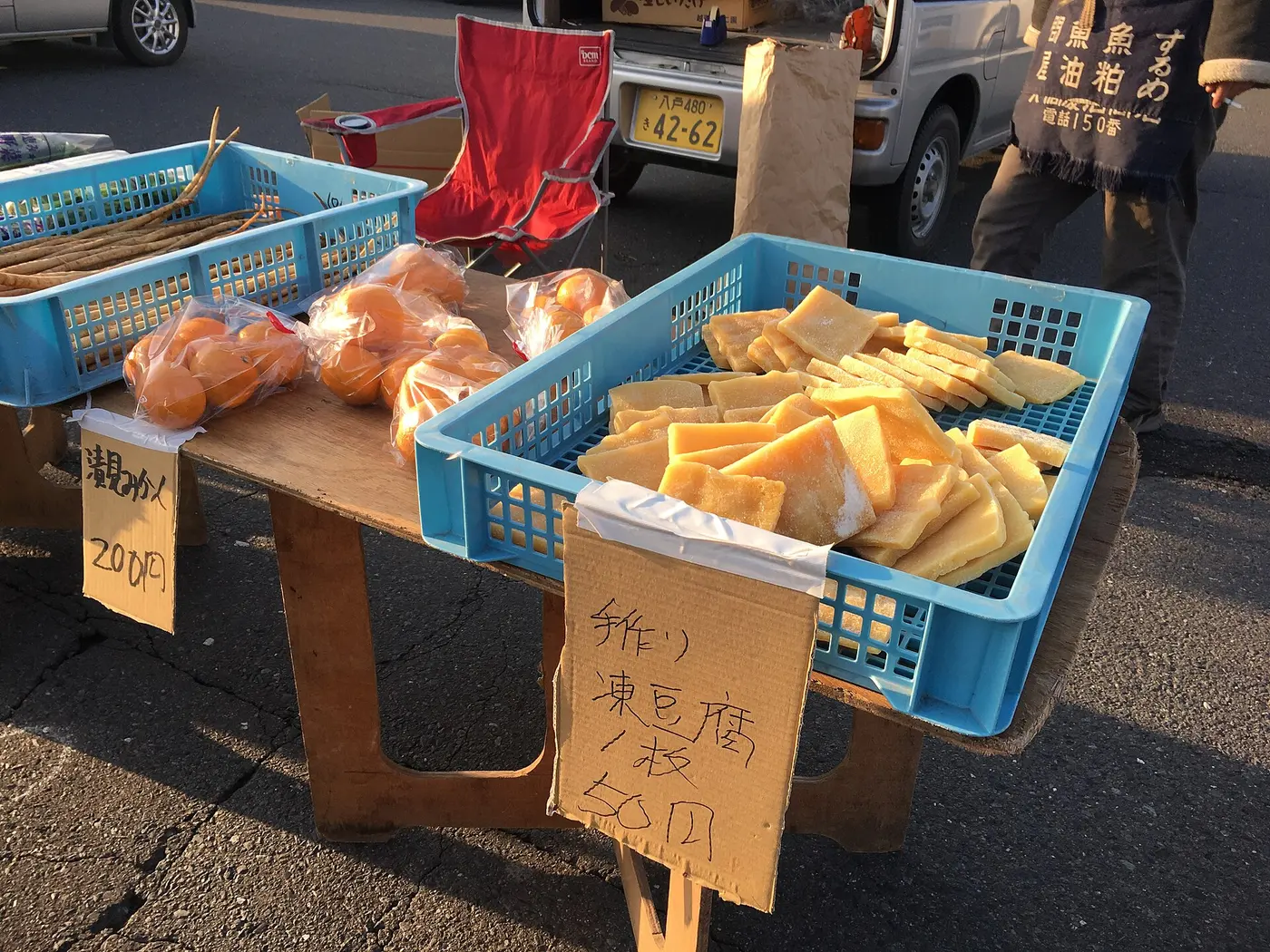
Koya-dofu, also known as shimi-dofu or kori-dofu, is tofu that has been frozen and then dried so that it keeps for a long time. In the traditional method, thin slices of tofu are tied together with straw, hung under the eaves and left exposed to the winter cold and sunlight to dry. Today more than 90 percent of it is made in Nagano Prefecture in the mountains of central Japan.

Kanten, the Japanese form of agar, also owes its existence to winter. According to legend, in the 17th century an innkeeper in Fushimi, near Kyoto, found that tokoroten, a jelly made from seaweed, left outdoors had frozen and dried out. When he melted it down, it made a clearer jelly without the seaweed smell. The Buddhist monk Ingen is said to have named it kanzarashi tokoroten, “cold-exposed tokoroten,” later shortened to kanten. Natural kanten is still made in the depths of winter, from December to February. The jelly freezes in the cold night, thaws in the daytime sun so the water drains away, and is dried for several more days. The Suwa area of Nagano, centered on the city of Chino, is known for its bar-shaped kakukanten.