Why is it so quiet after it snows?
Freshly fallen snow is full of tiny air gaps that soak up sound. Once it is packed down or icy, it loses much of that power.
60%
The morning after a snowfall, the air feels different. Passing cars and distant voices sound muffled, as if someone has turned the volume down. Plenty of people know it has snowed before they even look outside.
This hush is more than a mood. Fresh snow really does swallow the sounds around it. “Snow is a pretty good sound absorber,” David Herrin, an acoustics researcher at the University of Kentucky, said in 2016.
Fresh snow is mostly air
Snow crystals have intricate, branching shapes. When they pile up, they do not pack neatly together, so they form a layer riddled with gaps.
Just how much empty space is there? From 1975 to 1977, a branch of Japan’s National Research Center for Disaster Prevention in Shinjo, a snowy city in Yamagata Prefecture in northern Japan, measured each day’s fresh snowfall. Its density averaged 0.076 grams per cubic centimeter. Ice weighs about 0.92 grams per cubic centimeter, so fresh snow is roughly one-twelfth as heavy as the same volume of ice. More than 90 percent of it is air.
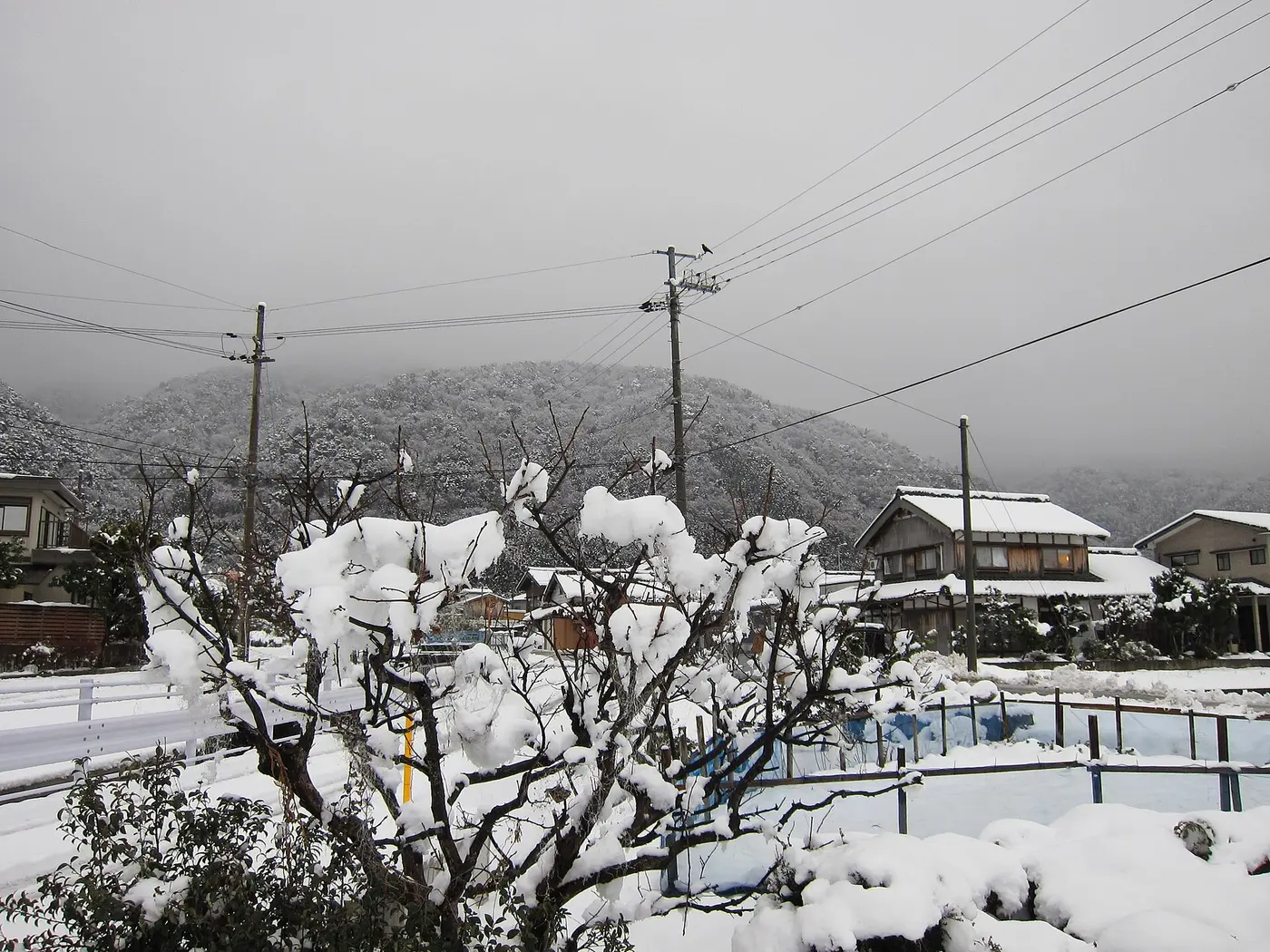

That open structure works much like the acoustic panels on a recording studio wall. Sound is a vibration of the air. When it enters a maze of tiny pores, the air is jostled back and forth along winding passages, and the sound’s energy is turned into a minute amount of heat. According to Herrin, a couple of inches (about 5 centimeters) of snow absorbs roughly 60 percent of sound across the audible range on average. “Snow is porous, in some ways like a commercial sound absorbing foam,” he said.
Fewer echoes off the ground
On an ordinary day, asphalt and concrete reflect sound like a mirror. What reaches your ears is not only the sound traveling directly from its source but also sound bouncing off the ground and walls.
Cover the ground with fresh snow and much of that reflected sound is absorbed instead. Distant sounds arrive weaker, and the whole neighborhood seems quieter.
In Japan’s snow country, the effect has been studied for decades. In 1954, researchers from Yamagata University’s engineering faculty reported measurements of sound traveling over snow in the journal of the Acoustical Society of Japan. Over newly fallen snow, sound was considerably weakened at distances of more than 200 meters (about 650 feet) from the source.
Packed and icy snow is not so quiet
The same study found something else. When the snow was hard or frozen, sound faded about as much as it did with no snow on the ground at all.
After it falls, snow gradually settles under its own weight and with changes in temperature. Over 15 winters in Shinjo, Japan’s National Research Institute for Earth Science and Disaster Prevention found that new snow in the snowpack averaged about 0.09 grams per cubic centimeter, settled snow about 0.3 grams, and the coarse, granular snow of early spring about 0.4 grams. As the gaps are squeezed out, snow loses its ability to absorb sound.
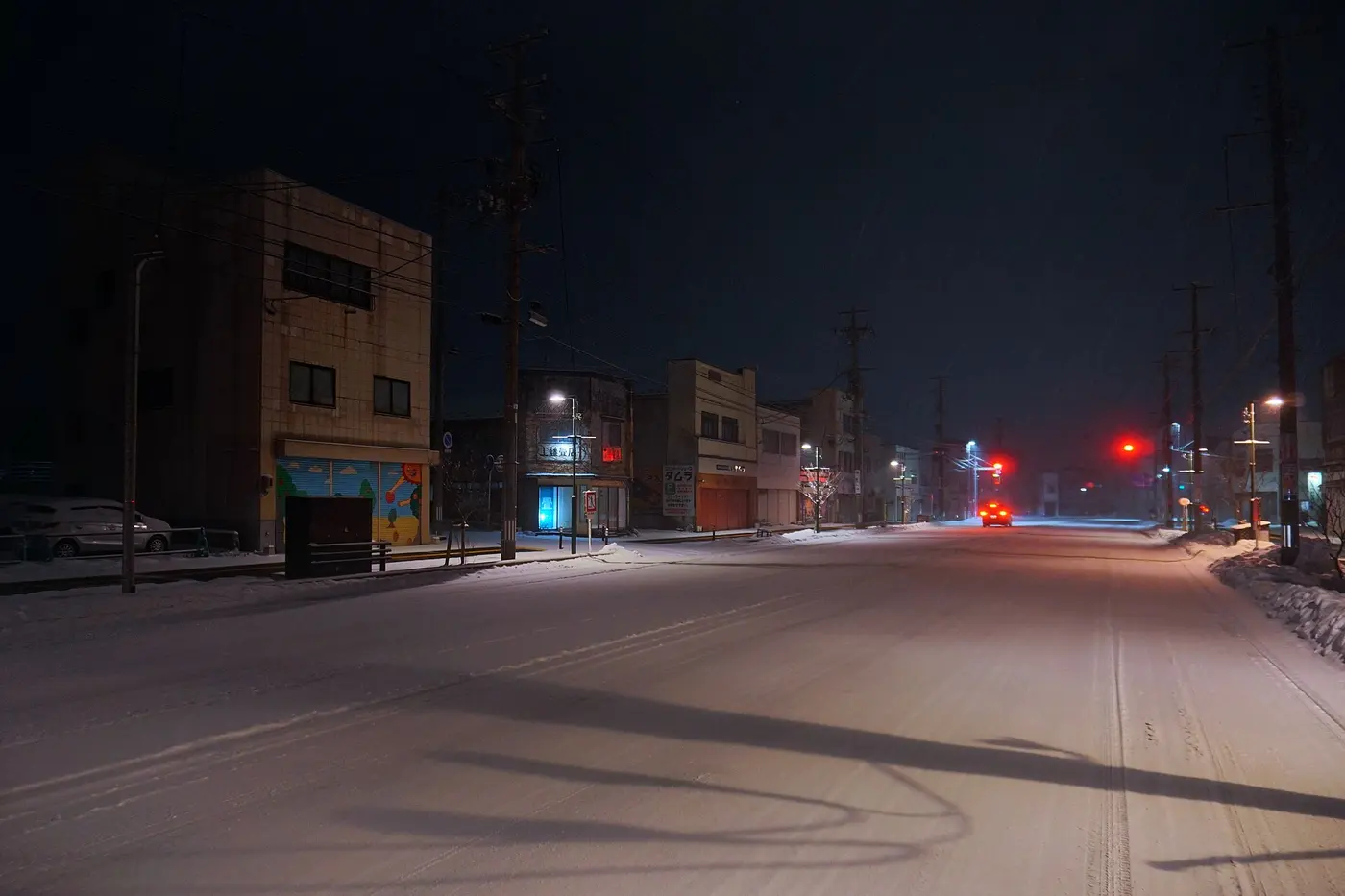

Herrin makes the same point. Sound absorption is at its peak right after a snowfall, he says, and once snow has turned hard or icy, much of the sound bounces back. On roads packed down by feet and tires, or on snow that has melted and refrozen, the special hush of a snowy day does not last long.
Fewer people, fewer cars
The other reason is simpler. When snow piles up, fewer cars take to the roads and fewer people go out. Benjamin Davenny, an engineer at Acentech, a US acoustics consulting firm, lists this alongside absorption by the snow as a reason snowy days are so quiet.
There is less noise to begin with, and much of what remains is swallowed by the snow. Together, those two effects create the stillness of a snowy morning.