Is the world’s snowiest city in Japan?
Among sizable cities, Aomori in northern Japan is one of the snowiest on Earth. In an average year, about 5.7 meters of snow falls there.
567cm
In winter, Aomori City at the northern tip of Japan’s main island, Honshu, is lined with walls of snow along its roads, and snowplows rumble through the streets before dawn. According to preliminary results of the 2025 census, it is home to about 256,000 people. It is the capital of Aomori Prefecture and the commercial and administrative hub of the region.
And every year, an extraordinary amount of snow falls on it. The city itself has described Aomori as “one of the world’s snowiest cities for its population of around 300,000.” Abroad, NASA, citing figures compiled by the US weather company AccuWeather, has named Aomori the snowiest of the world’s major cities.
5.67 meters in an average year
According to the Japan Meteorological Agency’s 30-year normals for 1991 to 2020, 567 centimeters (about 223 inches) of snow falls on Aomori in a typical year. That figure is the total of each day’s fresh snowfall added up over the whole winter, more than three times the height of an adult. The snow on the ground reaches a maximum depth of 101 centimeters (40 inches) in an average winter.
Compare that with other snowy Japanese cities. Sapporo, on the northern island of Hokkaido and home to more than 1.9 million people, gets 479 centimeters, and Toyama on the Sea of Japan coast gets 253 centimeters. Sapporo is plenty snowy for a big city, but Aomori beats it. The deepest snow ever recorded in Aomori was 209 centimeters (82 inches), on February 21, 1945.
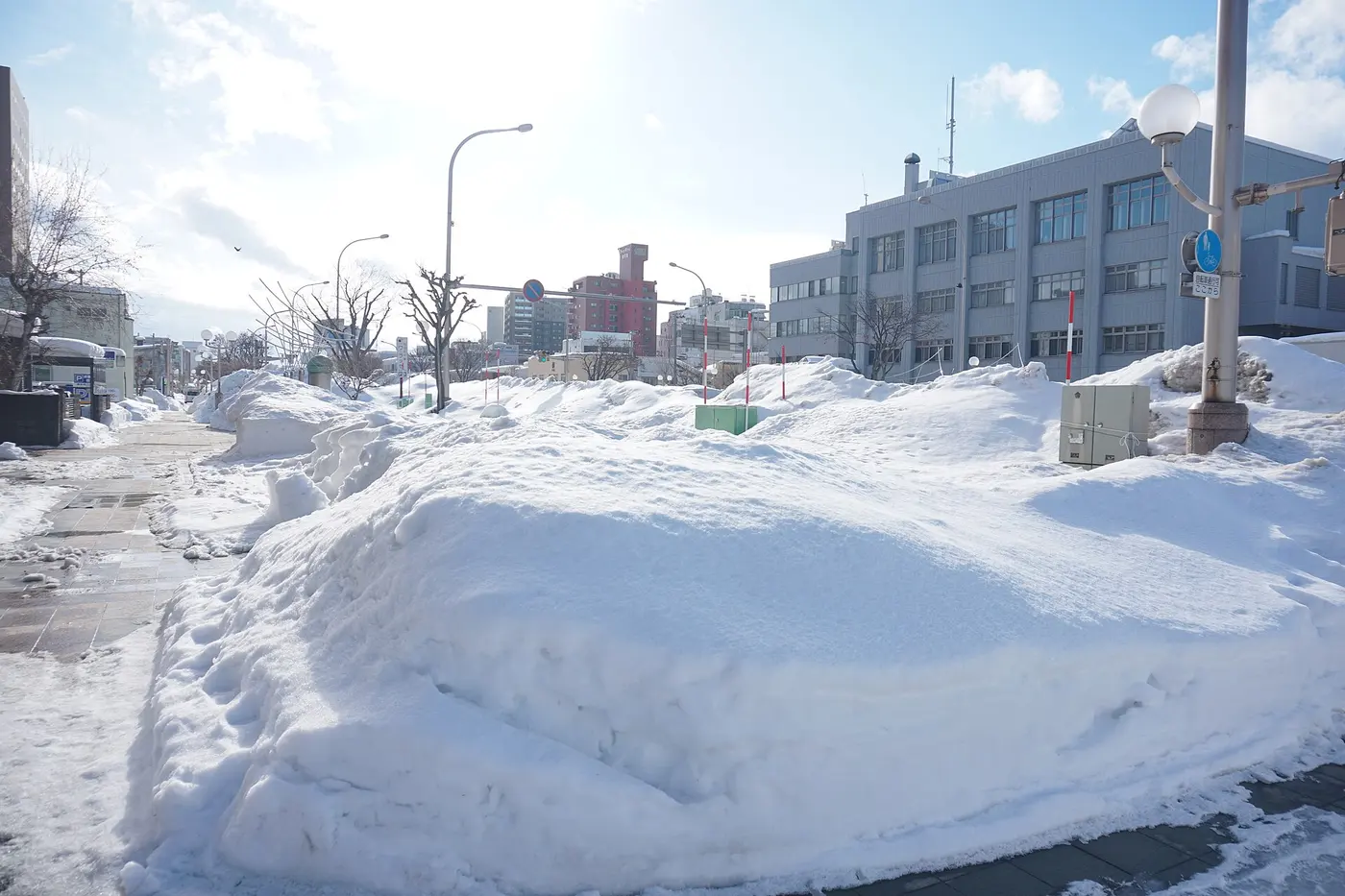

According to the city, Aomori is the only prefectural capital in Japan whose entire area is designated by the national government as a “special heavy snowfall area.”
The snow comes from the Sea of Japan
Why so much snow? The key players are the winter monsoon and the Sea of Japan.
As the Japan Meteorological Agency explains, in winter, bitterly cold and dry northwesterly winds blow from Siberia and mainland China. As this air crosses the Sea of Japan, it picks up plenty of heat and moisture from the comparatively warm sea surface. The Tsushima Current, a warm current flowing into the Sea of Japan from the south, keeps the water far warmer than the continental air even in winter. As the moist air is chilled, snow clouds form one after another over the sea.
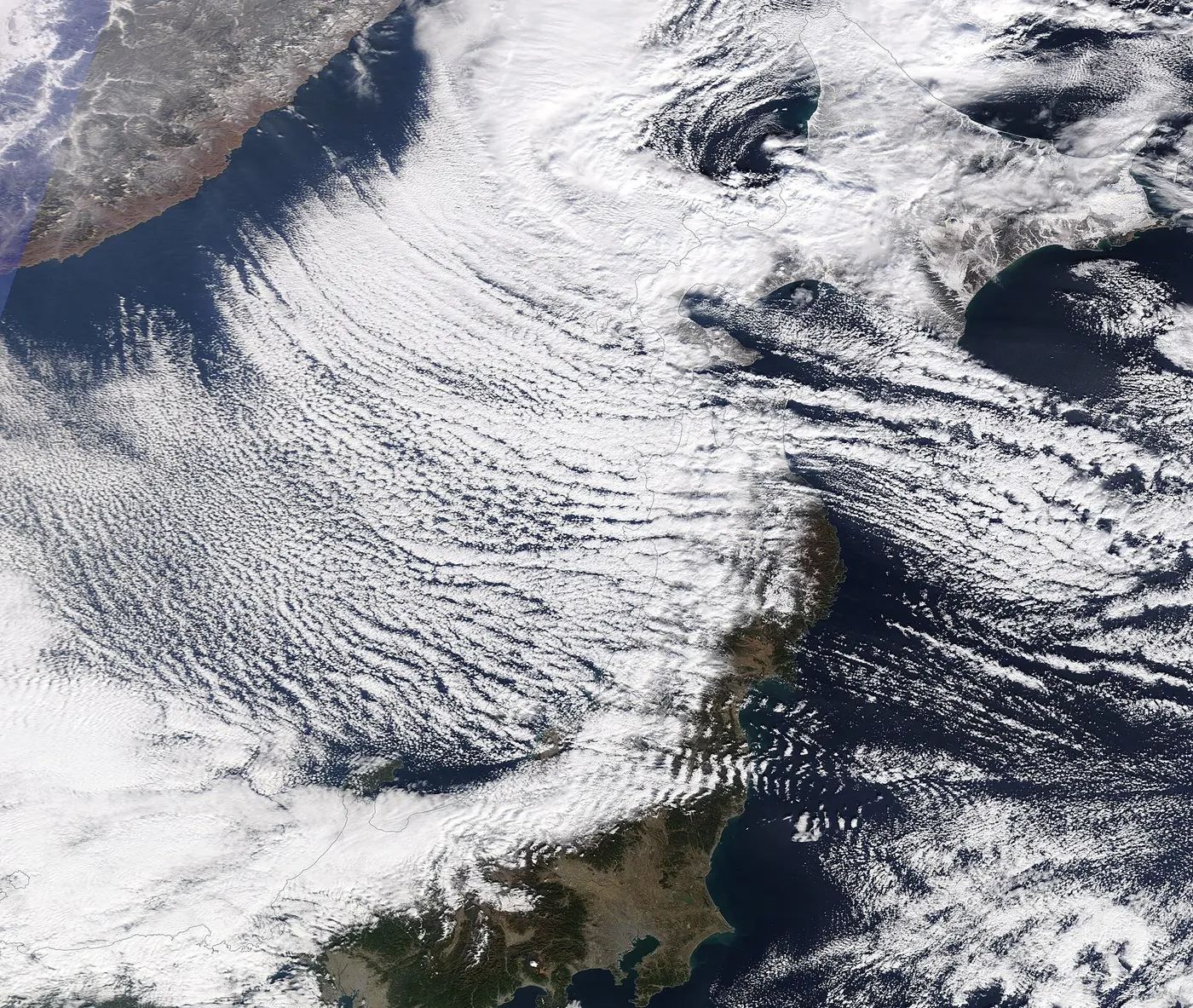

The wind carries the snow clouds onto land, and when they run into mountains and are forced upward, they grow even stronger and dump huge amounts of snow. Aomori sits between Mutsu Bay to the north and the Hakkoda Mountains to the south, and having mountains rising right behind the city is thought to be part of the reason it gets so much snow.
Once the air has dropped its moisture as snow, it crosses the mountains and descends toward the Pacific side of Japan. That is why winter on the Pacific coast, including Tokyo, brings a run of dry, sunny days. The same seasonal wind delivers heavy snow to one side of the country and blue skies to the other.
Even deeper in the mountains
Sukayu, 890 meters up in the Hakkoda Mountains, is also part of Aomori City. The Japan Meteorological Agency’s automated weather station there recorded 566 centimeters (about 18.5 feet) of snow on the ground on February 26, 2013, the second-highest figure in the agency’s nationwide records. On February 20, 2025, the snow depth there reached 500 centimeters again; according to the weather company Weathernews, it was only the third time it had hit 5 meters since observations began in 1979.
The national record belongs to Mount Ibuki in Shiga Prefecture in central Japan, where 1,182 centimeters of snow was measured on February 14, 1927. That is almost 12 meters (39 feet) of snow on the ground.
A city that lives with snow
Keeping a city running under all that snow is a huge job. According to a 2012 city document, Aomori cleared about 1,350 kilometers of roadway, not counting sidewalks, roughly the length of the national highways from Aomori to Fukuyama in western Japan. Snow removal on city roads cost about 1.9 billion yen a year on average over the previous decade, and 3.45 billion yen in the snowy winter of fiscal 2011.
In heavy years, the whole city mobilizes. In January 2026, cumulative snowfall since November reached 441 centimeters, and the city set up a heavy snow disaster headquarters to coordinate snow clearing.