Does green snot mean a bacterial infection?
Not necessarily. The yellow or green comes from an enzyme in white blood cells and reflects how strong the inflammation is. It is common with ordinary viral colds.
<2%
Two or three days into a cold, what comes out of your nose often turns thick and yellow or green. Many people take this as a sign of a bacterial infection that calls for antibiotics.
But the color does not come from bacteria. It comes from our own white blood cells, which have rushed in to fight the infection. And the color alone, health authorities say, cannot tell you whether bacteria are involved.
A green enzyme in white blood cells
When viruses or other invaders get into the nose and throat, white blood cells gather from the bloodstream, most of them neutrophils, the front-line defenders that engulf and destroy germs.
Neutrophils are packed with an enzyme called myeloperoxidase. It makes up about 5 percent of the protein in a neutrophil, and it contains heme, an iron-bearing group, which gives the enzyme itself a green color. From hydrogen peroxide and chloride, it produces hypochlorous acid, a close chemical cousin of household bleach, which kills the bacteria the neutrophil has swallowed.
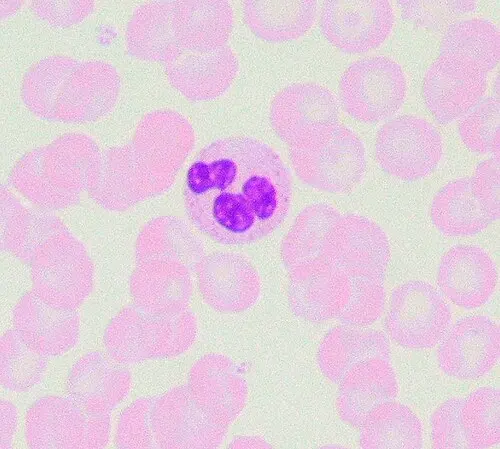

Ronald Eccles, a longtime cold researcher at Cardiff University in Wales, explained in a 2005 review that the color of nasal discharge depends on how many white blood cells it contains. With few of them, it is white or clear; as their numbers grow, it turns yellow (pale green); and with large numbers it becomes green. The color, in other words, reflects how strong the inflammation is, not what is causing the infection. For phlegm coughed up from the chest, a British study in 2001 confirmed that the deeper the color, the more of the enzyme it contains.
The “green peroxidase”
The color has long caught scientists’ eyes. According to a 2013 review in the Journal of Leukocyte Biology, the 19th-century German pathologist Edwin Klebs, whose name lives on in the bacterium Klebsiella, noticed the greenish tinge of pus and phlegm.
In the early 1940s, a researcher named Kjell Agner managed to isolate the enzyme from dog pus. Because it was such an intense green, he named it verdoperoxidase, from the word for green. The Swedish biochemist Hugo Theorell, who would later win a Nobel Prize, and a colleague then renamed it myeloperoxidase, after the bone marrow (myelo-) cells it comes from.
Colds make green snot too
The U.S. Centers for Disease Control and Prevention (CDC) explains in a fact sheet that when cold viruses first infect the nose and sinuses, the nose makes clear mucus that helps wash them away. After two or three days, the mucus may turn white, yellow or green. This is normal, the CDC says, and does not mean you need an antibiotic.
Japan’s Ministry of Health, Labour and Welfare says the same in its guide for doctors on the appropriate use of antimicrobials (fourth edition, 2026): the color of nasal discharge alone cannot distinguish a viral infection from a bacterial one. According to the guide, fewer than 2 percent of acute viral upper respiratory infections are reported to lead to acute bacterial rhinosinusitis.
Color is not meaningless. In a 2002 study from Geneva, Switzerland, three kinds of disease-causing bacteria, including Streptococcus pneumoniae, were found in the nasal secretions of 29 percent of 265 patients who came in with cold-like symptoms. Colored discharge, along with facial pain and signs on sinus imaging, was somewhat associated with bacteria. But even the best combination of these clues missed about three in ten patients who had bacteria and flagged over a third of those who did not, so the researchers concluded it could not serve as a diagnostic test.
Duration matters more than color
So when should a doctor suspect bacterial sinusitis? Citing guidance from the American College of Physicians and the CDC, Japan’s guide says antibiotics should be considered only when symptoms last more than 10 days, when the illness is severe, with a fever of 39°C (102°F) or higher or with pus-like discharge and facial pain lasting three days or more, or when a cold starts to get better and then gets worse again. What matters is less the color than how severe the illness is and how it progresses.


Antibiotics do nothing against viruses. The Japanese guide cites a report that, even without antibiotics, 46 percent of people with acute rhinosinusitis recovered within a week and 64 percent within two weeks, while those who took antibiotics had more side effects such as vomiting, diarrhea and abdominal pain. The CDC advises seeing a health care professional if a fever lasts longer than four days, if symptoms last more than 10 days without improvement, or if they improve and then return or worsen. Rather than fretting over the color of your tissue, keep an eye on how you feel overall.