Why is blood red?
Hemoglobin inside red blood cells absorbs blue and green light and reflects red. It isn’t the color of rusty iron.
A paper cut on a fingertip, a scraped knee, the tubes filled at a blood donation. The blood we see is always a vivid red. In picture books and comics alike, blood is drawn in red without a second thought.
Yet plasma, the liquid part of blood, is actually a pale yellow. So whose color is that red, exactly?
The red is hemoglobin
Blood is red because it is packed with red blood cells. A single microliter of blood (a thousandth of a milliliter) holds about 4 to 5 million of them in women and 5 to 6 million in men. Across the whole body that adds up to 20 to 30 trillion, which by count makes red blood cells about 70 percent of all the cells in the body.
Most of what is inside a red blood cell is a protein called hemoglobin. Hemoglobin makes up about 96 percent of a red blood cell’s dry weight, and each cell holds roughly 270 million hemoglobin molecules. Every hemoglobin molecule has four parts called hemes, and at the center of each sits a single iron atom. Oxygen binds to that iron, so one hemoglobin molecule can carry up to four oxygen molecules from the lungs to the rest of the body.
Swallowing blue and green, returning red
Things look colored because they absorb some colors of light and reflect the rest. Hemoglobin absorbs blue and green light strongly and reflects red and orange. That is why it looks red to us.
Some people think blood is red because the iron in it is rusty. Iron does hold the key to the color, but it isn’t the color of rust. In heme, the iron atom is set in the middle of a ring-shaped molecule called a porphyrin. The ring does most of the light absorbing, while the iron tunes how it behaves. Together, the ring and the iron create a structure that soaks up blue and green.
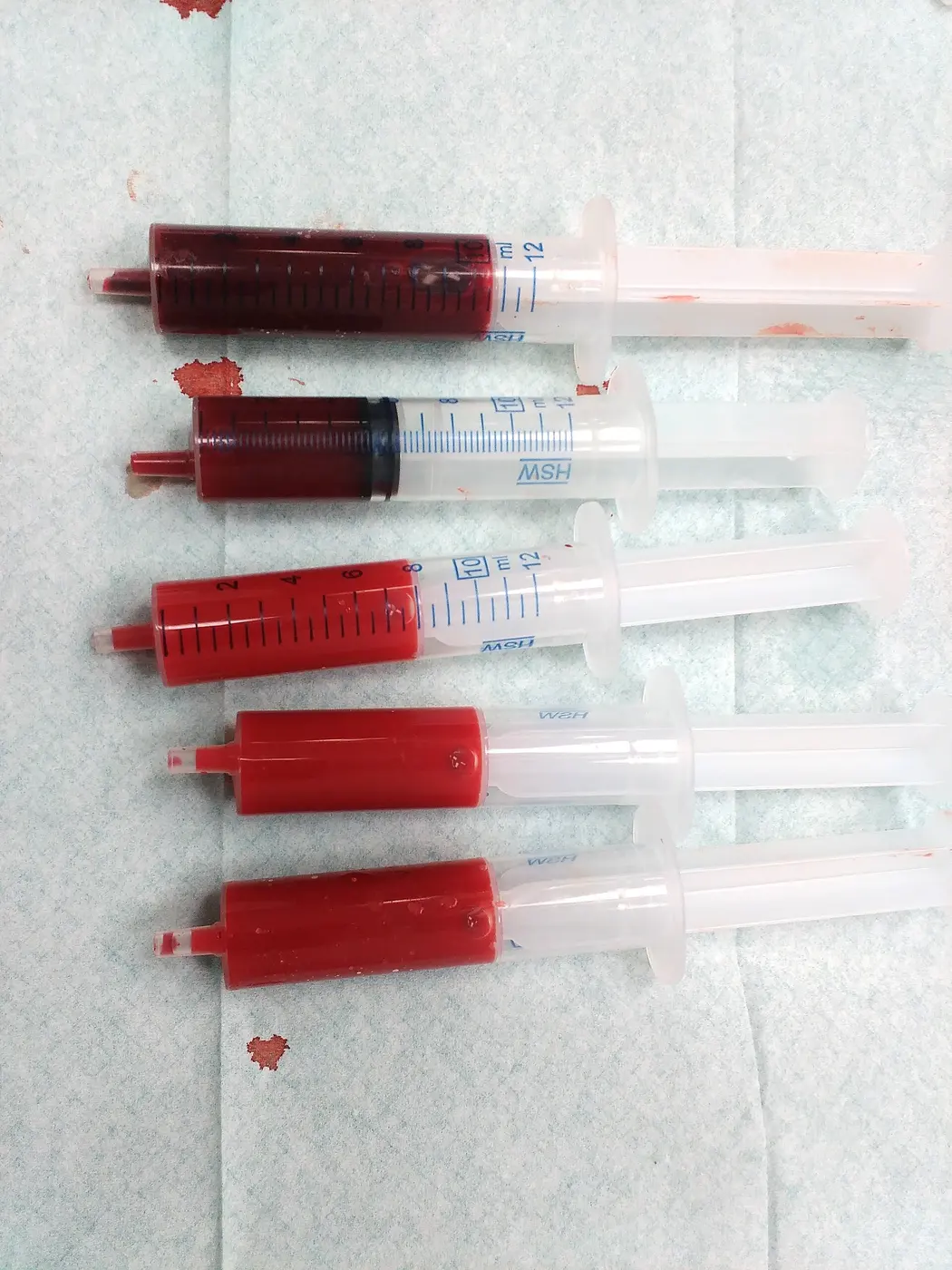

The shade of red also depends on whether oxygen is attached. Arterial blood, freshly loaded with oxygen in the lungs, is bright red. Venous blood, returning to the heart after handing its oxygen out around the body, is a dark, blackish red. Hemoglobin bound to carbon monoxide, by the way, is known to turn an even more vivid red than with oxygen.
Why veins look blue
Look at the inside of your wrist and you can see bluish veins through the skin. That leads many people to believe venous blood is blue, but it is a dark red all the same.
The blue is a trick of light and skin. Blue light doesn’t penetrate as deep into the skin as red light does. For a vessel lying deep enough, some of the red light is absorbed by the blood, so the light bouncing back from it carries less red than the light from the surrounding skin. To our eyes, that makes it look bluish.
Blue blood, green blood, clear blood
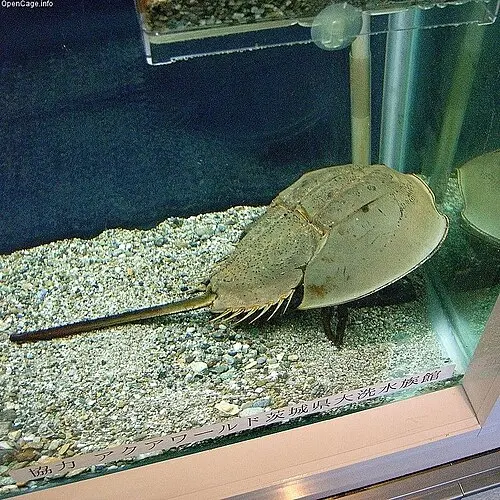
Red blood isn’t universal among living things. The blood of horseshoe crabs, squid and octopuses turns blue when it picks up oxygen, because their oxygen carrier is a protein called hemocyanin, which uses copper instead of iron.

On the island of New Guinea there are even lizards with green blood. The pigment that tints it is biliverdin, which forms when heme breaks down. In people, it is the same pigment behind the greenish tinge of a healing bruise. These lizards live with concentrations 40 times higher than the level that would be lethal to a human.
Stranger still are the icefishes of the Antarctic seas. They are the only vertebrates known to have no red blood cells at all, and their blood is nearly transparent. They are thought to manage because the frigid water holds plenty of dissolved oxygen.