What is the world’s smallest seed?
Orchid seeds are among the very smallest. The lightest weigh only about 0.3 micrograms each.
4 million
Say “seed” and most people picture something you can pick up between your fingers, like a sunflower or morning glory seed. Yet some plants make seeds so fine that picking up just one is out of the question. They are more like dust.
The best-known examples are orchids. Even the showy moth orchids and cymbidiums sold in flower shops ripen pods packed with seed as fine as powder. Botanists call them “dust seeds.” Here is a closer look at the world of the orchid seed.
Three million to the gram
Much of what we know about orchid seed sizes comes from a review published in 2000 in the plant science journal New Phytologist by orchid researcher Joseph Arditti and his colleague Abdul Karim Abdul Ghani. Most orchid seeds, they report, are between about 0.05 and 6 millimeters long. The lightest known seed weighs about 0.31 micrograms, and even the heaviest only about 24 micrograms.
A microgram is a millionth of a gram. At 0.31 micrograms apiece, a single gram would hold more than 3 million seeds.
The numbers per pod are staggering too. Some orchids make as few as 20 to 50 seeds in a pod, but the record stands at about 4 million.
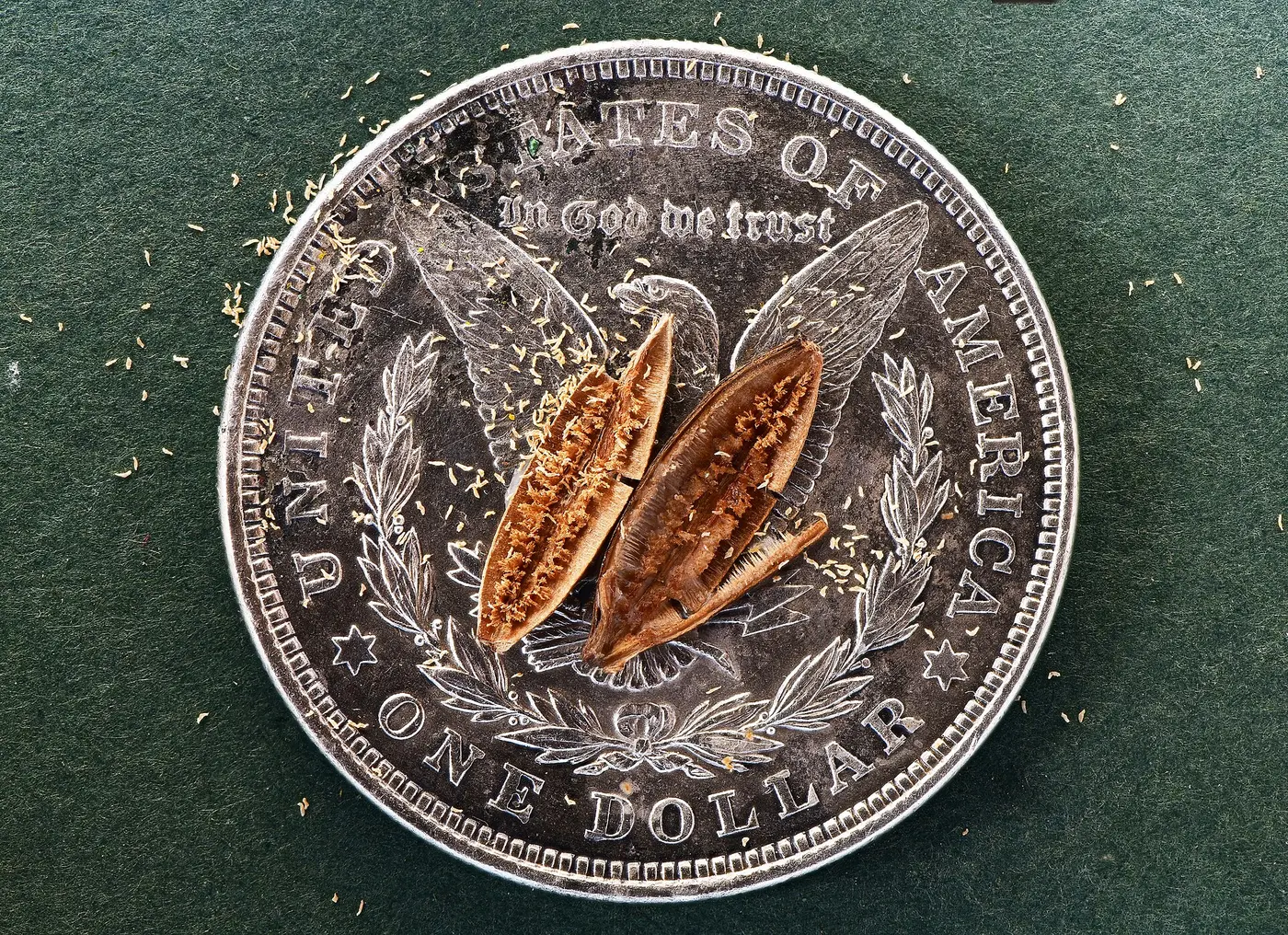

Almost empty inside
Orchid seeds can be this small because they leave out nearly everything a normal seed carries.
Most seeds contain an embryo, the part that becomes the shoot and root, plus a store of food to fuel its growth. In a grain of rice, the white rice we eat is that food store, called the endosperm. Orchid seeds have no endosperm at all. Even the embryo is just a small cluster of cells that has not yet divided into shoot and root.
That embryo sits loosely inside a thin seed coat that is usually transparent. Between the two are large pockets of air, which make the seed a kind of tiny balloon. As a result, orchid seeds can stay airborne for long periods and travel great distances. Their water-repellent surface and trapped air also let them float on water for a long time. They may even hitch rides in animal fur, in feathers or in mud stuck to feet.
Sprouting with help from a fungus
A seed with no food of its own, however, cannot grow by itself. So orchids rely on fungi living in the soil and elsewhere.
In the wild, nearly all orchid seeds germinate only with help from a particular fungal partner. Fungal threads grow into the seed, and the baby orchid takes carbon and other nutrients from the fungus. The tiny clump that eventually bursts out of the seed coat, with no leaves and no roots yet, is called a protocorm.
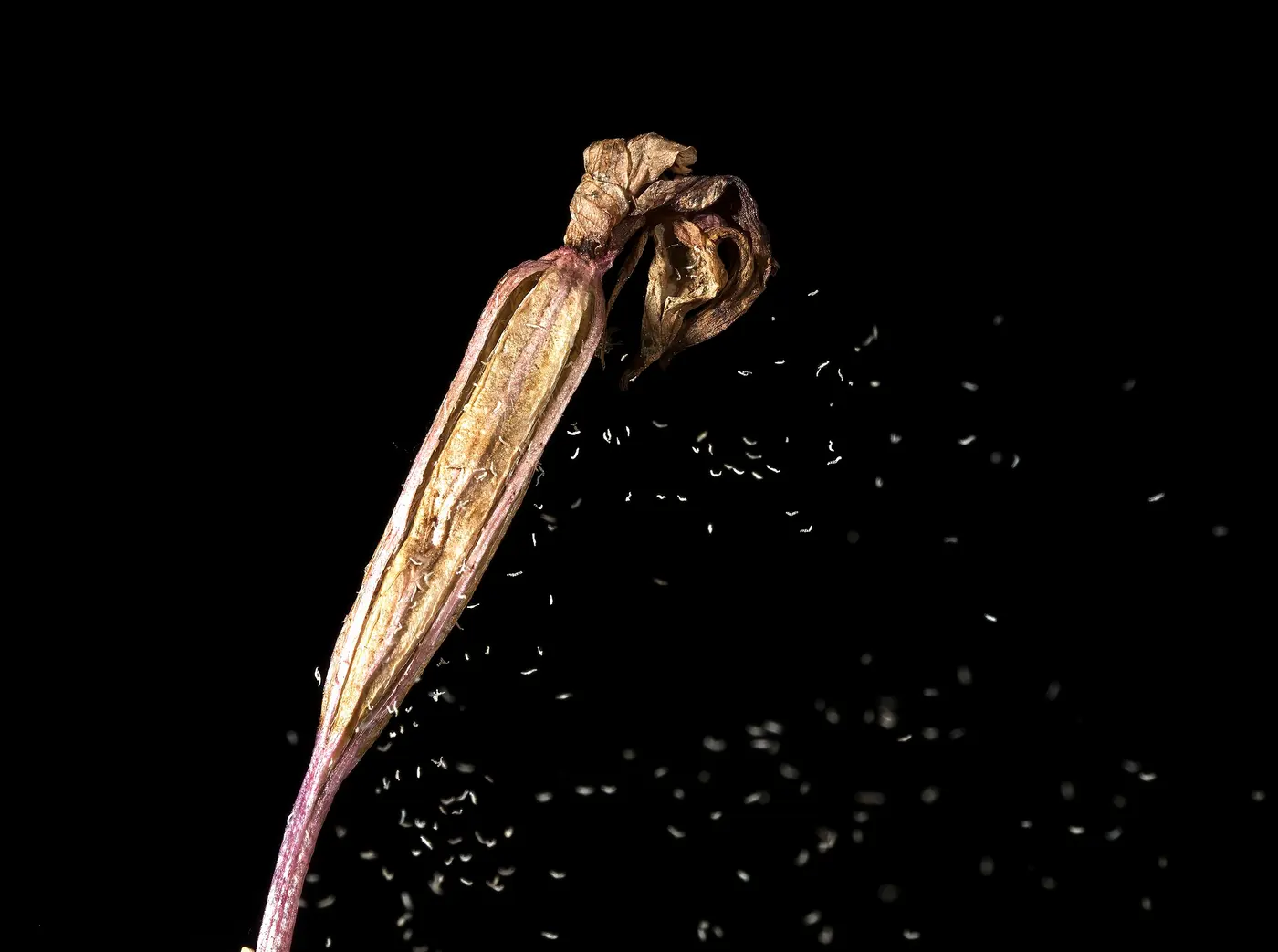

The first person to work this out was the French researcher Noël Bernard. Until the end of the 19th century, how orchid seeds sprouted was a mystery. In 1899, studying a European orchid, Bernard reported that its seeds needed a fungus in order to germinate. Scattering millions of seeds may be the orchid’s way of betting on the slim chance that a few will land near just the right fungus.
Sugar instead of fungus
The man who found a way to sprout orchid seeds without fungi was the American botanist Lewis Knudson. In 1922 he reported that he had germinated orchid seeds on an artificial growing medium, no fungus required.
The trick is to supply in the medium what the fungus would otherwise provide. Research suggests that some form of carbohydrate, such as sugar, is essential for germinating orchid seeds without fungi. Knudson’s approach became the foundation for growing orchids from seed, and for some popular garden orchids, mass production from seed is now well established.