When was sliced bread invented?
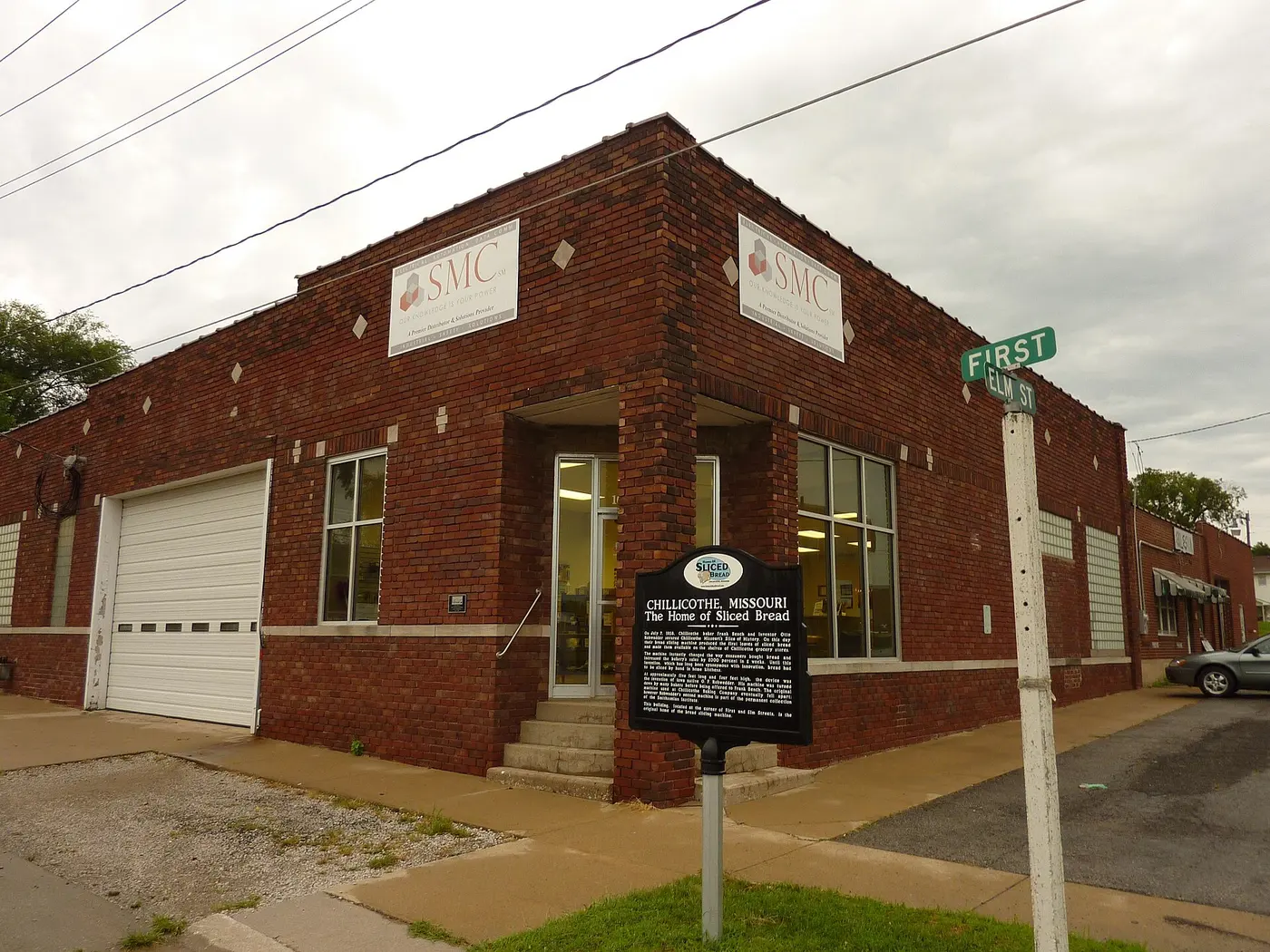
Machine-sliced bread first went on sale in July 1928, at a bakery in Chillicothe, Missouri. The slicer was built by Otto Rohwedder, a former jeweler.
1928
Open the bag and there they are: slices of bread, all exactly the same thickness. In Japan, supermarket loaves are even labeled by how many slices they have been cut into, six or eight being the usual choices.
English has a phrase for any marvelous new invention or person: “the best thing since sliced bread.” Pre-sliced bread has become the yardstick for a great idea. Yet bread sliced by machine has been on store shelves for less than a century.
A jeweler’s bread slicer
The man behind the bread-slicing machine was Otto Frederick Rohwedder. According to the Lemelson-MIT Program at the Massachusetts Institute of Technology, he was born in Des Moines, Iowa, in 1880 and ran three jewelry stores of his own in St. Joseph, Missouri. Around 1912 he began working on a machine that could automatically slice a whole loaf.
Bakers were not impressed. Sliced bread, they believed, would dry out and go stale, and no one would buy it. Then, in late 1917, a fire at a factory in Monmouth, Illinois, that had agreed to build his first slicers destroyed his blueprints. It was not until 1928, more than a decade later, that Rohwedder had a machine that really worked.
Chillicothe, July 1928
The first buyer was Frank Bench, who owned the Chillicothe Baking Company in Chillicothe, Missouri. On July 6, 1928, his advertisement ran in the local paper, the Chillicothe Constitution-Tribune: “Just think of it! Every slice perfect and CORRECT, far better than you could cut it yourself.” It went on: “There was a time when you ground coffee. Now you buy it ground.” The product, Kleen Maid Sliced Bread, went on sale the next day.
That day’s paper also praised the machine for slicing with “no crumbing and no crushing.” Two metal pins, one at each end, held the slices together while the loaf was wrapped in paper. At home, you opened the wrapper, pulled out a pin and took as many slices as you needed.

According to the Smithsonian’s National Museum of American History, the Chillicothe machine fell apart after about six months of heavy use. The museum holds Rohwedder’s second slicer, which went to work in late 1928 at a bakery in his hometown of Davenport, Iowa. By 1929 his company was scrambling to meet the demand for slicers, and by 1930 the Continental Baking Company was selling sliced bread under its Wonder Bread label.
“Since sliced bread”
The famous phrase seems to have grown out of bread advertising. The website Word Histories, which traces the origins of English phrases, has collected early examples from old newspapers. In 1933, an Indiana paper carried an ad for a loaf with thick and thin slices in the same package, calling it “the first improvement since sliced bread.” In 1939 another bakery promoted its new packaging as “the newest thing since sliced bread.”
One early use that has nothing to do with bread comes from 1951. New York columnist Dorothy Kilgallen collected the reactions of women swooning over the actor Stewart Granger, and her own sister declared: “He is the greatest thing since sliced bread!”
The 1943 ban
Yet this wonder briefly vanished from American stores. On January 18, 1943, in the middle of World War II, an order from Claude Wickard, the Secretary of Agriculture, who was also in charge of wartime food policy, banned bakeries from selling sliced bread.
The script of a Department of Agriculture radio program broadcast on February 20 that year gave three reasons. Sliced bread needed a thicker wrapper, sometimes a double one, so the ban saved paper. Without slicing machines, it saved steel. And because sliced bread went stale faster, it saved food.


New York’s mayor, Fiorello La Guardia, suggested on the radio that shops with their own slicers be allowed to keep using them, but on January 26 officials ordered those shops to stop too. In the end, the ban was lifted on March 8. Wickard explained that the supply of wax paper had improved and that the savings had been smaller than expected. The Associated Press reported that housewives “who have risked thumbs and tempers slicing bread at home for nearly two months” would find sliced loaves back on the shelves the next day in most places. The New York Times headline put it more simply: “Housewives’ Thumbs Safe Again.”