How many days can a person go without sleep?
The best-documented record is about 11 days (264 hours). It is now considered too dangerous to be recognized as a record at all.
264hours
Plenty of us have stayed up all night before an exam or a deadline. The next day, our eyelids are heavy and even simple arithmetic is a struggle.
We spend roughly a third of our lives asleep. So if a person skipped sleep entirely, how many days could they stay awake? One 17-year-old high school student set out to answer that question with his own body.
A 17-year-old’s science project
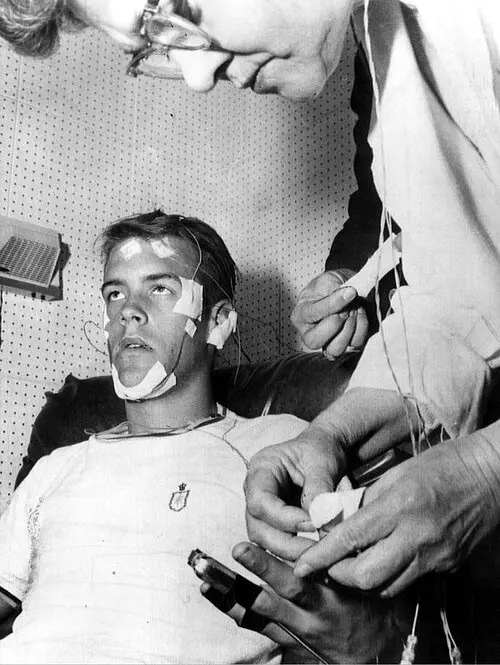
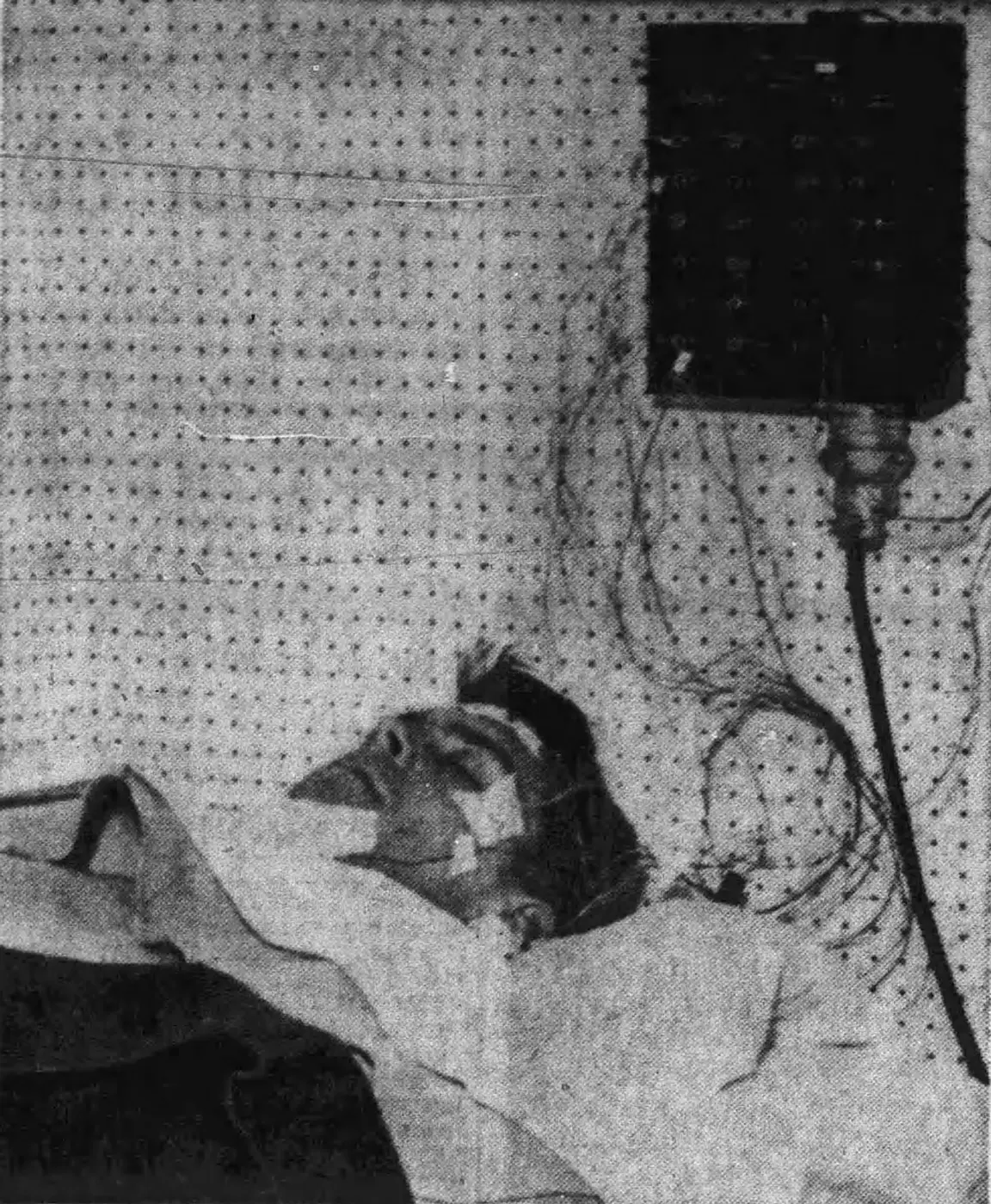
At the end of 1963, Randy Gardner, a high school student in San Diego, California, began an experiment with two friends for a science fair. He had heard that a radio host in Hawaii had stayed awake for 260 hours, and he wanted to beat it. His friends took turns staying with him, keeping a log and watching for any sign that he was nodding off.
When William Dement, a sleep researcher at Stanford University, heard about the attempt, he came down to observe, and a medical officer from a nearby naval hospital kept an eye on Gardner’s health. To keep him awake, Dement played basketball with him and took him to an arcade to play pinball. Gardner reportedly won most of the pinball games.
At 2 a.m. on January 8, 1964, Gardner ended the experiment after just over 264 hours awake, or 11 days and 25 minutes.

Awake, but not all there
His body was awake, but his mind was steadily fraying. According to the medical officer’s notes, Gardner showed moodiness, trouble concentrating, short-term memory problems, paranoia and hallucinations. On day 11, asked to count down from 100 by sevens, he stopped at 65 and said he had forgotten what he was doing. Gardner himself later recalled that from about the fourth or fifth day he couldn’t remember things: “It was almost like an early Alzheimer’s thing.”
Afterward he slept for more than 14 hours at the naval hospital and woke up feeling “groggy, but not any groggier than a normal person.” Medical checks found nothing obviously wrong with him physically.
A record no longer counted
Gardner’s record was later broken by others. The last one Guinness World Records recognized was set in 1986 by Robert McDonald of California, who stayed awake during a rocking-chair marathon for 453 hours and 40 minutes, or 18 days, 21 hours and 40 minutes.
In the late 1990s, however, Guinness stopped accepting records in this category. One reason was the danger to health. Another was “microsleep.” A severely sleep-deprived brain can drop into sleep for a few seconds at a time, even with the eyes open and without the person noticing. These fleeting naps can’t be detected without constantly monitoring brain waves and other signals, so some of the longest records may in fact have been dotted with tiny sleeps.

One all-nighter is like being drunk
Animal experiments hint at how dangerous going without sleep can be. In studies by Allan Rechtschaffen and colleagues at the University of Chicago in the 1980s, rats deprived of all sleep died after roughly two to three weeks on average. Those studies, however, could not pin down exactly what killed them.
For people, you don’t need 11 days for it to become dangerous; a single all-nighter is enough. A study cited in the sleep guidelines of Japan’s Ministry of Health, Labour and Welfare found that in people who stayed awake from 8 a.m., performance had dropped by 3 a.m., 17 hours later, to the level seen at a blood alcohol concentration of 0.05 percent. By 8 a.m. the next morning, 24 hours in, it matched a blood alcohol level of 0.1 percent, roughly what you would get from a large bottle of beer. In Japan, driving with a blood alcohol concentration of 0.03 percent or more counts as drunk driving.