Do we have a dominant eye, like a dominant hand?
Yes. Even with both eyes open, when we aim at something we rely on the image from one eye. About two-thirds of people favor the right eye.
270years
Try this. Stretch your arms out in front of you and put your thumbs and index fingers together to make a small triangular window. With both eyes open, frame a distant object, such as a clock or a light switch, in the window. Now close one eye, then the other. With one eye, the object stays in the window; with the other, it jumps out.
The eye that keeps the object in view is your dominant eye. We think we look with both eyes, but when we line something up, we quietly rely on one.
Two eyes open, one eye in charge
In a 1976 review of research on the dominant eye, the Canadian psychologists Clare Porac and Stanley Coren pointed to an everyday example. When you point at something far away, looking at the target with both eyes should make your finger appear double. Look at your finger instead, and the target doubles. Yet we never notice anything of the kind when we point. We use the image from one eye and suppress the other. The eye we use in situations like this is what is usually meant by the dominant eye.
The triangle test is close to a method published by the American psychologist Miles in 1929 and 1930. He used a cardboard cone with its tip cut off. You hold the wide end against your face with both hands and look at a distant target through the small hole. It feels as if you are looking from a point midway between your eyes, but in fact only one eye can see the target. Because both hands hold the cone, your dominant hand can’t sway the result. One researcher in 1951 listed about 25 different tests.
A scholar in 16th-century Naples
Porac and Coren wrote that, apart from hands and feet, no form of left-right dominance turns up in writing until 1593. That year the Neapolitan scholar Giambattista della Porta discussed the dominant eye in De refractione, a book on the refraction of light. In modern terms, his demonstration goes like this. Hold a pencil upright in front of you and, with both eyes open, line up its tip with a point on a distant wall. Then wink each eye in turn. For one eye, the pencil stays lined up; for the other, it seems to jump to the side. It is the same idea as the triangle test.
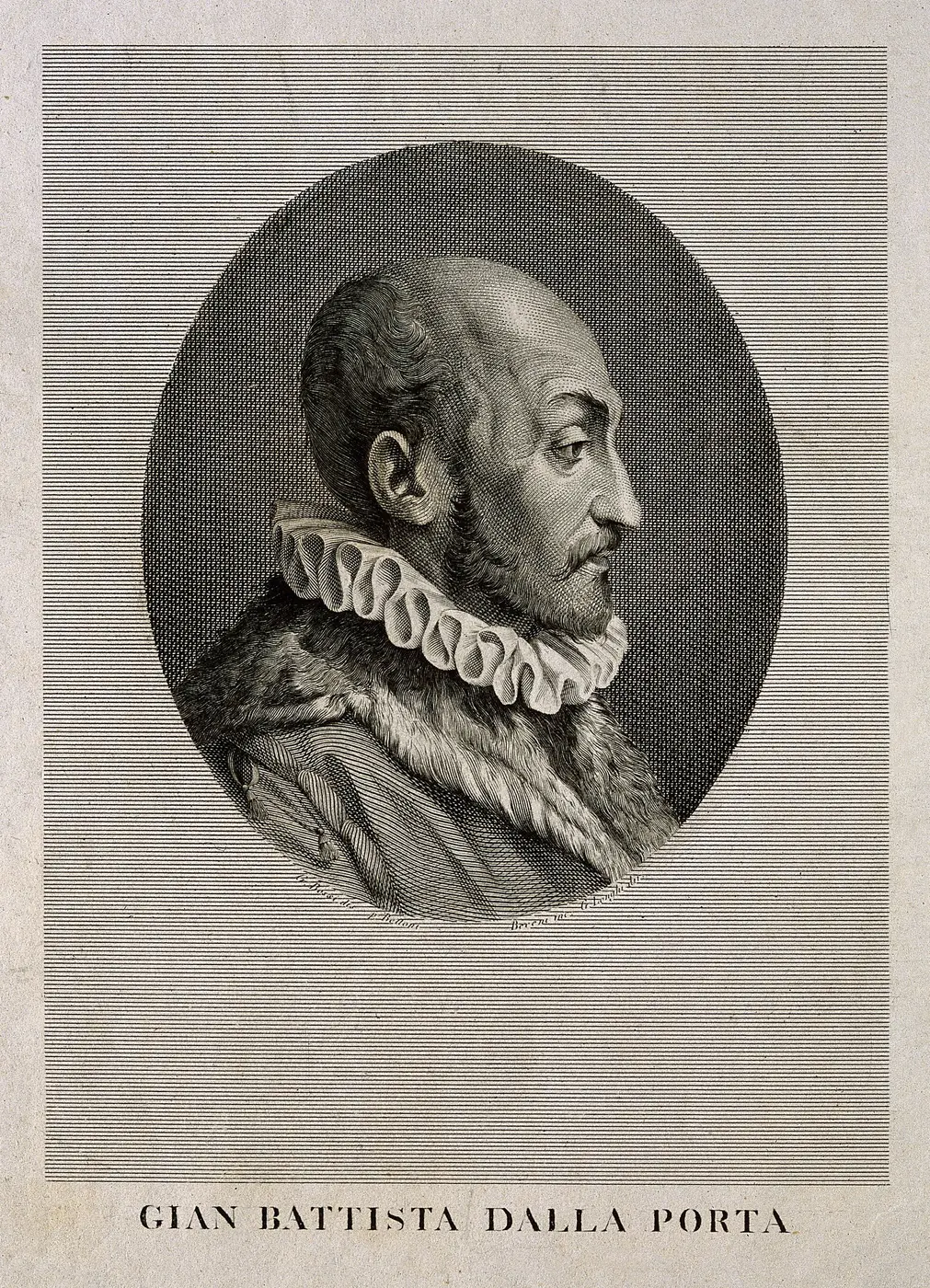

Nicholas Wade, a historian of vision science at the University of Dundee in Scotland, has traced the idea back even further: Aristotle, he notes, mentioned which eye people close as a sign of eye preference. Porta also wrote that when the two eyes are shown different images, the right eye’s image tends to win. In 1673, by contrast, the Italian scholar Borelli claimed that the left eye sees more sharply.
After Porta, though, the subject went quiet. According to Porac and Coren, it did not reappear in the scientific literature until the 1860s, some 270 years later, and research took off only in the mid-1920s.
Two-thirds right, and not always your hand’s partner
Which eye is more often dominant? In 1996, researchers in Canada and Britain combined data on 54,087 people from 54 groups. About one person in ten is left-handed, they found, but about one in three is left-eyed. Around 34% of right-handers had a dominant left eye, as did around 57% of left-handers. Hand and eye preferences are related, then, but they don’t always match. There was no difference between men and women.
Your dominant eye isn’t necessarily your sharper eye, either. In 2003, a team of Canadian researchers argued that the sighting-dominant eye is simply the eye we use for one-eyed tasks, with no special role in vision itself. Other studies have found that dominance can even switch from one eye to the other when we look far to the left or right.
Peering and aiming
When we look through a telescope, a microscope or a camera viewfinder, we usually use the dominant eye. Things get awkward when hand and eye don’t match. Porac and Coren noted that when people sight down a rifle, the pull to hold it on the side of the dominant hand can override the pull to line up the dominant eye with the sights.
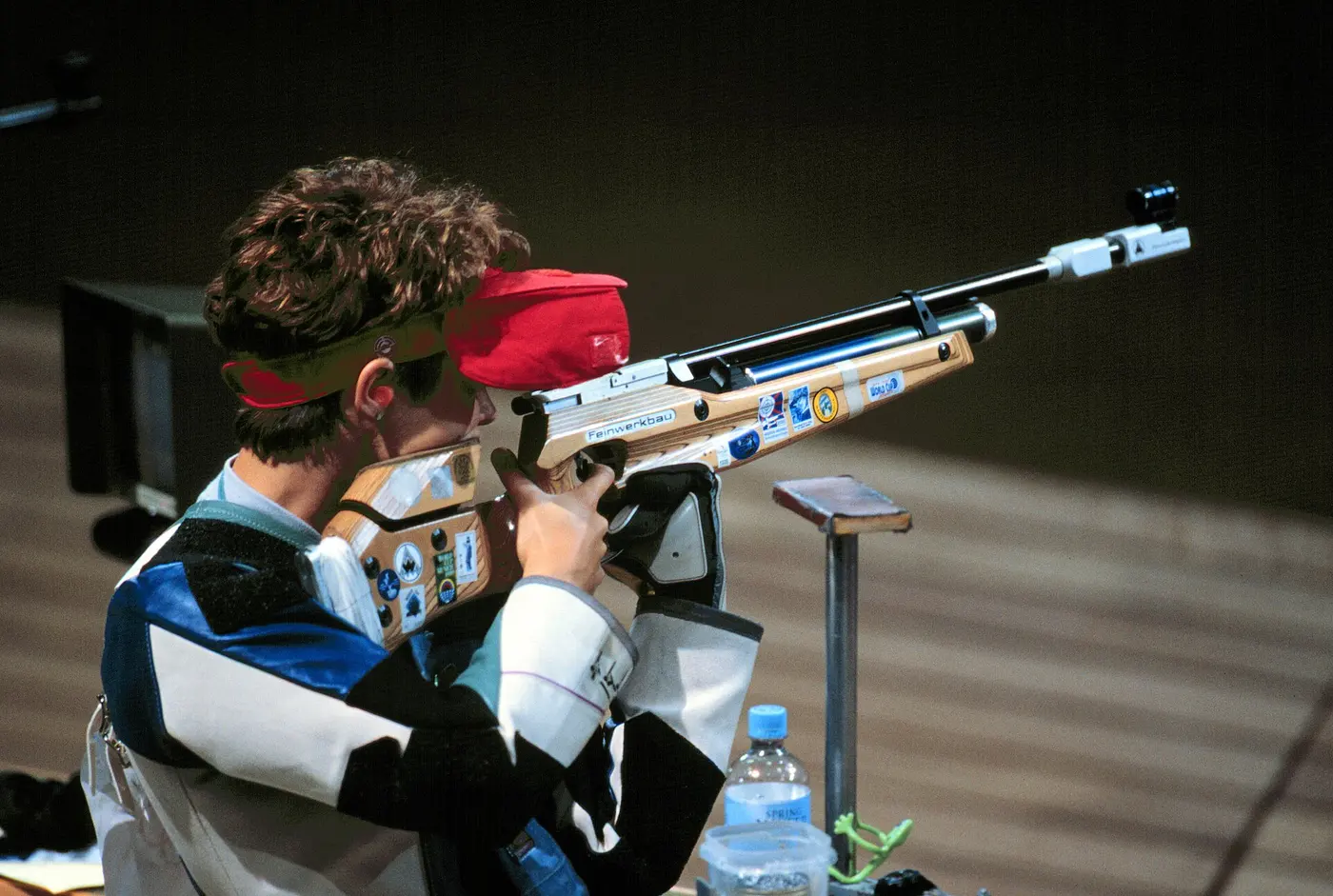

A study published in 1996 looked at 308 recruits who had completed basic rifle training at Fort Benning, a U.S. Army base in Georgia. Of those whose shooting hand and dominant eye were on the same side, 86.1% qualified as marksmen; of those whose hand and eye were crossed, only 56.5% did. Because crossed dominance is easy to detect, the researchers suggested, such recruits could be given special training. If you’re taking up shooting, archery or photography, it’s worth finding out which eye is dominant first.