Why do our ears hurt on airplanes?
Changes in cabin pressure create a difference in pressure on the two sides of the eardrum. During the descent before landing, the tube that should even it out does not open by itself, so that is when ears hurt most.
8,000 ft
When a plane starts its descent toward landing, your ears may feel plugged, sounds may turn muffled, and sometimes there is a throbbing pain. This is also when babies all over the cabin tend to start crying.
The cause is a change in air pressure inside the cabin. And the reason landing is usually worse than takeoff comes down to a slightly odd property of a narrow tube deep inside the ear.
A cabin as high as a mountain
At the altitudes where airliners cruise, roughly 10,000 meters (33,000 feet), the air is far too thin to breathe. So the cabin is pressurized, though not all the way to ground-level pressure. Under the U.S. Federal Aviation Administration’s design standards for airliners, the cabin must be kept at a pressure no lower than that found at an altitude of 8,000 feet (about 2,400 meters) under normal operating conditions.
Air pressure at 2,400 meters is about three-quarters of that at sea level. So as a plane climbs after takeoff, the pressure in the cabin gradually drops, and as it descends toward landing, the pressure climbs back up to ground level. Your ears respond to these ups and downs.
The little room behind the eardrum
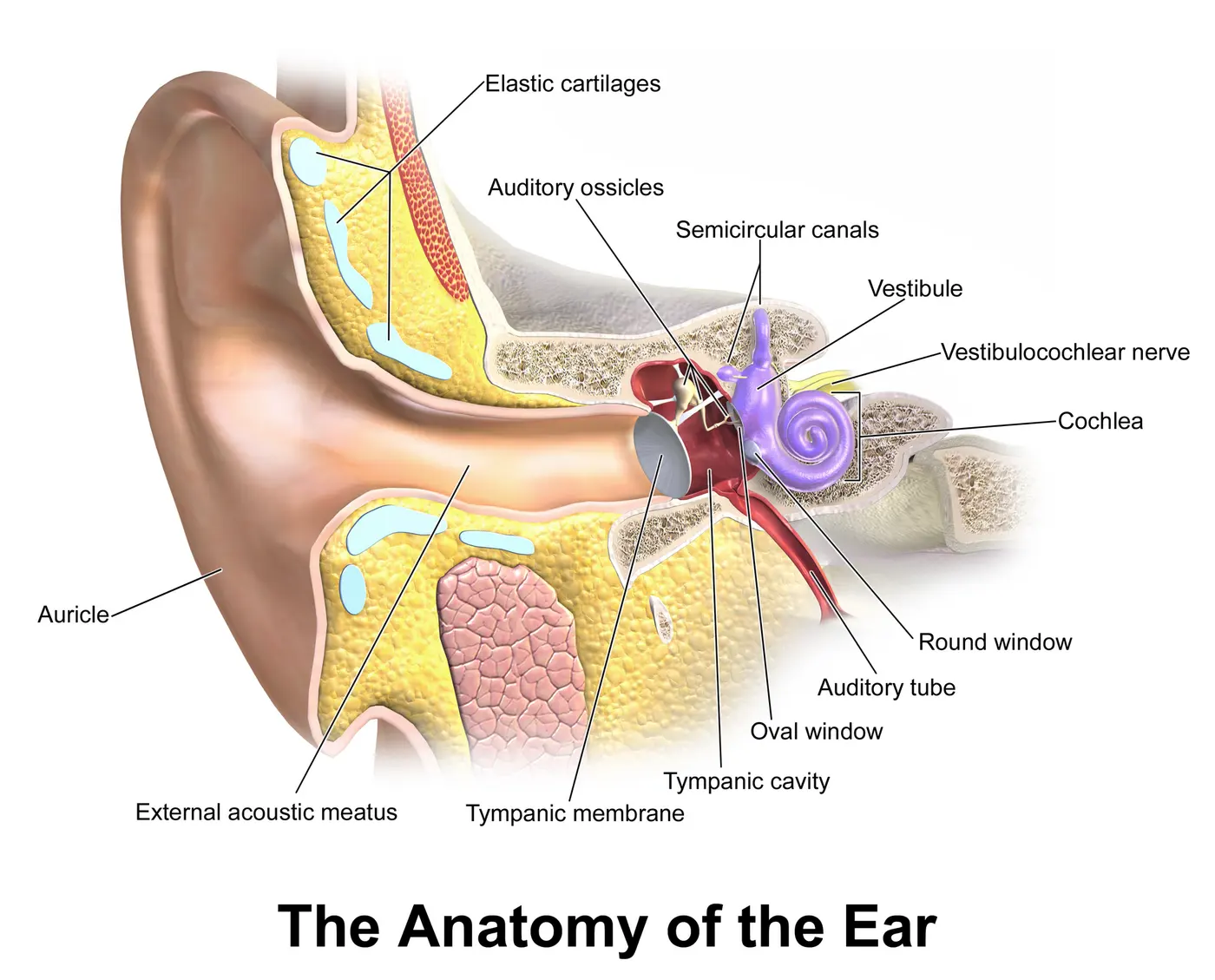
Behind the eardrum, at the end of the ear canal, is a small air-filled chamber called the middle ear. It is not sealed off: a narrow passage called the eustachian tube connects it to the back of the nose.
The eustachian tube normally stays closed, opening for a moment when you swallow or yawn. That lets air in or out, so the pressure in the middle ear matches the pressure outside. According to the American Academy of Otolaryngology–Head and Neck Surgery, when the tube fails to equalize the pressure, a vacuum forms in the middle ear that stretches the eardrum, causing pain and sometimes fluid buildup. The Japanese Society of Otorhinolaryngology–Head and Neck Surgery likewise lists “barotitis,” in which the tube cannot keep up with rapid pressure changes such as those during a flight.

Why landing is worse
The FAA’s Aeronautical Information Manual, a handbook for pilots, explains the difference between climbing and descending. As the plane climbs and cabin pressure falls, the air in the middle ear expands, pushes the eustachian tube open and escapes toward the nose. The pressure evens out more or less by itself.
During descent it is the other way around. Even when the pressure in the middle ear falls below that of the cabin, the tube does not open on its own; you have to open it, for instance by swallowing. If a cold or nasal allergy has swollen the tissue around the tube, that may not work. And once the pressure difference grows large enough, it can hold the tube shut. The result, which pilots call an “ear block,” can mean severe pain and hearing loss lasting from several hours to several days, and the eardrum can even rupture.
How many people actually hurt their ears? In a study published in 1998, a team from Denmark and other countries examined passengers getting off arriving flights and found signs of pressure-related damage to the middle ear in 10% of adults and 22% of children. Children’s eustachian tubes are narrower, and babies cannot pop their ears on purpose, which leaves them especially vulnerable.


Protecting your ears
According to the American Academy of Otolaryngology–Head and Neck Surgery, the simplest remedy is swallowing. Yawning, chewing gum and sucking on hard candy also help, especially just before takeoff and during descent.
If your ears still feel blocked, pinch your nose, close your mouth, and gently try to blow air out through your nose. A pop in the ears means it has worked. The academy stresses that you should blow gently, not forcefully.
If you sleep through the descent, you swallow less often and can fall behind the pressure change. The FAA, too, advises waking sleeping passengers before descent. For babies, sucking on a bottle or pacifier can help. If you have a cold or allergies, over-the-counter nasal sprays or decongestants may ease the swelling, but people who are pregnant or have conditions such as heart disease or high blood pressure are advised to check with a doctor first. If your ears are still blocked or painful some time after landing, see an ear, nose and throat specialist.