Where do figure skating jump names come from?
The Axel, Salchow, Lutz and Rittberger are named after the skaters said to have first performed them.
1882
Watch a figure skating broadcast and you’ll hear the words fly: “triple Axel,” “quad Lutz,” “Salchow.” There are six basic jumps in competition today: the toe loop, Salchow, loop, flip, Lutz and Axel.
Some of these names describe how the jump is done or what it looks like. The rest are people’s names. The skater said to have been the first to land a jump has given the jump his name.
The Axel, first jumped in speed skates
The most famous is surely the Axel. It is named after Axel Paulsen (1855–1938) of Norway, who first performed the jump at a competition in Vienna in 1882. Remarkably, he is said to have been wearing not figure skates but speed skates at the time. Paulsen was a top speed skater as well.
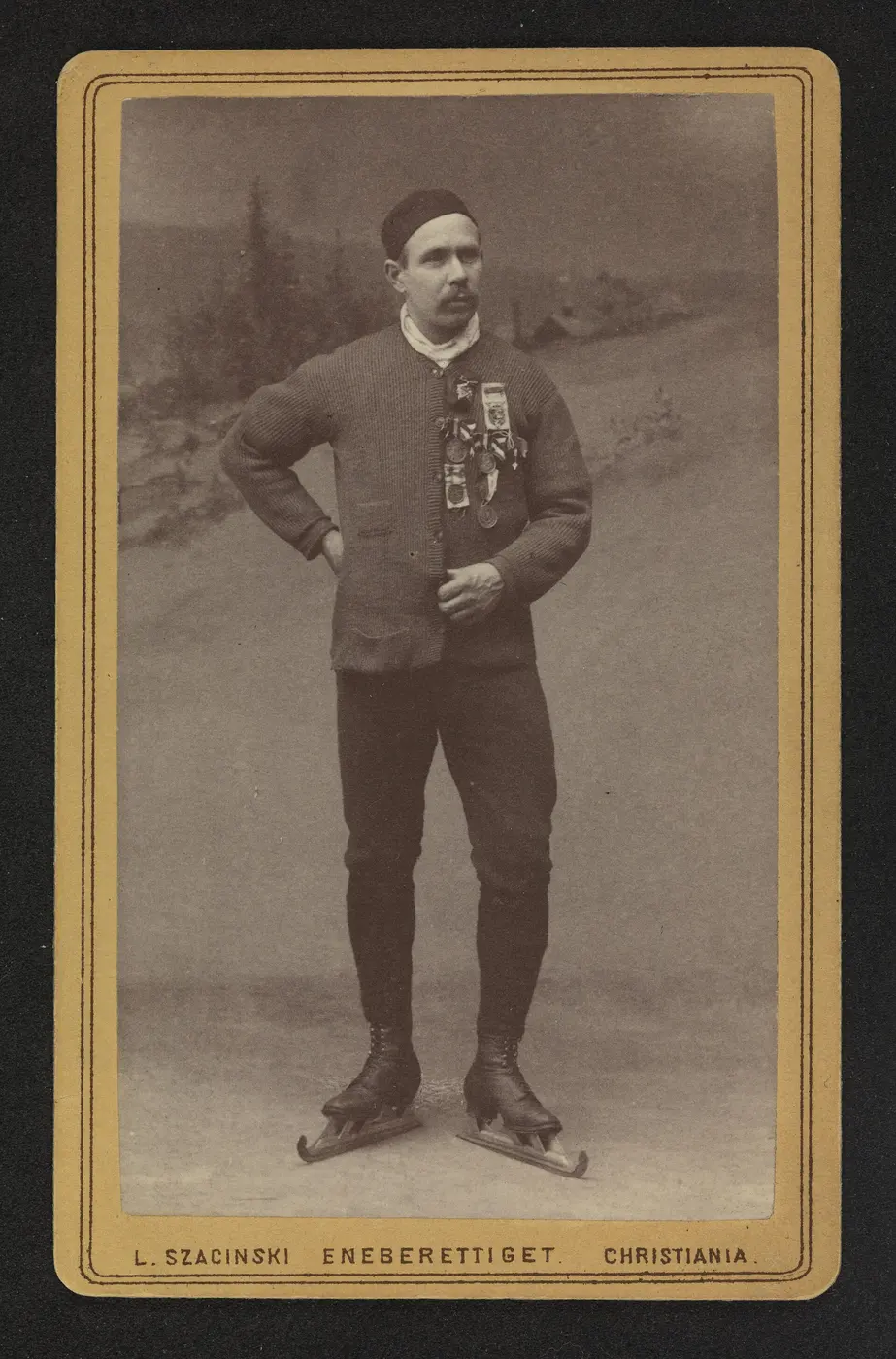

The Axel is the only one of the six jumps with a forward takeoff. Since it lands backward like all the others, the skater has to turn an extra half rotation in the air. A single Axel is one and a half turns; a triple Axel is three and a half. The triple Axel is such a demanding move that it is said to be “more a quadruple than a triple,” and it is regarded as the hardest of the six jumps.
Salchow, Lutz and Rittberger
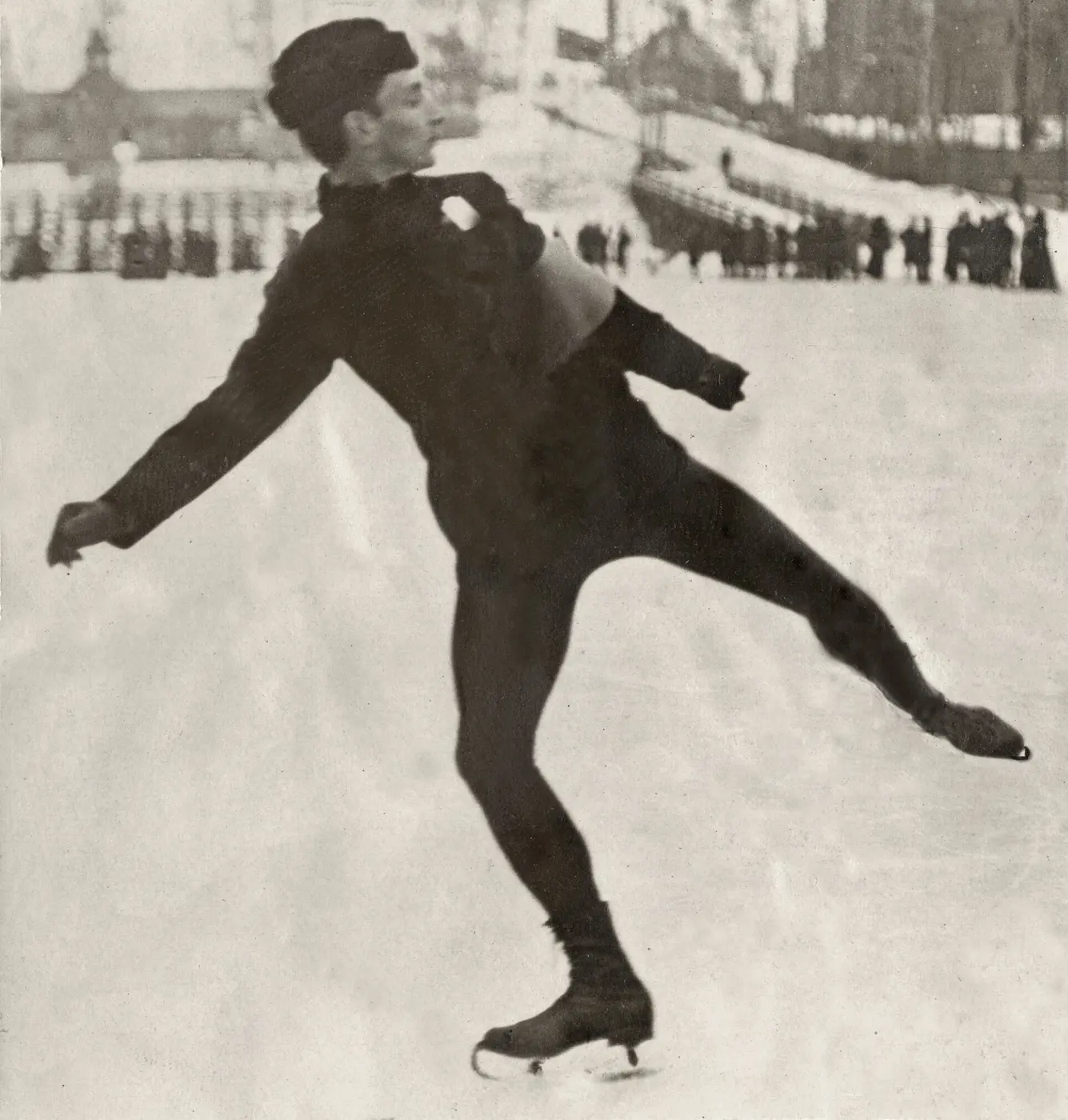
The Salchow takes its name from Ulrich Salchow of Sweden, and was named after him in 1909. Salchow was a great champion who won the World Championships ten times, and at the 1908 London Olympics he won the gold medal in men’s singles figure skating.
The Lutz comes from the name of Alois Lutz of Vienna, Austria, who is said to have first performed it in 1913. However, the skating historian Matthias Hampe found no contemporary sources mentioning the jump before the 1920s, so there are doubts about when the true “first” really happened.
The loop is said to have been devised around 1910 by Werner Rittberger of Germany. In Germany and elsewhere in Europe it is still called the “Rittberger.” The name “loop,” used in the English-speaking world and in Japan, is said to come from the fact that if the skater performed the rotation on the ice instead of in the air, the blade would trace a loop.
The two that aren’t named after people are the toe loop and the flip. The toe loop is a loop in which the skater taps the ice with the toe pick, the jagged teeth at the front of the blade, to take off. It is said to have been devised in the 1920s by the American professional skater Bruce Mapes, who may also have invented the flip.

The first woman to land a triple Axel
The Axel has a special ring in Japan, thanks to Midori Ito. Among men, Canada’s Vern Taylor landed the first triple Axel in international competition in 1978, but for women the jump stayed out of reach for a long time.
In 1988, at the Aichi Prefecture Championships, Midori Ito became the first woman to land a triple Axel in official competition, and later that year she landed it internationally as well, at the NHK Trophy. She won the World Championships in 1989, and at the 1992 Albertville Olympics she became the first woman to land a triple Axel at the Olympics, taking the silver medal.
Then, in 2022, America’s Ilia Malinin landed the first quadruple Axel in international competition. The one-and-a-half-turn jump first done in speed skates 140 years earlier had grown into four and a half turns.