Why do ski jumpers fly in a V?
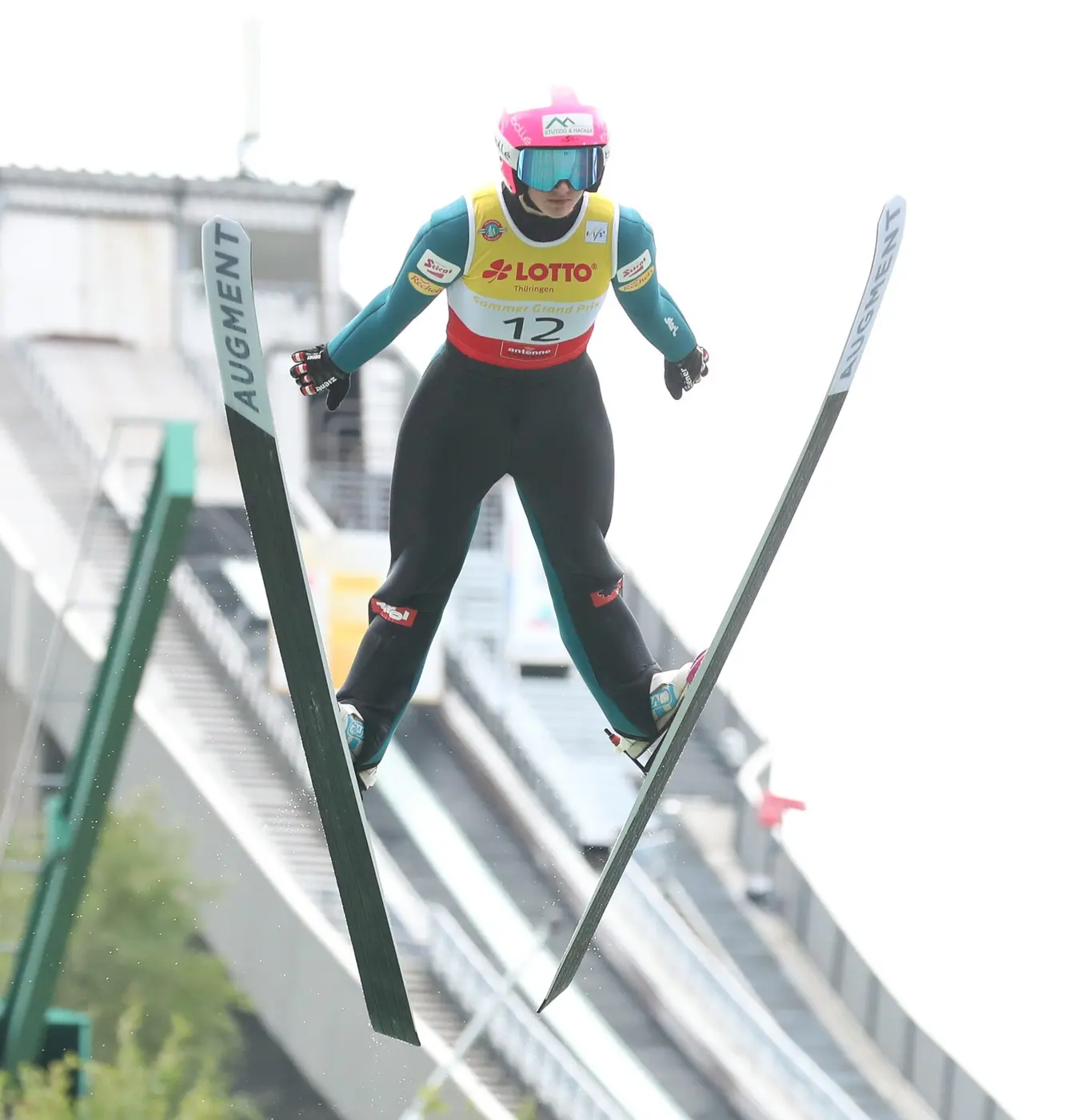
Spreading the skis into a V turns the jumper and skis into a kind of wing that generates more lift, so they fly farther.
A jumper leaves the takeoff, spreads the tips of the skis apart and glides down over the hill in a neat V. It is one of the most familiar sights of any Winter Olympics.
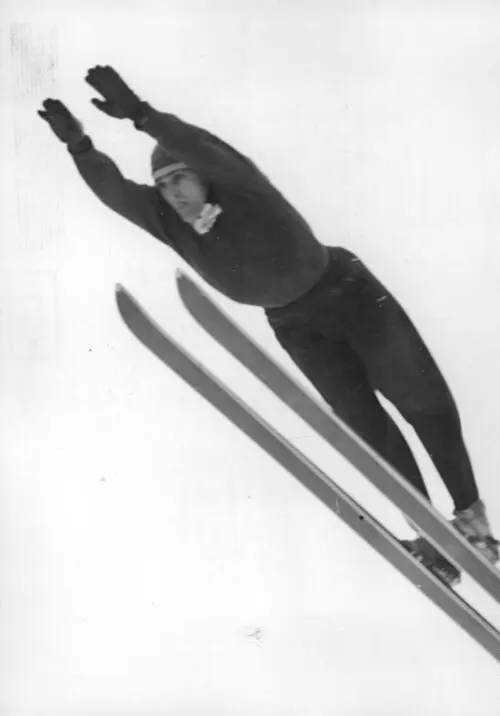
Yet the V is surprisingly recent. It has been the norm for only a little over 30 years. Before that, the correct way to fly was with both skis held tightly together, side by side.
When parallel skis were beautiful
Ski jumping technique has changed again and again. After the First World War, jumpers from Kongsberg in Norway developed a style in which they bent sharply at the hips and stretched their arms forward. In the 1950s, Switzerland’s Andreas Däscher brought the arms back alongside the body and flattened the upper body. That gave rise to the “classic” style, with the body stretched out and the two skis parallel, which remained the standard for decades.
Ski jumping is not judged on distance alone. Judges also award style points for the jumper’s form in the air and on landing. Neat, parallel skis were part of what made a jump look good.

Farther, but marked down
The man who broke the rule was Jan Boklöv of Sweden, born in 1966. In the mid-1980s he began spreading the tips of his skis wide in flight, a style he is said to have stumbled on by accident.
The judges were not impressed. Skis that were not parallel counted as sloppy form, and Boklöv lost style points for it. Even when he flew farther than his rivals, he could still lose on points.
He kept at it anyway. On December 10, 1988, he won a World Cup event in Lake Placid in the United States, and he went on to take the overall World Cup title for the 1988–89 season. Others, such as Jiří Malec of Czechoslovakia and Stephan Zünd of Switzerland, also stuck with the V despite low style marks.
Boklöv may not have been the first, though. Poland’s Mirosław Graf is said to have discovered the technique as a child in 1969, but nobody took it seriously at the time.
The jumper becomes a wing
In the air, a ski jumper is essentially a wing, held up by the air flowing around the whole body. Spread the skis into a V, and the body and the two skis together form a large surface that catches the air.
In a 2007 wind tunnel study, Japanese researchers using a human-shaped model confirmed that the V-style has a higher lift-to-drag ratio than the parallel style. That ratio measures how efficiently a shape produces lift, the upward force that holds the jumper up, compared with the drag that slows it down. The airflow looked different too: behind the parallel style there was a narrow, strong stream of air pushed downward, while behind the V it was wider and weaker.
The more efficiently a jumper produces lift, the longer they stay in the air and the farther they fly. Far from being sloppy, the V turned out to be the smarter way to use the air.
1992: a podium full of Vs
Judges came around in the early 1990s. As more and more jumpers won with the V, the scoring changed. At the 1992 Winter Olympics in Albertville, France, 16-year-old Toni Nieminen of Finland won the large hill event with a V. According to the International Olympic Committee, every ski jumping medalist at those Games used the style.
Japan’s jumpers were slow to adapt. Mastering the V was made a condition for selection to the Albertville team, and some jumpers switched their technique in a hurry, but Japan finished fourth in the team event. At the same Games, however, Japan’s team in Nordic combined, which pairs ski jumping with cross-country skiing, made up of Reiichi Mikata, Takanori Kono and Kenji Ogiwara, who had adopted the V early, won the team gold.

Japan’s jumpers soon made the V their own. At the 1998 Winter Olympics in Nagano, Takanobu Okabe, Hiroya Saito, Masahiko Harada and Kazuyoshi Funaki won the large hill team event, and Funaki also took gold in the individual large hill.