Did the paint tube give birth to Impressionism?
It gave a big push. But artists were painting outdoors well before tubes, so tubes alone did not create it.
The paints most of us used in art class came in tubes. Twist off the cap, give it a squeeze, and the color is on your palette.
The metal paint tube was invented in the mid-nineteenth century, and a popular story says that by making it easy to paint outdoors, it gave birth to Monet, Renoir and the rest of the Impressionists. Renoir himself is reported to have said something along those lines. The real story, though, is a little more complicated.
Paint in a pig’s bladder
Before tubes, how did painters keep their paint? Oil paint is made by grinding colored powders, called pigments, into oil. Many artists ground pigments and mixed their own paint in the studio.
To store it, they used pig bladders. The paint was packed into the bladder and the neck tied off with string; to use it, you pricked a hole with a tack or needle and squeezed some out. Once punctured, though, the rest of the paint tended to dry and harden. Glass syringe-like tubes were another option, but they broke easily and were poorly suited to carrying around.
An American portrait painter’s invention
The solution came from John Goffe Rand, an American portrait painter who spent part of his career working in London. In 1841 he received a US patent for a collapsible tube made of tin.
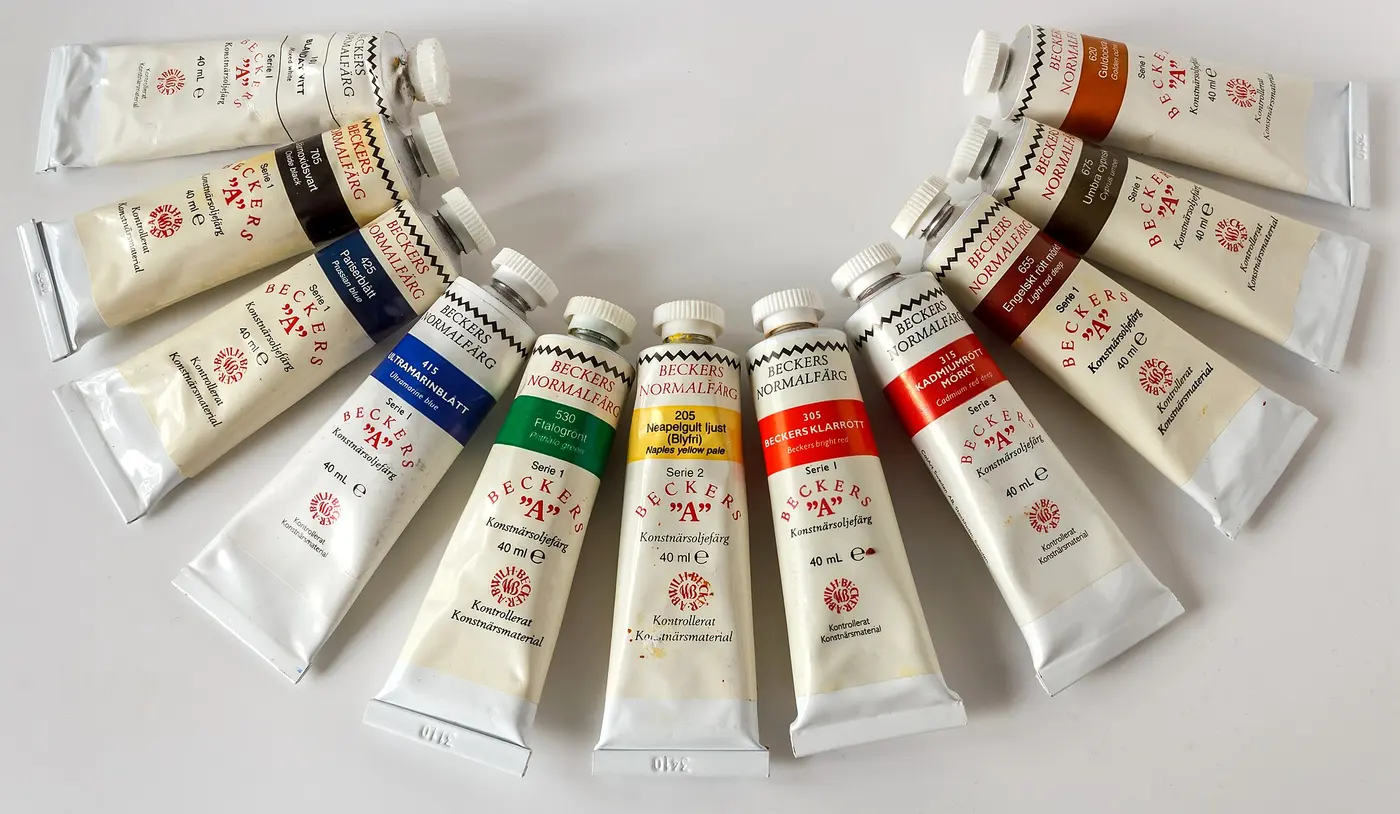
The tube was light and hard to break, and with the cap screwed on, the paint inside stayed fresh. You could squeeze out just what you needed, with nothing wasted. The British art supplier Winsor & Newton and others quickly took up the idea, and paint in tubes soon became widely available.

Renoir’s words
Renoir’s son, the film director Jean Renoir, wrote in his memoir of his father that the painter once told him:
Without paints in tubes, there would have been no Cézanne, no Monet, no Sisley or Pissarro, nothing of what the journalists were later to call Impressionism.
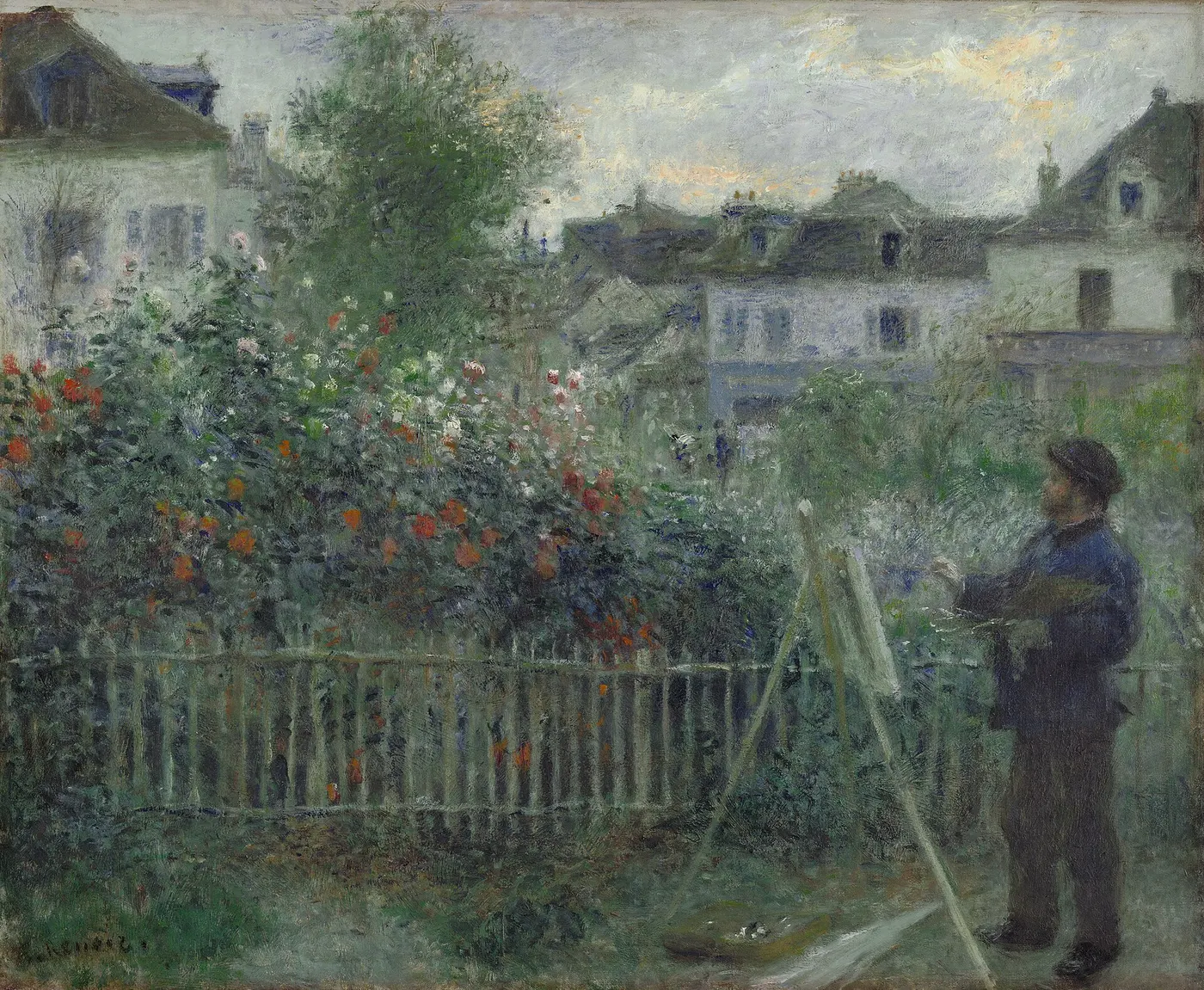
For painters trying to catch light and air as they changed from moment to moment, on the spot, portable paint was undoubtedly a huge help. In 1866, to paint his huge Women in the Garden, more than 2.5 meters (8 feet) tall, outdoors, Monet is said to have dug a trench in the garden and used pulleys to raise and lower the canvas.

Outdoor painters came first
Even before tubes, though, some artists were painting in oils outdoors. In the 1780s the French painter Pierre-Henri de Valenciennes made one oil study after another of the landscape around Rome, and in a book published in 1800 he urged young artists to make studies outdoors. In the 1830s the painters of the Barbizon school, who gathered in the Forest of Fontainebleau outside Paris, were regularly working in the open air.
Nor were tubes the only thing helping the Impressionists. Portable kits combining a folding easel and a paint box appeared in the mid-nineteenth century. And over the course of the century, vivid new pigments such as cobalt blue, cadmium yellow and synthetic ultramarine came on the market, all in use by the 1840s. The Impressionists’ bright colors owed a great deal to them too.
Rather than creating Impressionism from nothing, then, the paint tube is better seen as an invention that greatly sped up a movement already under way: the urge to go outside and paint.