Was “The Nutcracker” a flop at its premiere?
It was not considered a success, and reviews were mixed. It became a Christmas tradition only much later, in America.
On Christmas Eve, a girl’s new nutcracker comes to life as a prince and takes her on a journey to a land of sweets. Set to Tchaikovsky’s music, the ballet “The Nutcracker” opens in theaters around the world every December. Even people who have never seen a ballet know the “Waltz of the Flowers” or the “Dance of the Sugar Plum Fairy.”
Yet the work was not a hit from the start. Its premiere in 1892 was not considered a success.
A double bill with an opera
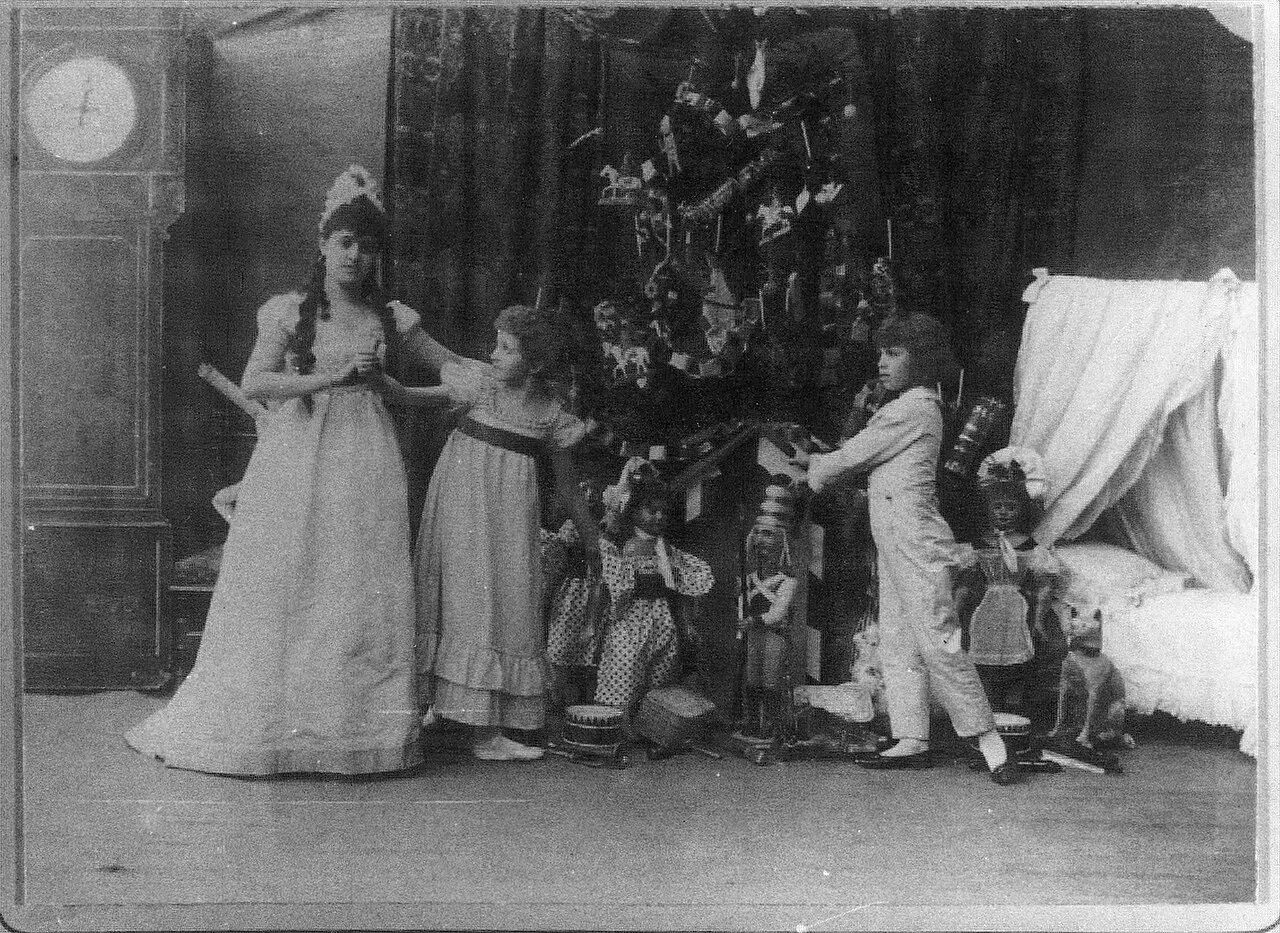
“The Nutcracker” premiered on December 18, 1892 (December 6 by the calendar then used in Russia), at the Mariinsky Theatre in St. Petersburg, then the Russian capital. It shared the bill with “Iolanta,” a one-act opera that Tchaikovsky had also written, and the conductor was Riccardo Drigo.
The libretto was by Marius Petipa, the choreographer behind “The Sleeping Beauty.” Petipa fell ill partway through the choreography, however, and his assistant Lev Ivanov completed it. The story came from “The Nutcracker and the Mouse King,” written in 1816 by the German author E. T. A. Hoffmann, by way of a French adaptation by Alexandre Dumas.
“Ponderous” and “insipid”
Opinions of the premiere were divided. One critic praised the music as “astonishingly rich in detailed inspiration,” but the party scene in Act I was called “ponderous” and the grand pas de deux near the end “insipid.” As a piece of theater, it was not judged a success.
The music, though, had found its audience before the ballet even opened. Tchaikovsky picked eight numbers from the score for a concert suite, which premiered in St. Petersburg on March 19, 1892, nine months ahead of the ballet. Almost every number was encored.

A secret instrument from Paris
Much of the music’s magic comes from the celesta. It looks like a small piano, but its keys work hammers that strike steel plates, producing a clear, bell-like sound. It was a brand-new instrument, invented in Paris in 1886 by Auguste Mustel as a development of the typophone, which his father had created in 1860.
Tchaikovsky fell for it and, in 1891, had his publisher Pyotr Jurgenson order one for him. In a letter to Jurgenson he wrote: “For God’s sake bear in mind that no one besides myself should hear the sounds of this wonderful instrument.” He wanted to be the first to use it.
He did so later that year in his symphonic ballad “The Voyevoda,” and then gave the celesta the starring role in the “Dance of the Sugar Plum Fairy” in “The Nutcracker.” Petipa had reportedly asked for music for that scene that sounded like drops of water shooting out of fountains.
America made it a Christmas classic
The complete ballet was not performed outside Russia until 1934, in England. Its first complete performance in the United States was given by the San Francisco Ballet on Christmas Eve, December 24, 1944, in a production staged by Willam Christensen.
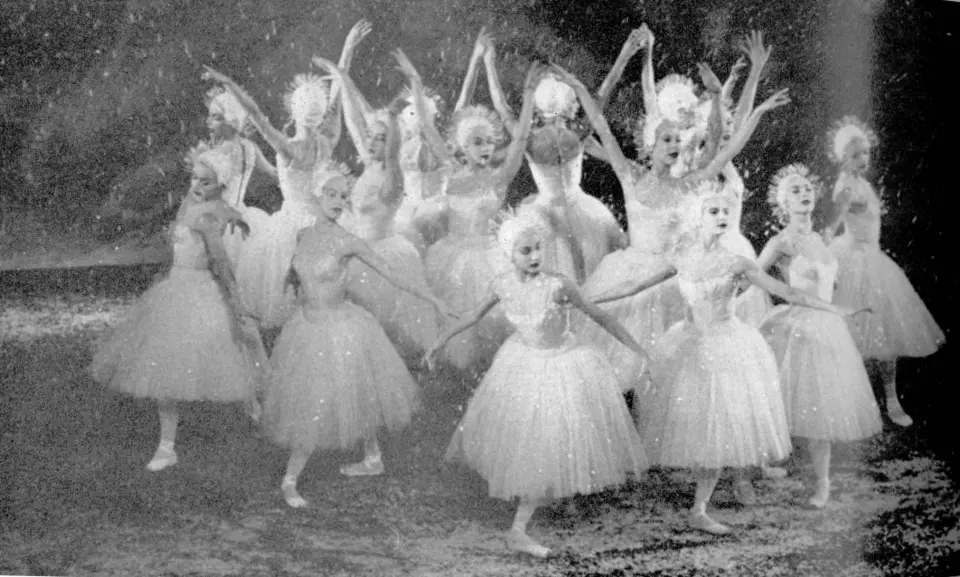

The turning point came in 1954, when New York City Ballet premiered George Balanchine’s version. The company has performed it every year since, and “The Nutcracker” became a fixture of the American Christmas season. According to a 2025 NPR report, the production brings in nearly half of the yearly revenue of large American ballet companies. Citing figures from Dance/USA, NPR noted that ticket revenue from “The Nutcracker” at large companies rose from just over $57 million in 2022 to well over $84 million in 2024. The ballet that underwhelmed at its premiere now keeps the lights on.