Why do vegetables get sweeter in the cold?
To keep from freezing, they pack their cells with sugar. Spinach grown in the cold can contain about nine times as much sugar as summer spinach.
9×
Napa cabbage and daikon radish simmered in a winter hot pot can taste meltingly sweet. Vegetables that are in season in winter often have that kind of sweetness.
The sweetness comes from a survival strategy. As Japan’s Ministry of Agriculture, Forestry and Fisheries puts it, many winter vegetables are high in sugar because they store sugar in their cells so they won’t freeze in the cold.
Sugar against the freeze
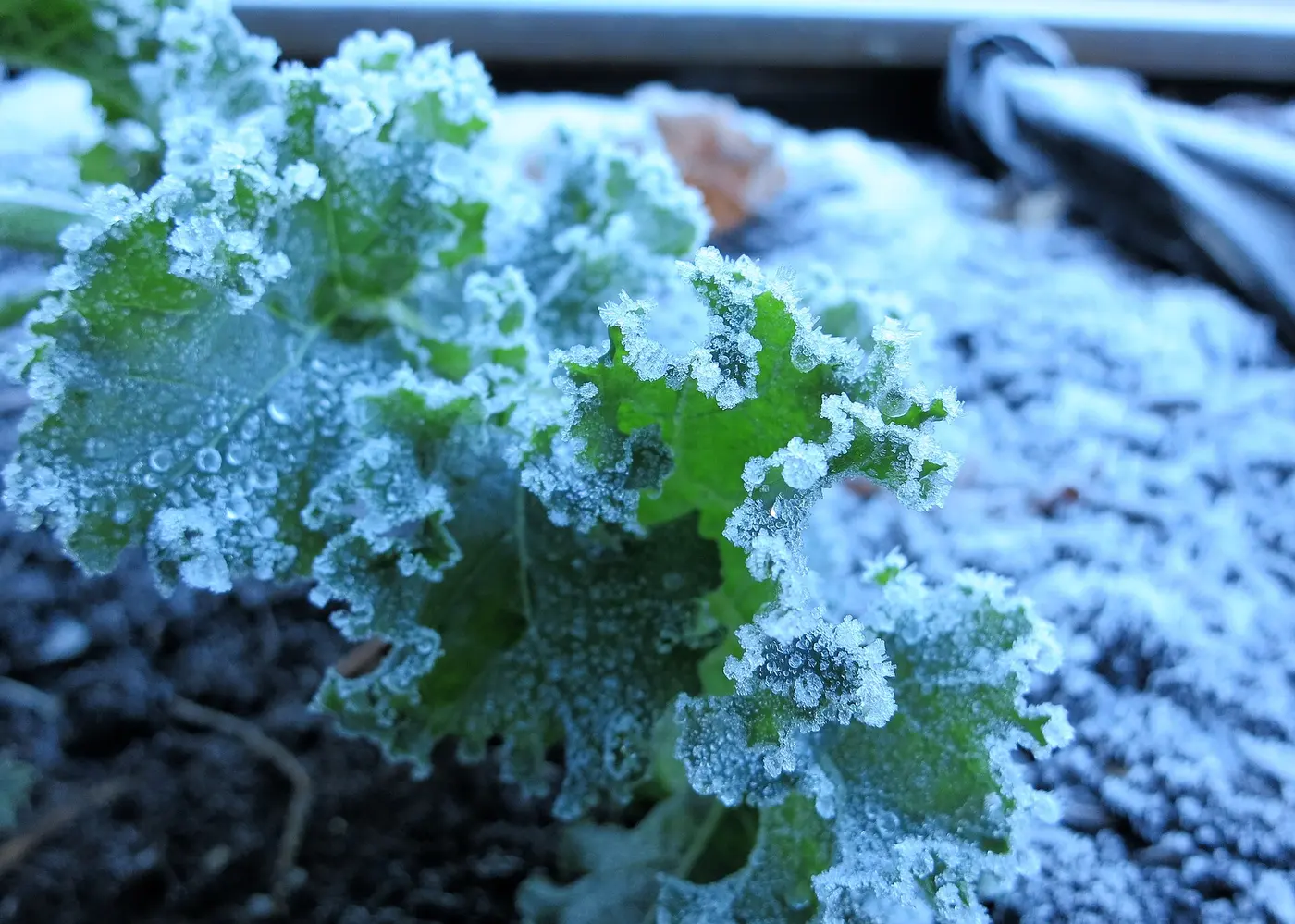
A vegetable’s cells are mostly water. If that water freezes, ice crystals form and damage the cells, and the plant dies. For vegetables growing through frosty winters, freezing is a matter of life and death.
So when a vegetable senses cold, it is thought to convert stored starch and other carbohydrates into sugar, raising the sugar level in its cells. Water with sugar or other substances dissolved in it doesn’t freeze until it gets colder than 0 degrees Celsius (32 degrees Fahrenheit). It’s the same effect, called freezing-point depression, that lets salt melt ice on winter roads.
Sugar isn’t the whole story. In 2024, a team from Saitama University and other institutions in Japan reported that when spinach, komatsuna (a Japanese leafy green), garland chrysanthemum and peas were grown at 4 degrees Celsius (39 degrees Fahrenheit) for a week, the share of a sugar called galactose roughly doubled in pectin, one of the materials that make up the cell wall. In thale cress, a plant widely used in lab research, mutants unable to make this part of the pectin suffered widespread tissue death at −10 degrees Celsius (14 degrees Fahrenheit), even after being acclimated to the cold. Vegetables, it seems, prepare for freezing both inside and outside their cells.

Chilling on purpose
Farmers in Japan have turned this trait to their advantage with a technique called kanjime, roughly “cold finishing.” Developed by the Tohoku Agricultural Research Center of NARO, Japan’s national agricultural research organization, in the city of Morioka in northern Japan, it involves growing spinach and other greens in plastic greenhouses until they are ready to harvest, then throwing open the doors and windows to expose them to the winter air.
According to the center, once the soil temperature has stayed at or below 8 degrees Celsius (46 degrees Fahrenheit) for about five days, the roots stop taking up water and the sugar content of the leaves starts to rise. When Iwate Prefecture analyzed cold-finished spinach collected from around the prefecture, it contained an average of 2.8 grams of sugar per 100 grams, about nine times as much as summer spinach (0.3 grams). Vitamin C was up about fourfold too, to a level comparable to green bell peppers, which are rich in it. In taste tests, the more sugar the spinach had, the sweeter it was rated. In 2015, the research center and its partners also reported that cold finishing more than doubled the spinach’s flavonoids, compounds with antioxidant properties.
It isn’t only leafy greens that get sweeter. In the Hiruzen area of northern Okayama Prefecture, the prefecture’s agricultural research institute found that one daikon variety’s sugar content rose to about 4.5 degrees Brix when the average daily low over the 12 days before harvest fell to 8 degrees Celsius, and to about 5.0 degrees Brix when it fell to 2 degrees Celsius.
Wintering under the snow
In snowy regions, there’s another way: let vegetables spend the winter under the snow. Beneath a deep snowpack the temperature stays around 0 degrees Celsius, so however cold it gets above, the vegetables are unlikely to freeze.
The town of Tsunan in Niigata Prefecture, on the Sea of Japan side of Honshu, can get as much as 3 meters (10 feet) of snow. There, carrots that could be harvested in autumn are deliberately left in the fields to spend the winter under the snow, then dug up between mid-March and April after the snow is cleared away. These are called yukishita ninjin, “under-the-snow carrots.” According to the Niigata Prefecture tourism association, it all started when a farmer forgot to dig up some carrots in autumn, harvested them in spring and found them unusually sweet. When experts analyzed them, the carrots turned out to contain much higher levels of amino acids that give a sweet, savory taste.
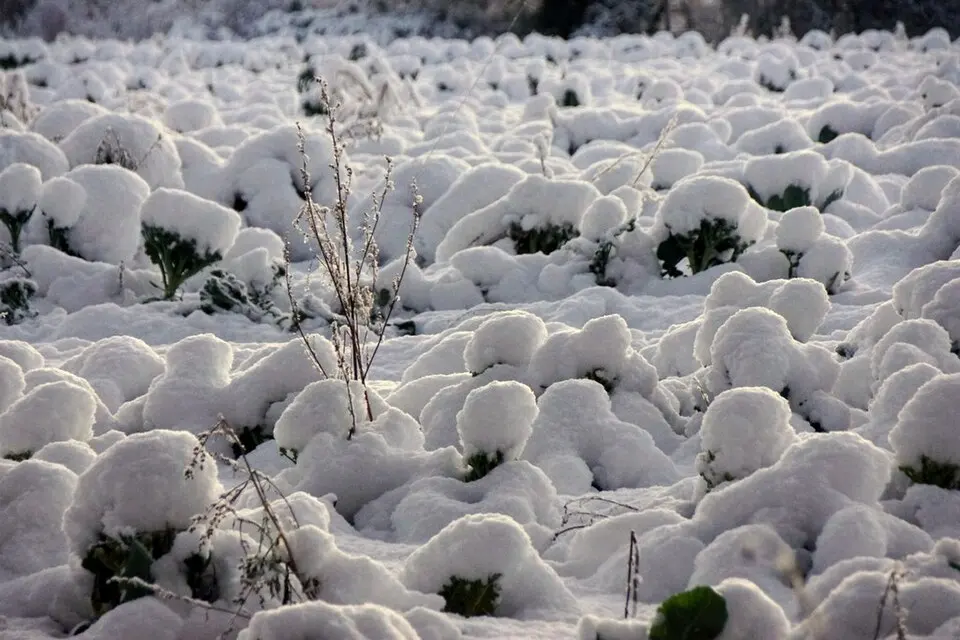

The town of Wassamu in Hokkaido, Japan’s northernmost main island, is known as the birthplace of “overwintered cabbage,” which is stored under the snow to sweeten it. Cabbages harvested in autumn are laid out in the fields, left buried in snow, and dug out for shipping from around the end of January.